Italy’s economy minister is putting debt discipline back at the center of the country’s policy debate, arguing that once a state loses control of borrowing costs it no longer chooses how to spend. For investors, the message is that Rome’s fiscal room is being shaped less by politics than by the rising bill for debt service, just as public finances, health care and retirement support come under strain.
Italy Debt Discipline and Health Fund Reform
Giancarlo Giorgetti said at a University of Insubria event in Varese that “when a country loses control of debt it no longer chooses, it suffers,” casting balance-sheet repair as a prerequisite for any social policy that works. He said an orderly budget is “a redistributive choice before a bookkeeping one,” because interest payments on past borrowing crowd out so-called useful spending on health, welfare, education and investment.
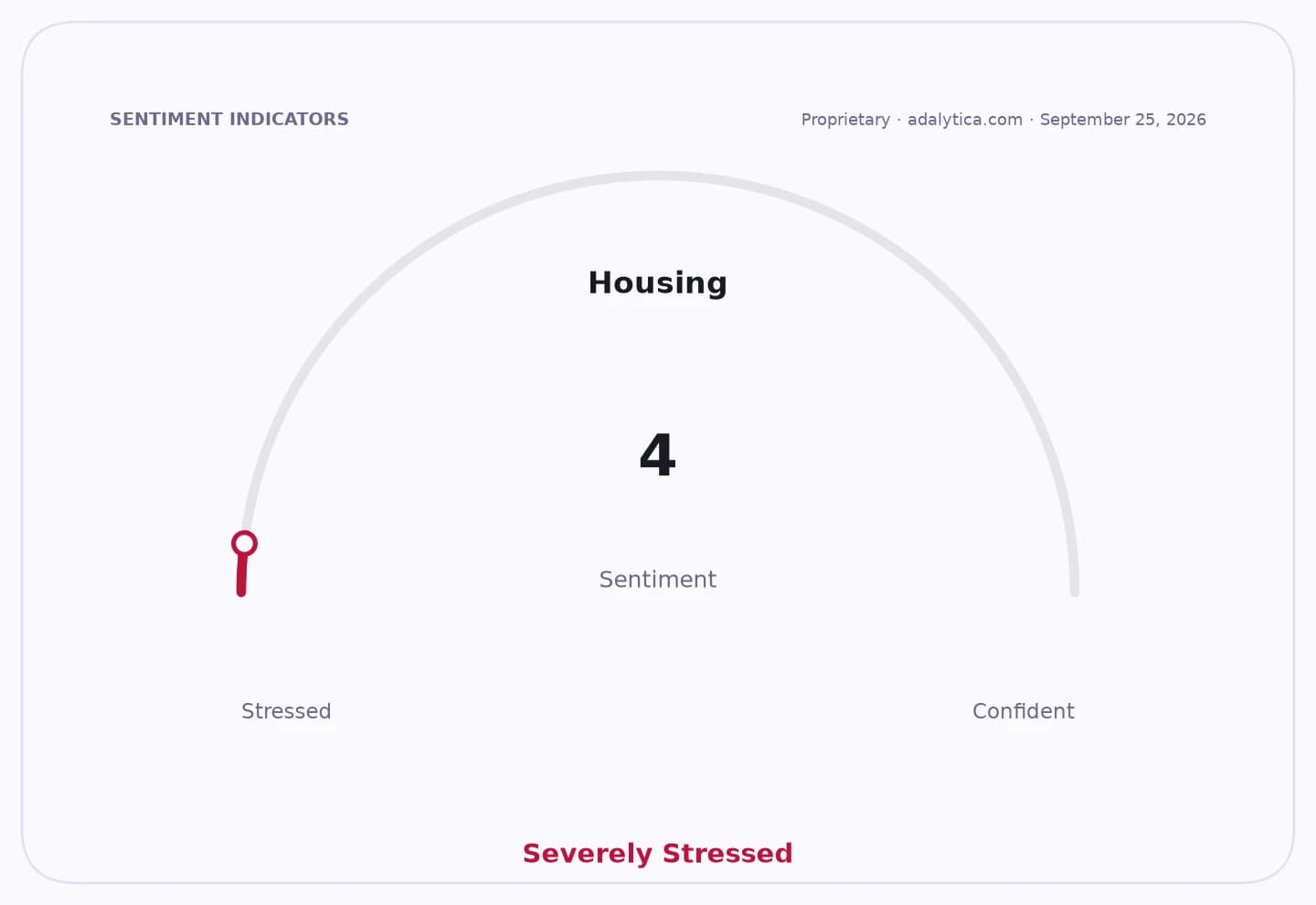
Sentiment IndicatorsⓘProprietary · adalytica.com · September 25, 2026
This is a snapshot — live sentiment, awareness and momentum for 130+ markets update continuously in the dashboard.Open AlphaPulse
The warning lands as Italy’s public debt stands at about 132% of GDP, underscoring why Rome faces a narrower margin for error than most euro zone peers. Higher debt levels translate into a larger fixed charge on the budget, limiting the government’s ability to target support and forcing more linear cuts when fiscal pressure rises.
Giorgetti tied the fiscal argument directly to health care, saying the state must protect access to treatment for those who cannot pay. He also pointed to the strain already visible in household budgets, saying Italians spend 41 billion euros a year out of pocket on health and that for 8.6% of families those costs are unsustainable.
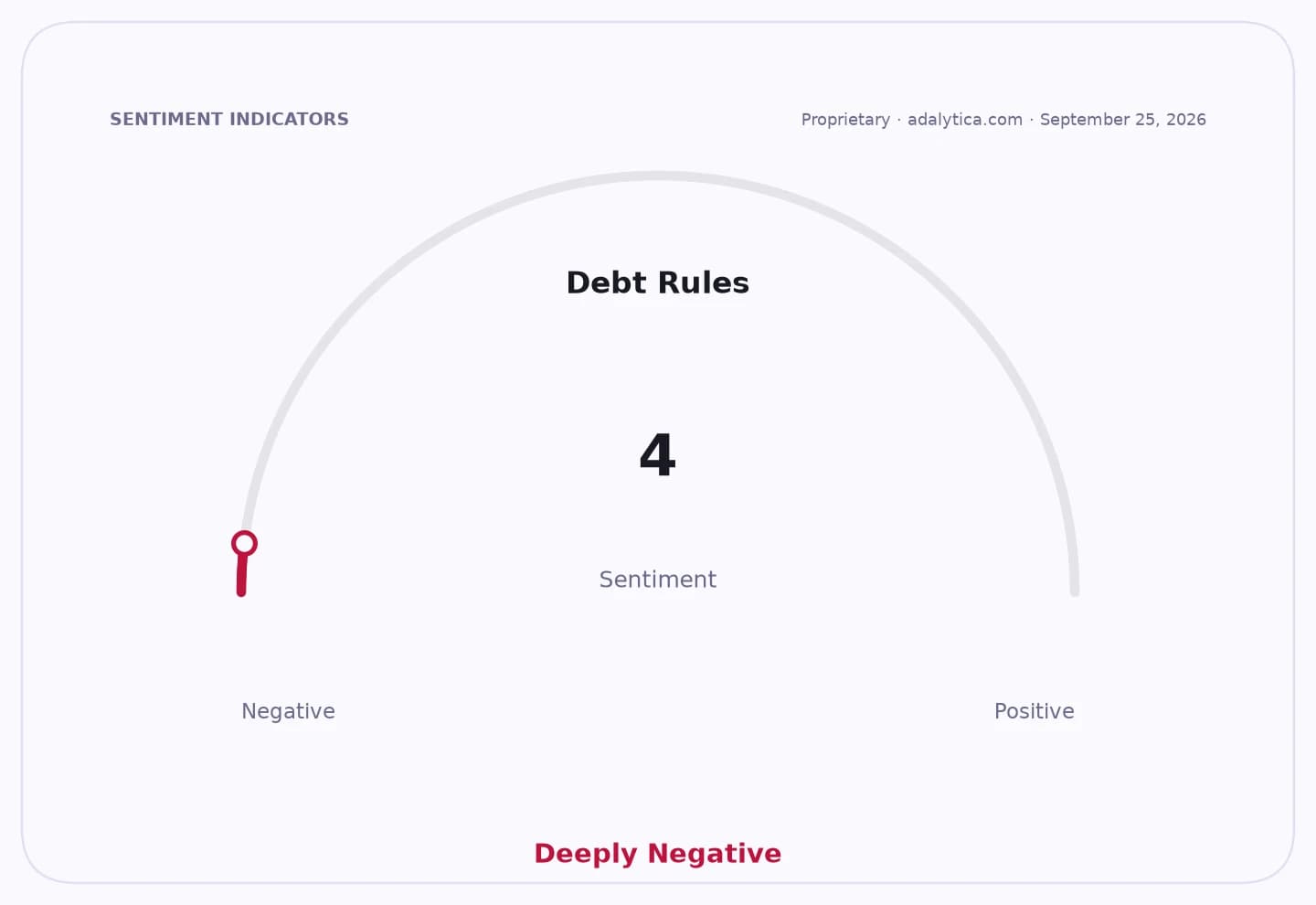
Debt Rules — 30-day sentimentadalytica.com
Explore this data interactively — full history, time series and cross-market comparisons.Open AlphaPulse
That creates an opening for private and semi-private savings vehicles, and Giorgetti said Italy should strengthen the role of health funds and pension funds. He said tax advantages for health funds should be linked to the actual benefits they deliver, and that long-term coverage for non-self-sufficiency should become a standard feature of every supplementary pension plan.
For markets, the significance is less about one speech than the policy direction it signals: Rome wants to keep debt reduction at the center of fiscal strategy while pushing more of the burden for health and retirement protection toward complementary schemes. The stance is consistent with broader European worries over sovereign debt sustainability, reflected in cautious sentiment around EU fiscal rules and a market that remains sensitive to any sign that borrowing costs could rise faster than growth.
The next test will be whether Italy can preserve budget discipline without deepening pressure on households and public services. If debt service keeps absorbing a larger share of spending, Giorgetti’s warning suggests the real constraint on policy will not be ideology, but arithmetic.
| Entity | Gains | Losses |
|---|---|---|
| Italian Treasury | ▲More fiscal discipline | ▼Less room for discretionary spending |
| Taxpayers | ▲Better chance of targeted spending | ▼Higher pressure from debt service |
| Health funds / pension funds | ▲Stronger policy role | ▼Tighter rules on tax benefits |
| Households paying out of pocket | ▲Potential extra cover | ▼Continued cost burden if reform stalls |