The central bank is signaling that keeping inflation predictable has become as important as lowering it, a message that underscores why policymakers are holding rates at 14% even as the government trims its growth forecast and inflation outlook for 2026.
Central bank keeps rate at 14% as inflation stays high
That stance matters because it shows the bank is still prioritizing credibility over stimulus. A repeat of inflation shocks would feed directly into borrowing costs, wages and exchange rates, making it harder for businesses to plan and for investors to price local assets. The latest data and forecasts suggest officials see the economy slowing — government growth expectations have been cut to 2% and inflation for 2026 to 4.9% — but not enough to justify easing while external pressures remain elevated.
Sentiment IndicatorsⓘProprietary · adalytica.com · September 25, 2026
This is a snapshot — live sentiment, awareness and momentum for 130+ markets update continuously in the dashboard.Open AlphaPulse
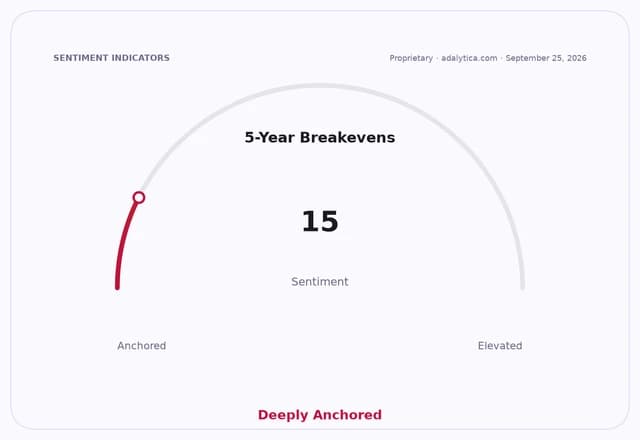
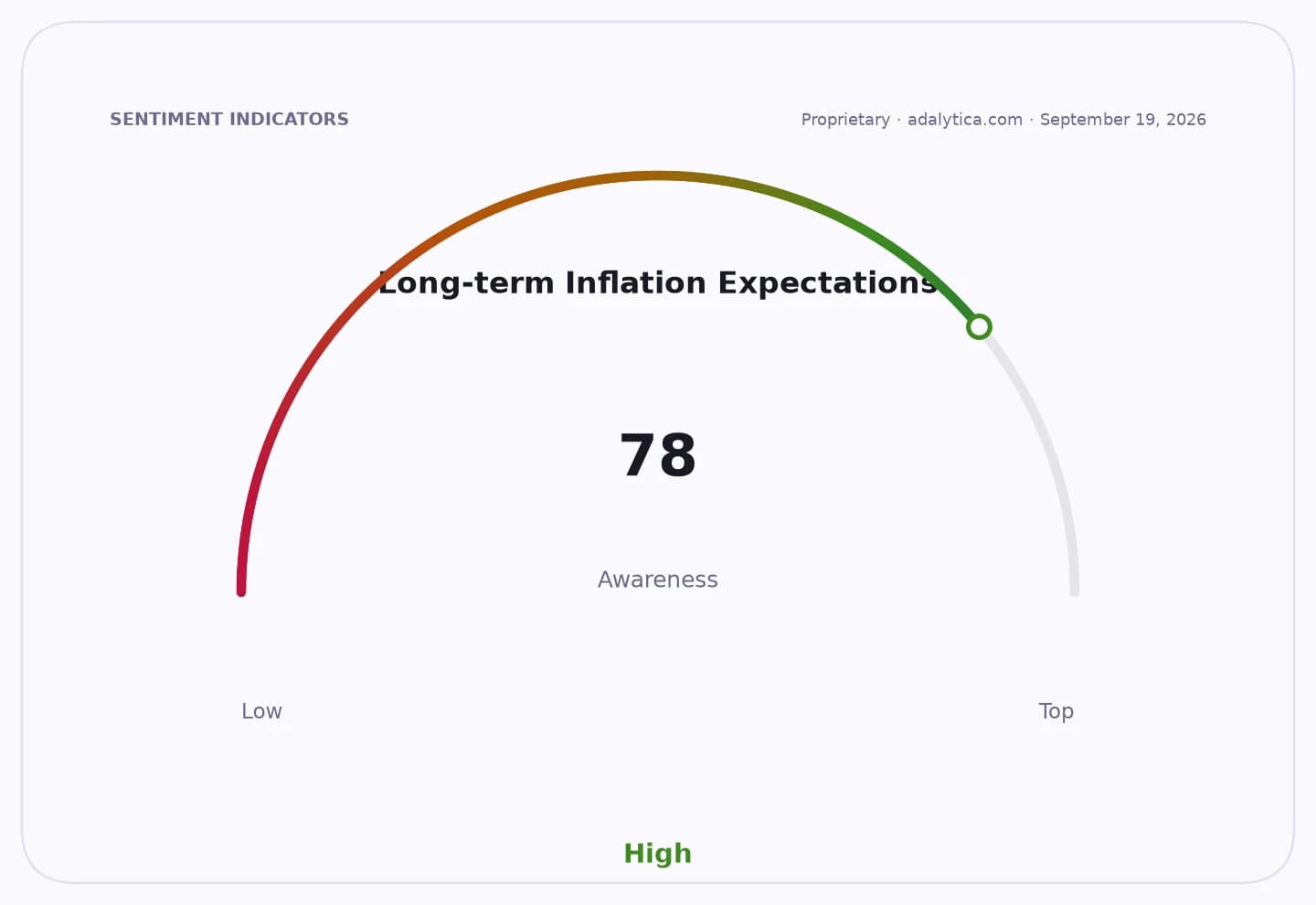
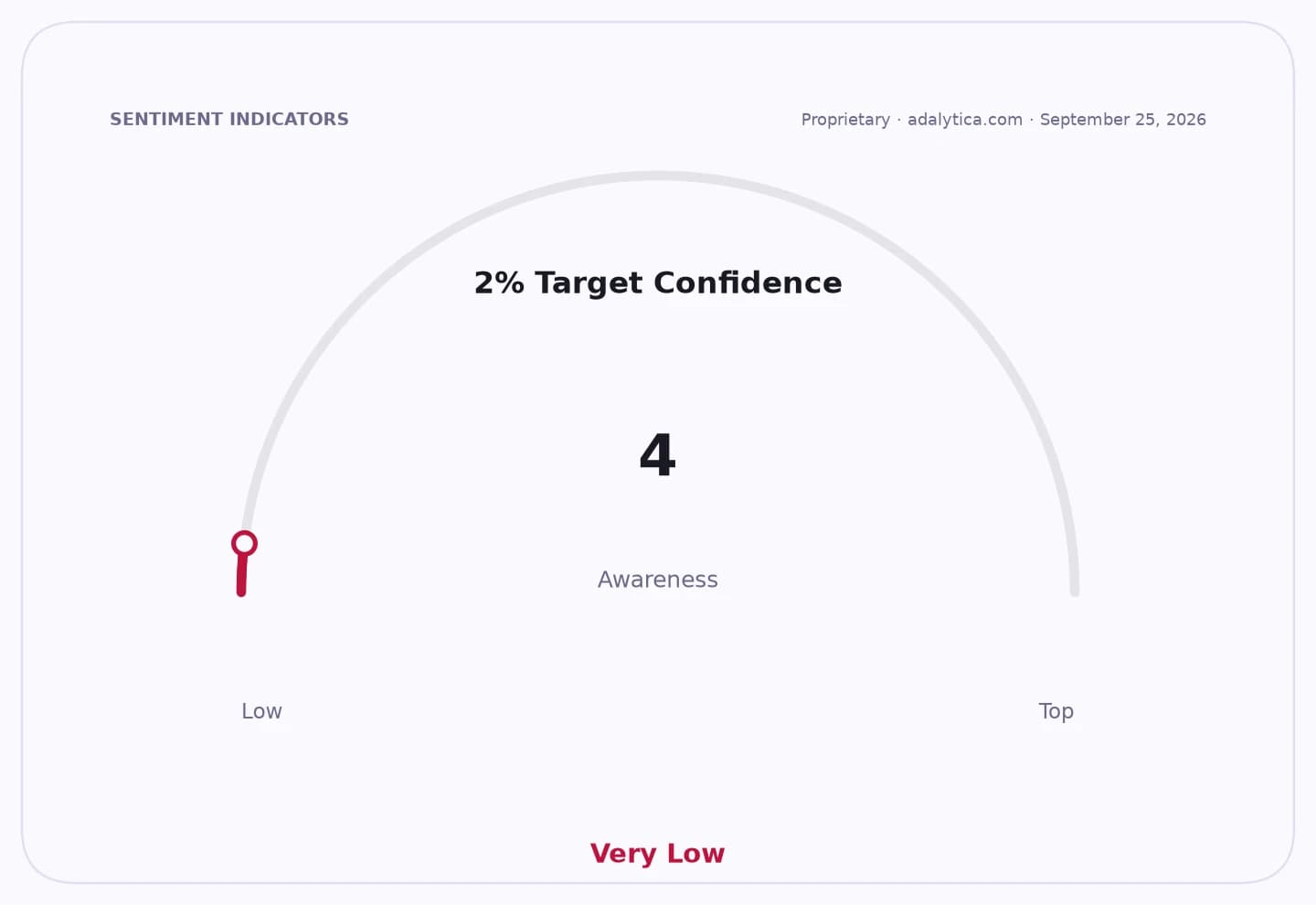
The policy backdrop is still fragile. The Monetary Policy Committee kept the benchmark rate unchanged for a third consecutive meeting, reflecting concern that war-related disruptions, currency weakness and higher energy prices could still spill into consumer prices. Inflation expectations tracked by Adalytica have deteriorated sharply, with confidence in the Fed’s 2% inflation target at 19 and long-term inflation expectations at 7, both deep in fear territory. Five-year breakeven sentiment is also at 15, indicating investors remain wary that price pressures will not normalize quickly.
In market terms, the message is straightforward: the central bank is trying to prevent a second round of inflation from becoming embedded in wages and pricing behavior. That helps explain why policymakers are resisting calls for a faster shift to easing even as growth cools. A lower policy rate could support credit demand and activity, but it would also risk weakening the currency further and lifting imported inflation, which would quickly offset any benefit to households and corporates.
Bond markets are already reflecting that caution. The 10-year yield has climbed to 5.191% in the latest reading, a level consistent with persistent inflation risk and a market that is still demanding a premium for policy uncertainty. For investors, that means duration remains vulnerable if inflation surprises to the upside, while local-currency assets will likely stay hostage to any shift in the currency and price outlook.
The bull case for the central bank is that a firm stance now can anchor expectations and reduce the risk of a more damaging tightening later. The bear case is that keeping policy restrictive for too long could deepen the slowdown, especially if consumer demand weakens faster than inflation does. For now, the key signal is not whether inflation is falling, but whether it is falling in a way that markets can believe.
| Entity | Gains | Losses |
|---|---|---|
| Central bank | ▲Credibility | ▼Growth support |
| Bond investors | ▲Higher yields | ▼Price volatility |
| Local currency savers | ▲Inflation defense | ▼Near-term easing |
| Borrowers and equities | ▲Predictability | ▼Lower credit relief |