China’s move to encourage bank exchange-traded funds underscores a more urgent policy goal: getting domestic money back into equities after one of the market’s weakest stretches in years.
China Bank ETFs Gain Policy Support

That matters because Beijing is no longer just trying to stop a slide in stocks; it is trying to rebuild confidence in the investment channel itself. The CSI 300 has suffered its longest weekly losing streak since 2005, a warning sign that households and institutions are still reluctant to step into the market even as officials lean harder on stabilization measures. Steering savings toward bank ETFs gives policymakers a simpler, lower-cost vehicle to channel funds into large financial names and, by extension, into the broader market.
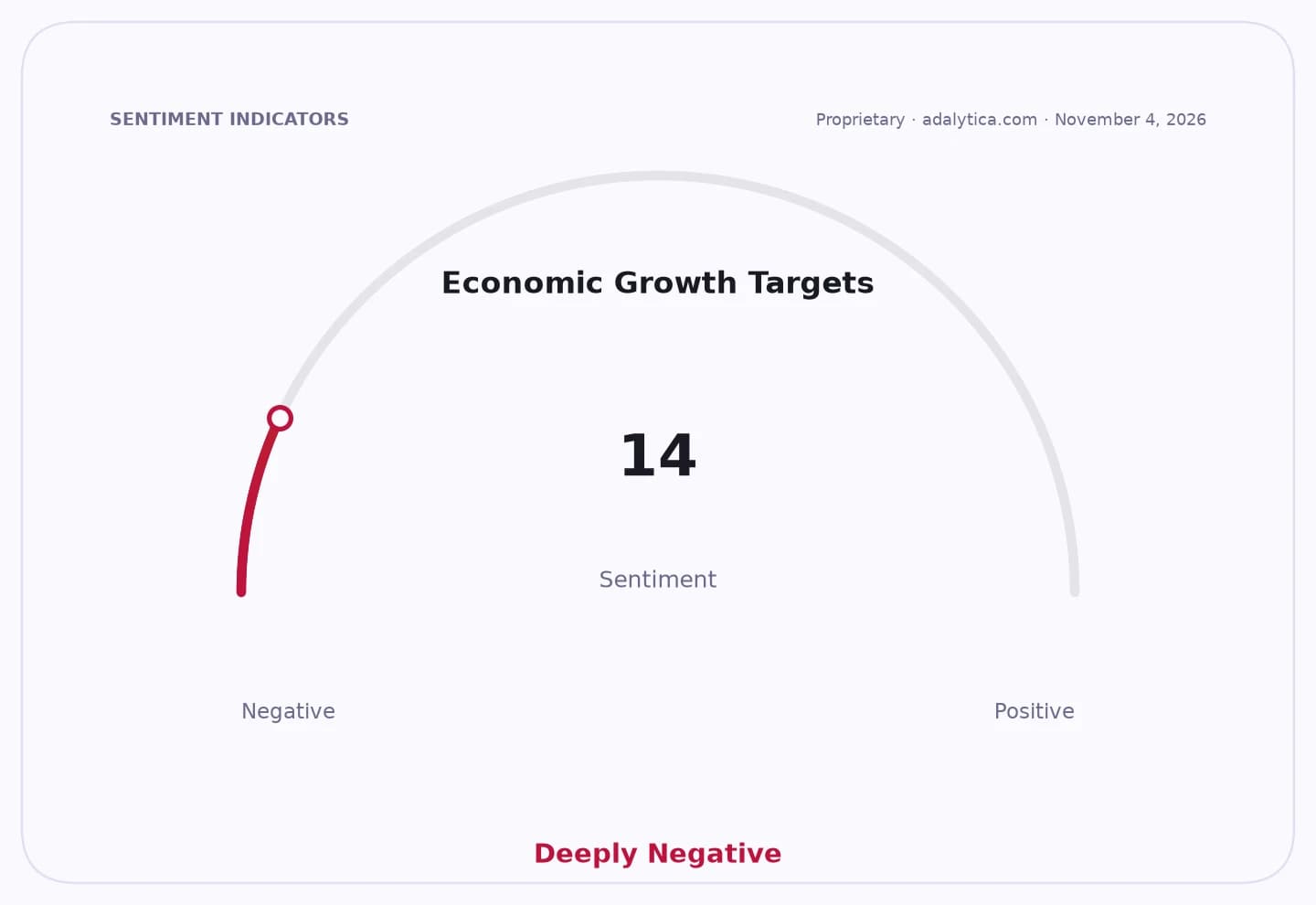
Sentiment Indicators

The timing also fits a wider campaign to support risk appetite. China’s central bank has kept buying gold for 24 straight months, adding about 25.8 tons in October even as bullion prices fell 7%, a clear sign it prefers hard assets and balance-sheet resilience while volatility persists. At the same time, shares of China’s big state-owned banks have strengthened after solid profit reports, making the sector an obvious anchor for any policy-backed push into equities.
For investors, the message is that China’s financial sector is becoming a policy transmission mechanism, not just a defensive income trade. Bank ETFs can attract inflows from investors who want exposure to the country’s largest and most liquid names without taking direct single-stock risk, and that can help support valuations even if broader sentiment remains fragile. The opportunity is not in chasing a quick rebound in Chinese growth, but in positioning for persistent policy support, liquidity measures and the likelihood that banks remain the first place Beijing tries to stabilize the market.
Economic Growth Targets
The market underestimates how much Beijing is willing to use financial-sector channels to repair confidence. If the support effort broadens, bank ETFs, large-cap lenders and other domestically focused financials could keep outperforming while exporters, smaller cyclical names and speculative growth stocks remain vulnerable to uneven sentiment and slower household participation.
| Entity | Gains | Losses |
|---|---|---|
| China bank ETFs | ▲Policy-linked inflows | ▼Broad market skeptics |
| Big state-owned banks | ▲Higher demand, valuation support | ▼Short sellers |
| Chinese households/investors | ▲Easier equity access | ▼Cash hoarders |
| Smaller Chinese stocks | ▲Limited spillover | ▼Liquidity competition |