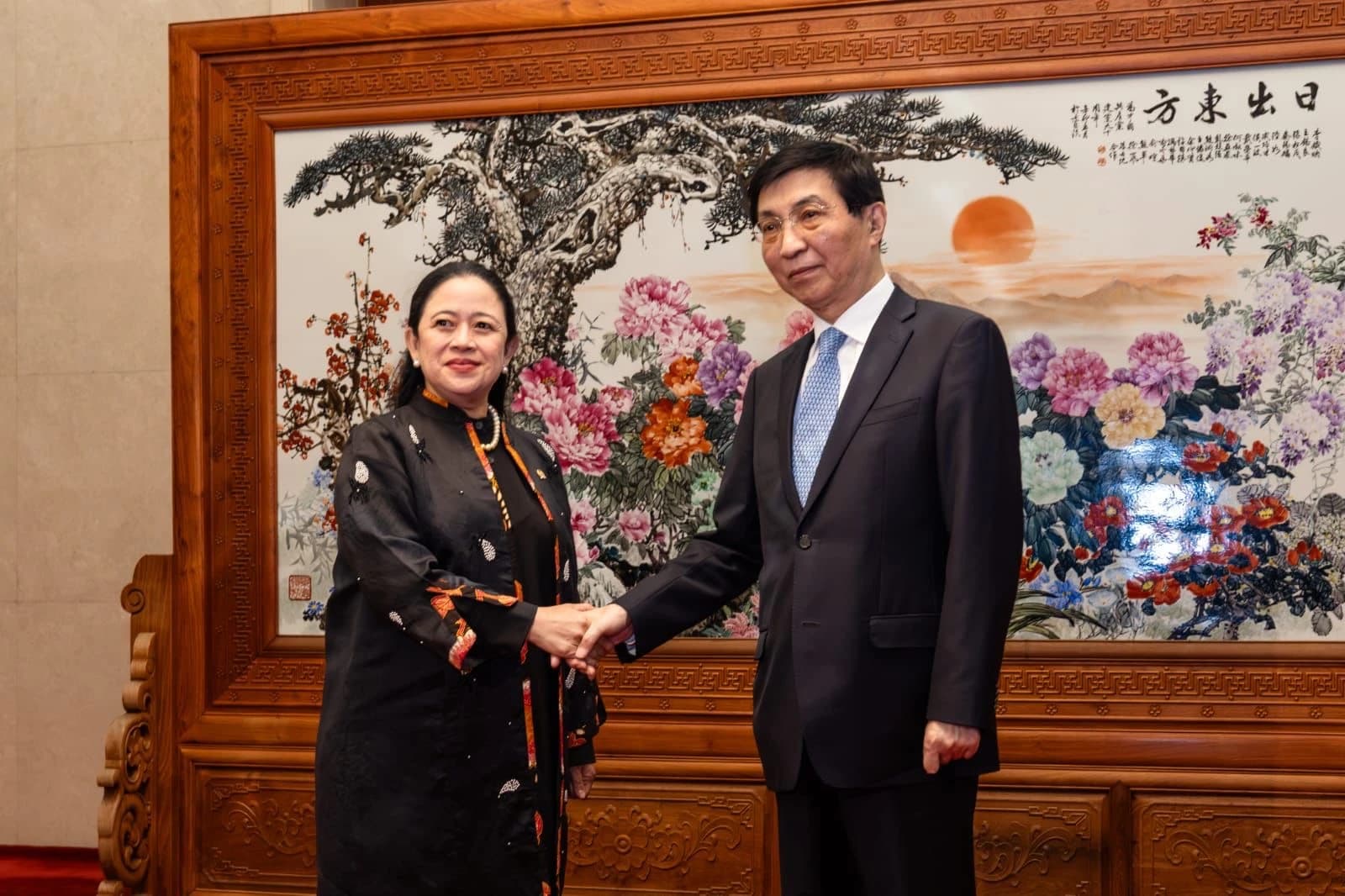
China said it is ready to continue working with the United States after the midterm elections, a sign Beijing wants to keep bilateral ties from sliding into a deeper economic freeze even as rivalry over trade, technology and security stays intense.
China-US Post-Election Talks Support FXI, MCHI
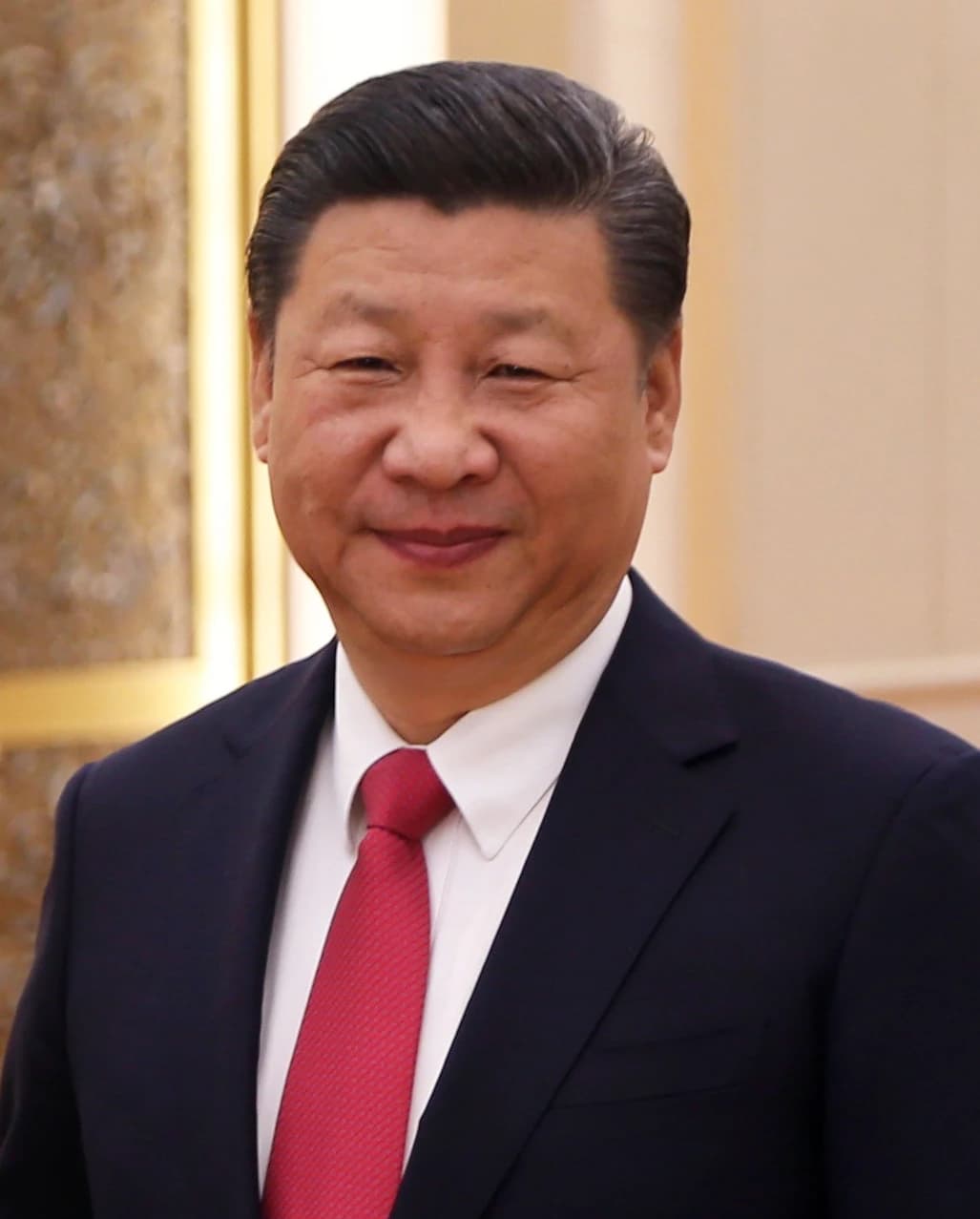
The message matters because the world’s two biggest economies remain central to global growth, supply chains and risk assets. Any hint that both sides may keep talking reduces the odds of a fresh tariff shock or another round of export controls that could hit manufacturers, semiconductors, energy demand and cross-border capital flows.
Sentiment Indicators
US-China Relations
For investors, the signal is supportive for China-linked assets that have been heavily punished by policy uncertainty. The iShares China Large-Cap ETF, FXI, closed at 34.95 on Nov. 6, just above its 50-day moving average of 34.05 but still below its 200-day average of 35.40, while the MSCI China ETF, MCHI, ended at 51.89, also modestly above its 50-day average of 52.02 but under its 200-day line of 55.25.
The market reaction has been cautious rather than euphoric. FXI’s relative strength index rose to 67.8, a sign of improving momentum, while MCHI’s RSI stood at 58.6. Both funds have recovered from earlier October weakness, but they remain below longer-term trend levels, suggesting traders want more than rhetoric before re-rating China exposure.
Energy and credit markets are also watching for any easing in geopolitical friction. U.S. crude ETF USO held at 148.41 on Nov. 6, far above its 50-day average of 152.22 and 200-day average of 125.96, after a volatile stretch that underscored how quickly oil can react to shifts in Middle East and China-U.S. tensions. High-yield credit stress, tracked by the Bank of America Merrill Lynch US High Yield Index option-adjusted spread, was 3.405 percentage points, still elevated enough to show investors are not pricing a benign global backdrop.
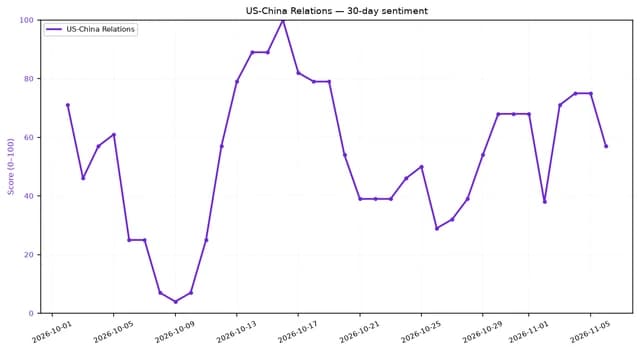
Adalytica’s U.S.–China relations sentiment gauge sits at 57, in neutral territory, after a sharp one-day drop, while its China CCP policy direction gauge remains at 68, also neutral. That points to a market that sees room for engagement but not a durable thaw.
The key question now is whether post-election diplomacy translates into concrete moves on tariffs, technology curbs and investment restrictions. If it does, Chinese equities, industrials and multinationals with heavy China exposure could get a relief bid; if it does not, the market is likely to treat the announcement as another temporary ceasefire in a relationship defined by recurring escalation.
| Entity | Gains | Losses |
|---|---|---|
| China exporters | ▲Lower tariff risk | ▼Policy uncertainty |
| U.S. multinationals | ▲Easier China access | ▼Escalation risk |
| FXI and MCHI holders | ▲Relief rally potential | ▼Longer-term de-rating risk |
| Trade hawks | ▲Less immediate leverage | ▼Reduced pressure on Beijing |