China’s top political advisory body has opened a key standing committee meeting in Beijing, underscoring how the leadership is moving to turn the Communist Party’s latest policy blueprint into economic action at a time of elevated geopolitical tension and investor focus on Beijing’s next growth steps.
China CPPCC Meeting Focuses on Policy Implementation
The meeting of the 14th CPPCC National Committee’s standing committee is centered on studying and implementing the guiding principles of the recently concluded fifth plenary session of the 20th Communist Party Central Committee, a signal that the policy machinery is now shifting from declaration to execution. That matters because China’s investment outlook over the next year will be shaped less by rhetoric than by whether Beijing follows through with support for growth, industrial upgrading and strategic self-reliance.
Sentiment Indicators
CCP Policy Direction
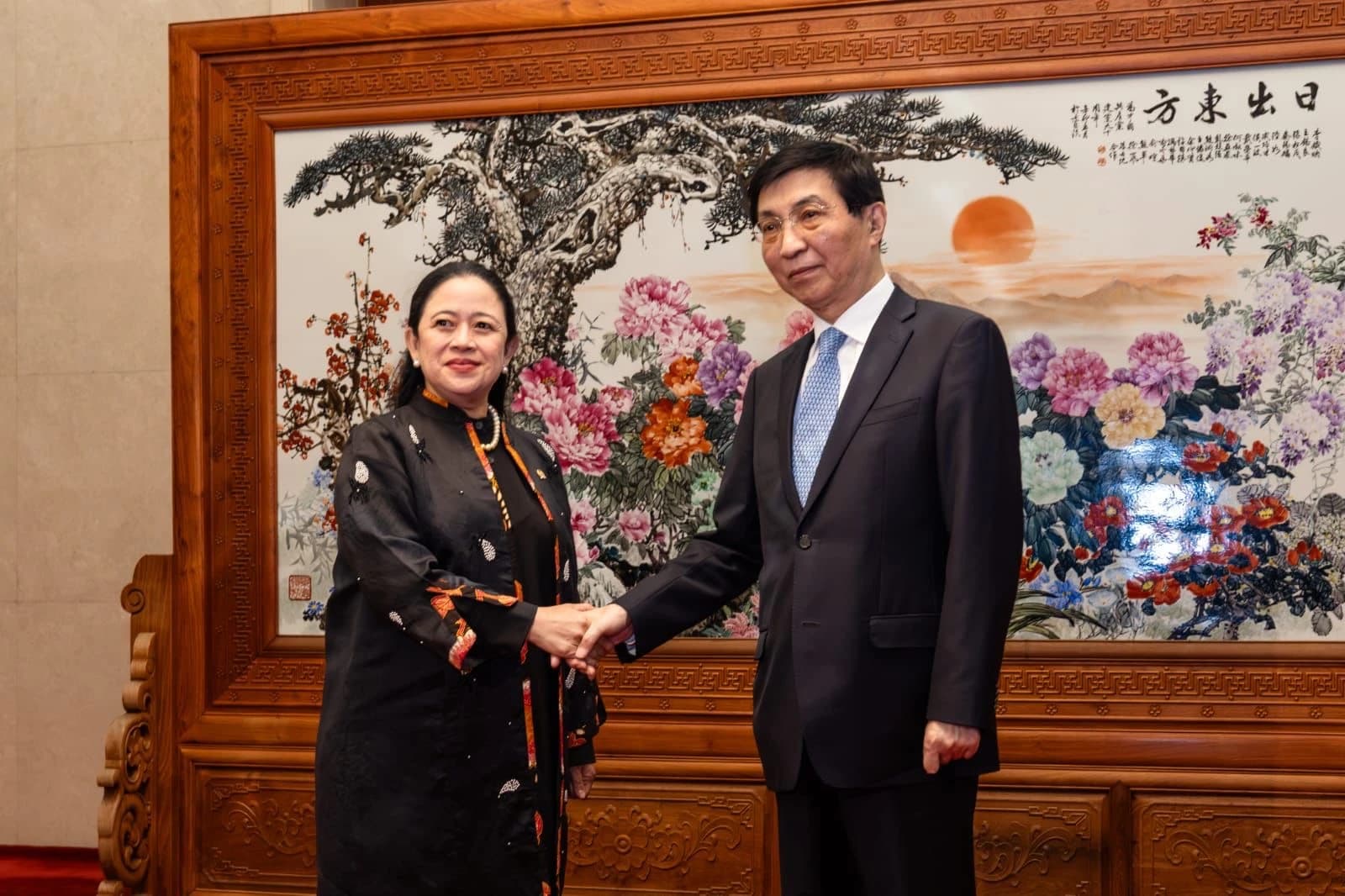
Wang Huning, who chairs the CPPCC National Committee and sits on the Communist Party’s Politburo Standing Committee, presided over the opening session, while Li Xi, the party’s top discipline chief, delivered a report. The presence of both senior figures shows the meeting is not a routine consultative gathering but part of a coordinated push to align party institutions behind the post-plenum agenda.
For investors, the significance is straightforward: China is signaling policy continuity and tighter central direction just as markets are searching for clues on the pace and composition of stimulus. The country’s policy stance still matters for everything from industrial metals and energy demand to Asian exporters, global luxury brands and multinational supply chains exposed to Chinese consumption and capex cycles.
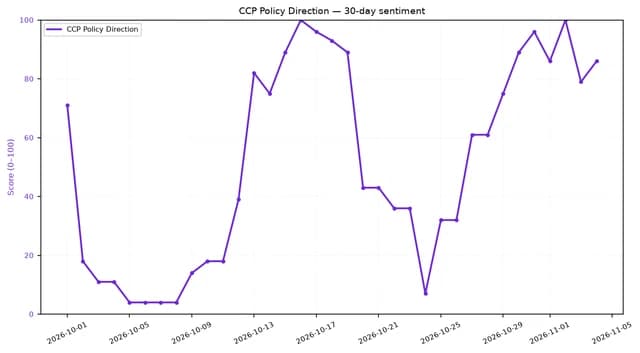
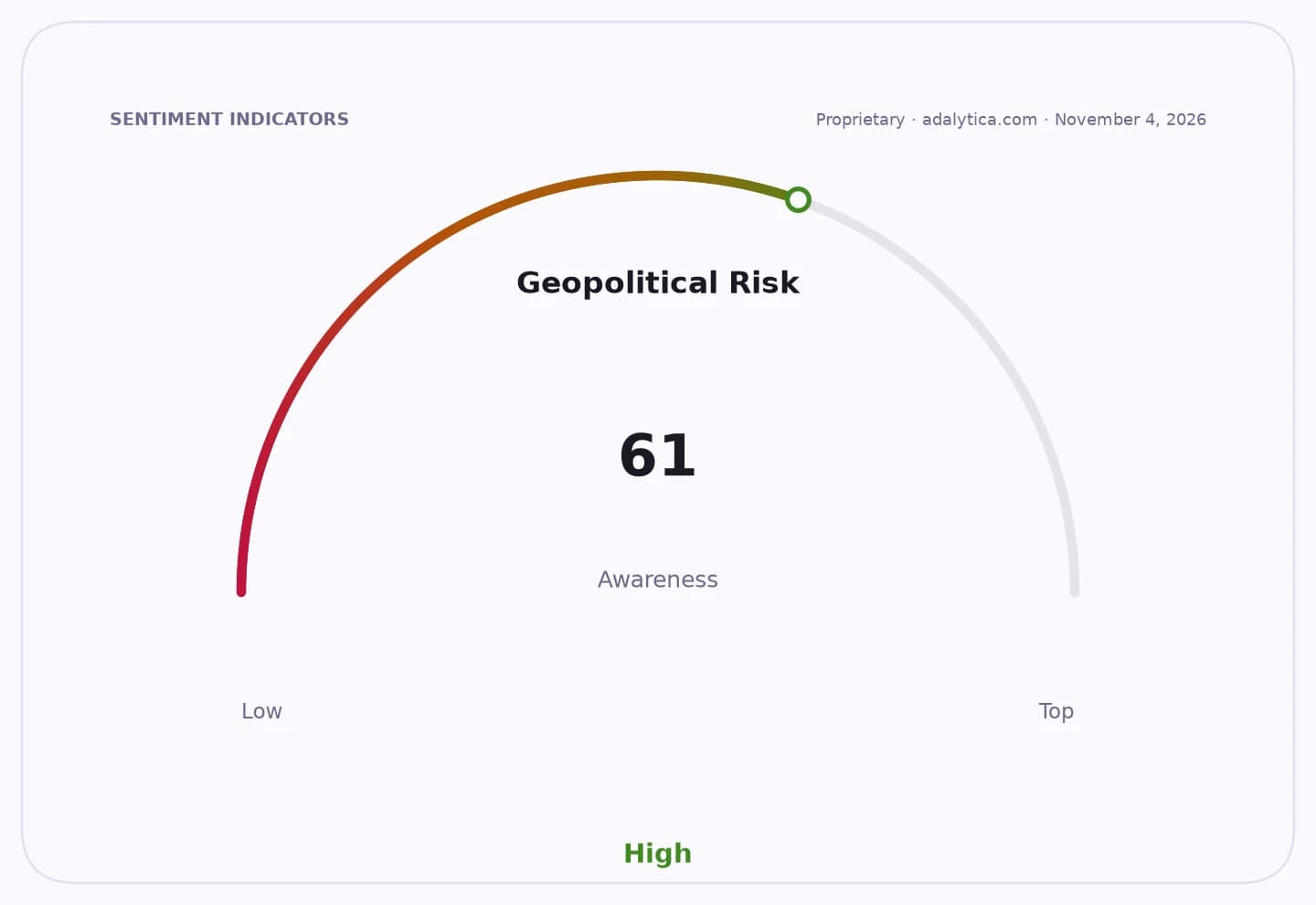
Adalytica’s China CCP Policy Direction sentiment gauge is flashing extreme greed, with a reading of 86, reflecting how sharply expectations for policy support have risen over the past month. Global stability sentiment is also elevated at 93, suggesting markets are pricing a more orderly geopolitical backdrop even as friction with the United States remains intense.
That disconnect between political messaging and market confidence is the real trade. Beijing is trying to project discipline, strategic coherence and policy durability; investors are trying to determine whether that translates into stronger domestic demand, more support for private activity and sustained investment in advanced manufacturing, AI infrastructure and other strategic sectors. If the leadership uses the plenum’s direction to accelerate fiscal, credit or industrial measures, China-sensitive assets could see another leg higher.
The bigger narrative is that China is entering a new phase of policy implementation, not policy invention. That favors investors who are positioned for selective upside in Chinese equities, commodities tied to Chinese demand and global companies leveraged to a steadier China cycle. The risk, of course, is that Beijing chooses control over stimulus and continuity over surprise.
For now, the message from Beijing is clear: the leadership wants every major party institution rowing in the same direction. The market should treat that as a cue to watch for concrete follow-through, because in China, the next meaningful move is often not the announcement itself but the machinery that turns it into policy.
| Entity | Gains | Losses |
|---|---|---|
| China policymakers | ▲Policy control and message discipline | ▼Room for market-driven surprises |
| Chinese equities tied to stimulus | ▲Higher odds of support measures | ▼Immediate policy ambiguity |
| Commodity exporters to China | ▲Potential demand uplift | ▼Weak China activity if follow-through disappoints |
| US-China friction | ▲Beijing’s defensive posture | ▼Cross-border confidence and cooperation |