China’s latest Communist Party plenum left the People’s Liberation Army’s top brass only partially rebuilt, underscoring that Xi Jinping’s anti-corruption drive inside the military is still not over and that key command posts remain in flux.
China Plenum Leaves PLA Leadership Vacancies
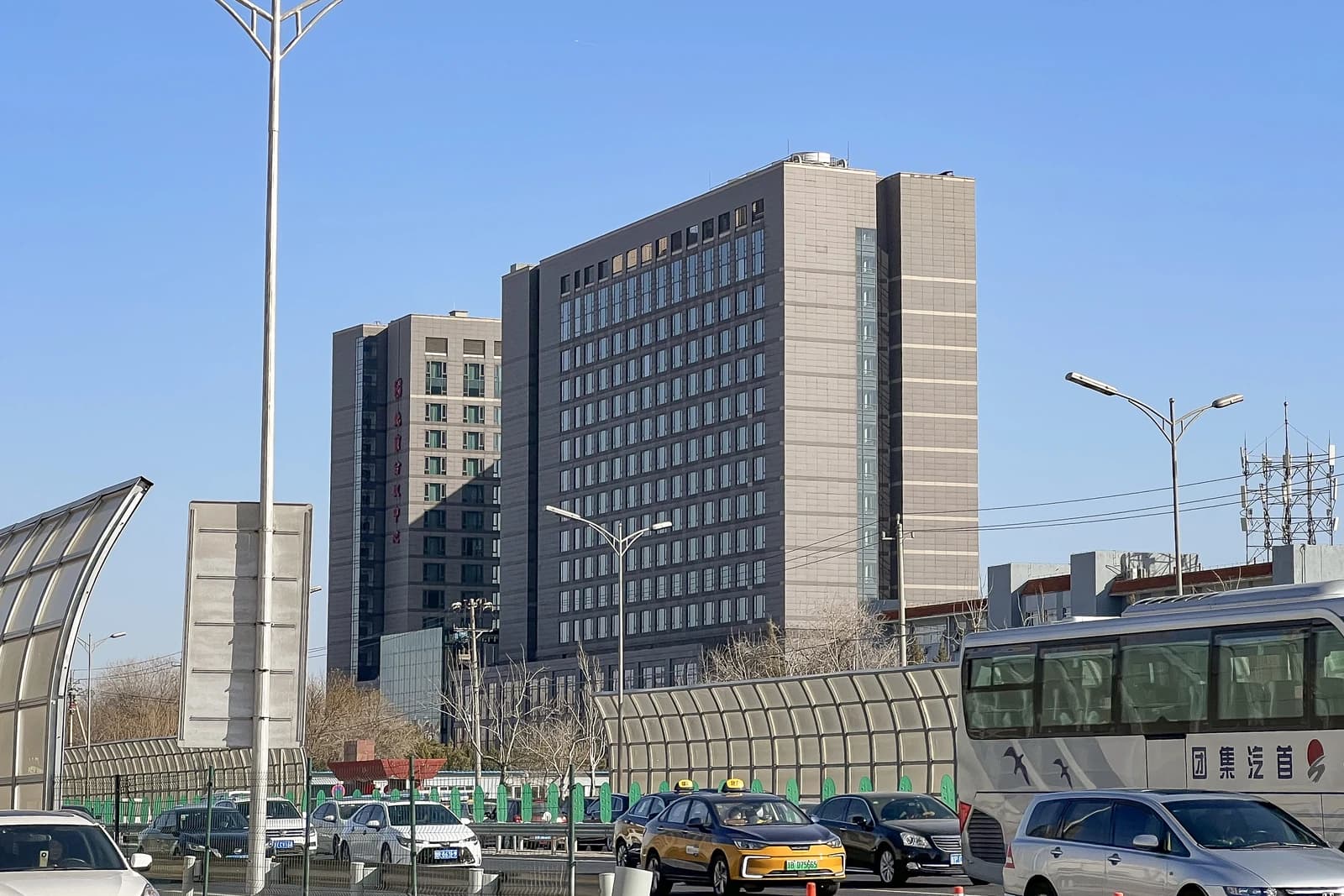
The Fourth Plenum of the 20th Central Committee ended on Oct. 23 without naming new members to the Central Military Commission beyond Zhang Shengmin’s promotion to vice chairman, even as several senior PLA figures were expelled and multiple command posts remain vacant. For investors, the message is less about personnel choreography than policy continuity risk: a military leadership still under investigation can slow decision-making, prolong internal uncertainty and keep China’s geopolitical posture harder to read.
Zhang, 67, has run the CMC’s discipline inspection role for more than eight years and helped oversee probes into senior officers accused of corruption. His elevation rewards a trusted enforcer, but the absence of broader promotions suggests Xi is still weighing replacements for posts including the Eastern Theater commander, Rocket Force commander, army and navy political commissars, the Armed Police commander and the CMC joint operations center deputy chief.
The plenum also confirmed the expulsion of 10 Central Committee members and four alternates, including nine top military officials. Among them were He Weidong, Miao Hua and several other senior generals tied to the recent purge, while 11 alternate members were elevated to full Central Committee status with none drawn from the military.
That matters economically because China’s leadership wants stability at a time when defense, technology controls and regional security are already feeding into trade and capital flows. A military reshuffle still unfinished can amplify questions about succession inside the PLA, reinforce the scale of Xi’s anti-graft campaign and keep foreign investors cautious on sectors exposed to policy and geopolitical risk.
China-focused assets reflected that unease. The iShares China Large-Cap ETF, FXI, fell to $33.19 on Oct. 2, after slipping below its 50-day moving average of $35.13 and 200-day moving average of $36.07, with RSI at 31.9, a level that points to oversold conditions. The iShares MSCI China ETF, MCHI, dropped to $51.24, also below both its 50-day and 200-day averages, while Alibaba, BABA, slid to $105.85, far under its 50-day average of $116.87 and 200-day average of $130.15.
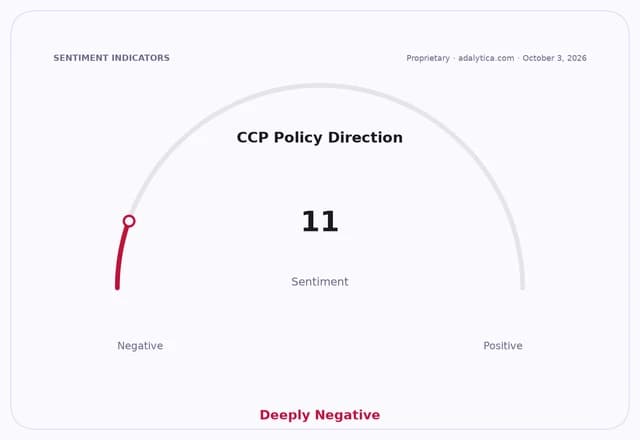
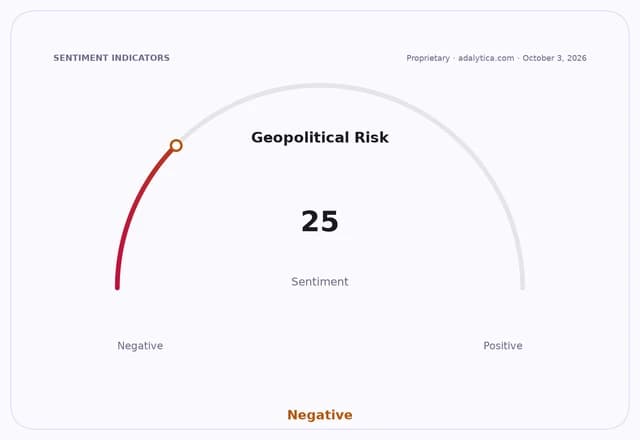
Adalytica’s China CCP Policy Direction Sentiment gauge was at 11, labeled “Extreme Fear,” while Global Stability Sentiment fell to 25, or “Fear,” reinforcing the market’s caution around China policy and geopolitical risk.
The next catalyst is whether Beijing fills the remaining military vacancies before the 2027 Party Congress. Until then, investors are likely to read the unfinished PLA reshuffle as another sign that China’s political cleanup is ongoing rather than complete.
| Entity | Gains | Losses |
|---|---|---|
| Xi Jinping | ▲tighter control over PLA | ▼faster normalization |
| Trusted allies in PLA | ▲promotion prospects | ▼stalled uncertainty |
| China equities | ▲possible clarity later | ▼policy and geopolitical discount |
| Foreign investors | ▲eventual cleaner chain of command | ▼near-term visibility on China risk |