China’s Communist Party is heading into its most consequential personnel reshuffle in years, with a wave of younger officials set to move up even as Xi Jinping keeps a firm grip on power.
China Party Reshuffle Raises Succession Questions
The immediate significance is not that Xi is about to leave — he is not — but that the party is entering a period in which the next layer of leadership will be rebuilt around officials born in the late 1960s and 1970s, a cohort with different formative experiences and potentially different instincts on economics, governance and technocracy. That matters for investors because personnel in Beijing is policy in China: the officials who rise over the next 12 months will shape the tone of industrial policy, local fiscal management, regulation and the eventual question of succession.
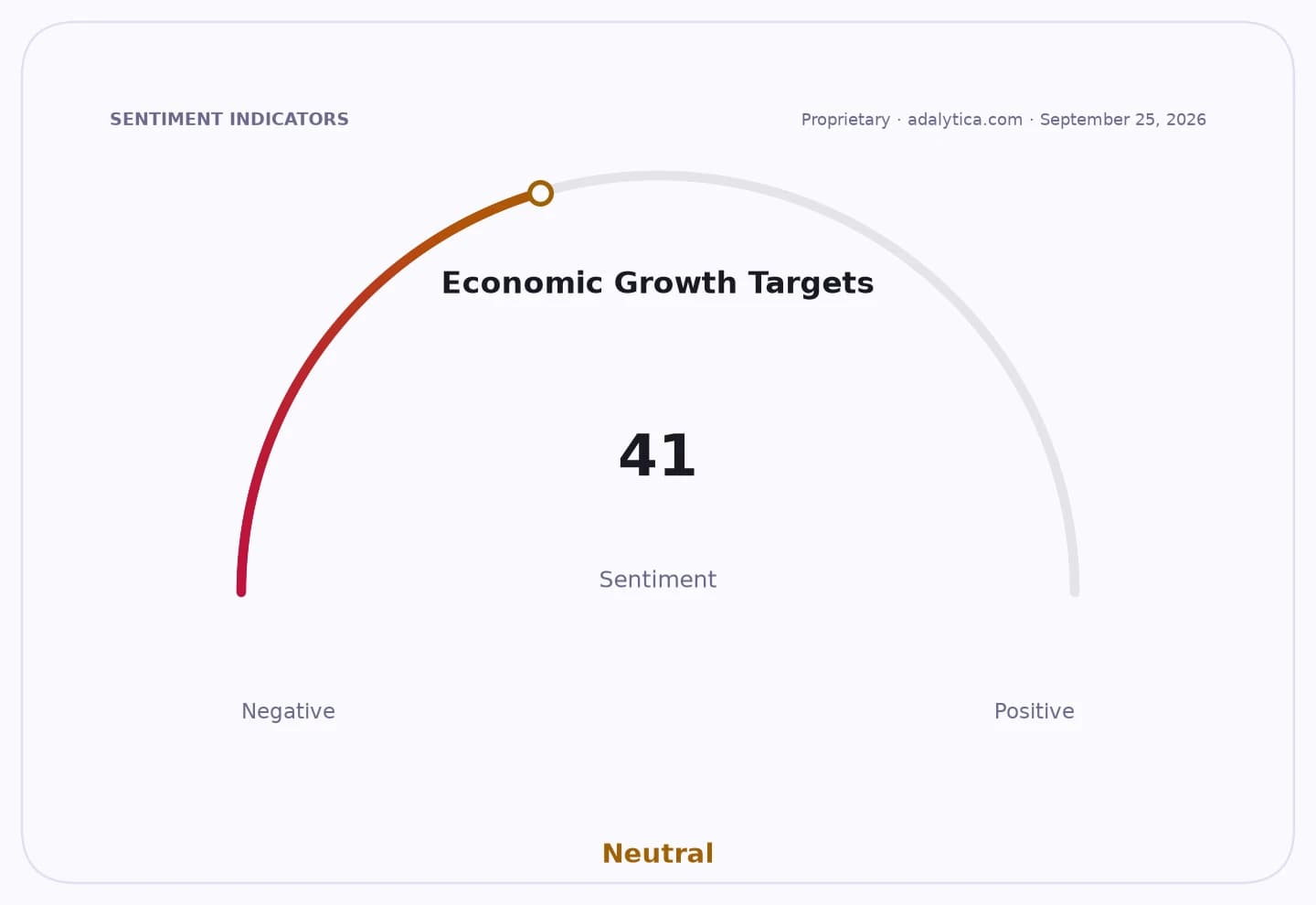
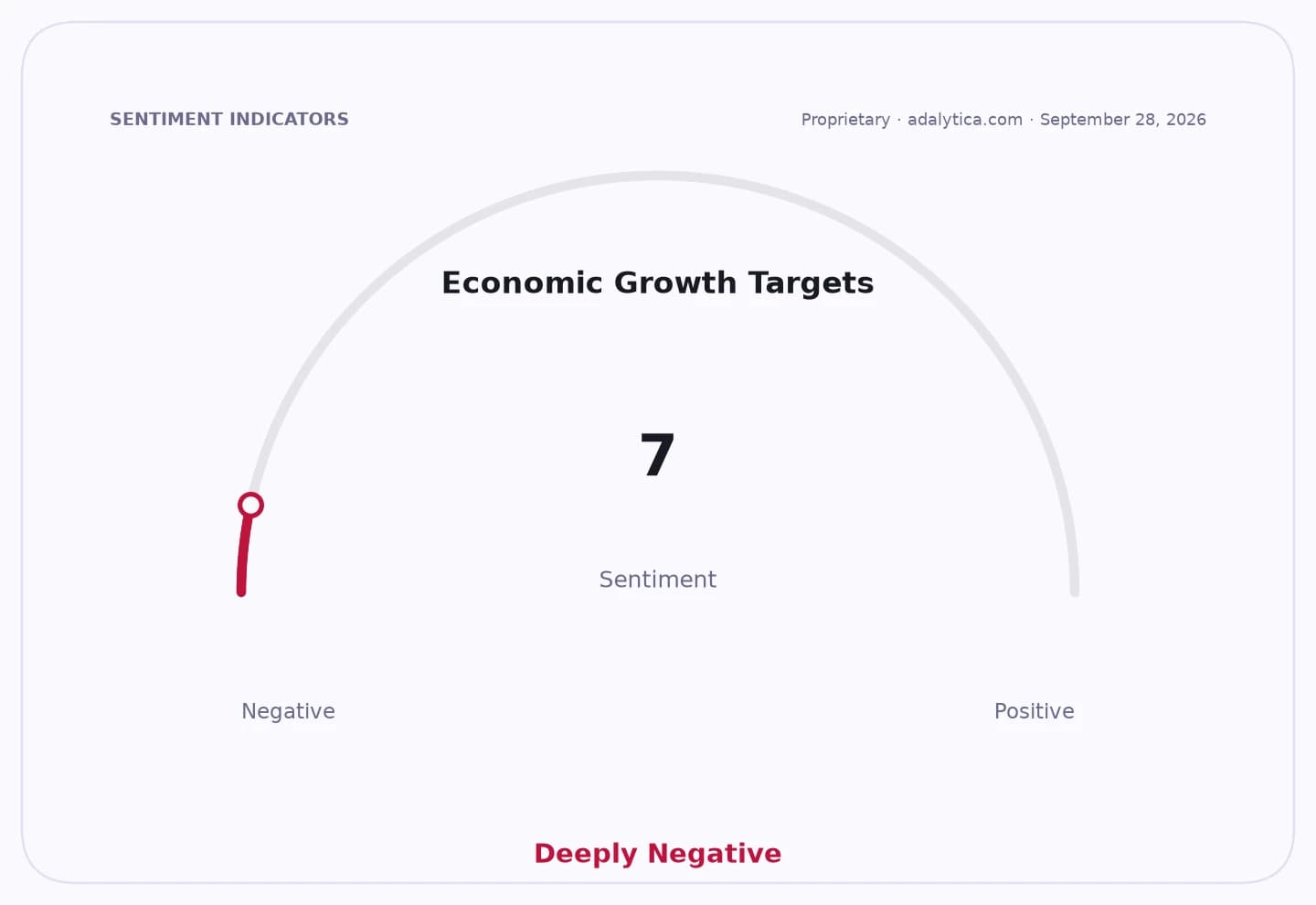
Sentiment IndicatorsⓘProprietary · adalytica.com · September 28, 2026
This is a snapshot — live sentiment, awareness and momentum for 130+ markets update continuously in the dashboard.Open AlphaPulse
A key milestone comes this month, when around 370 members of the Central Committee meet from Oct. 26-29. Officially, the gathering will focus on “full and rigorous party self-governance” — shorthand for obedience to Xi. In practice, it begins the process of deciding who fills hundreds of senior posts before the 22nd party congress in 2032, when Xi will be 79 and the question of who follows him will become unavoidable.
The looming turnover is large. Based on customary retirement rules, roughly two-thirds of the current Central Committee could step down at next year’s congress, and the share of so-called seventh-generation officials could rise from about 8% to more than 40%. That would mark the first broad elevation of cadres with little or no memory of the Mao era and much deeper exposure to China’s reform years of the 1980s.
Xi has already distorted the normal succession ladder. He scrapped presidential term limits and, through an extensive anti-corruption campaign, cut through the sixth generation of leaders that was expected to succeed the older cohort. By one count, about one-fifth of the Central Committee’s voting members have been purged over the past five years, shrinking the pool of obvious heirs and reinforcing the president’s dominance.
That leaves a new crop of officials to watch. Among the names drawing attention are Zhu Zhongming, 54, newly appointed acting mayor of Shanghai; Liu Jie, 56, governor of Zhejiang; and A Dong, 55, head of the Communist Youth League. Such figures are not yet heirs apparent, but they are increasingly the type of administrators Beijing may rely on as older political heavyweights age out.
The cohort is notable for its credentials. More than half of the top 100 or so seventh-generation officials identified in a study by Li Cheng of the University of Hong Kong hold PhDs, with engineering and economics especially common fields. Some also spent time outside mainland China or in state-owned enterprises, a background that could make them more commercially literate than the revolutionary-era cadres who dominate the current top ranks.
For markets, that cuts both ways. A younger leadership class could, in theory, be more pragmatic on growth, debt and innovation, especially if Beijing needs to stabilize confidence in the property sector and revive weak domestic demand. But the stronger near-term message is continuity: the next generation is still being selected inside a tightly controlled political system built around loyalty to Xi, not around institutionalized pluralism.
That makes the leadership transition more important, not less. The party is likely to face a difficult balancing act between preserving control and refreshing its top ranks with officials who are younger, more educated and less defined by Maoist politics. The transition may be orderly on paper, but it could also be turbulent beneath the surface if Xi delays naming a successor and must eventually choose from a group of leaders he has not yet fully vetted or trusted.
For investors in Chinese assets, including the FXI and MCHI ETFs, the message is that political succession is moving from a distant governance issue to a concrete medium-term market risk. Recent weakness in those funds leaves them trading below their 50-day and 200-day moving averages, reflecting persistent skepticism about China’s growth and policy outlook. The next phase of the party’s personnel shuffle will not resolve that uncertainty, but it will determine whether Beijing enters the 2030s with a more technocratic bench — or with succession risk still unresolved.
| Entity | Gains | Losses |
|---|---|---|
| 7th-generation cadres | ▲Faster promotion | ▼Little room for error |
| Xi Jinping | ▲Continued control | ▼Succession clarity |
| Chinese equities ETFs (FXI, MCHI) | ▲Policy renewal hopes | ▼Political uncertainty |
| Sixth-generation officials | ▲— | ▼Further marginalization |