China has rewritten the rules for enforcing its audit law, a move that strengthens central oversight of fiscal spending and brings state-owned resources more explicitly into the audit net, deepening Beijing’s push for tighter control over public money, state assets and local-government execution.
China audit rules tighten oversight of state spending

That matters because audits in China are not just bookkeeping exercises — they are a policy lever. By widening the scope of special investigations and formalizing a registration-and-reporting system for any attempt to interfere with audits, Beijing is signaling that compliance, rectification and accountability are becoming harder requirements for ministries, provinces and state-linked entities. The revised regulations take effect on Dec. 1.
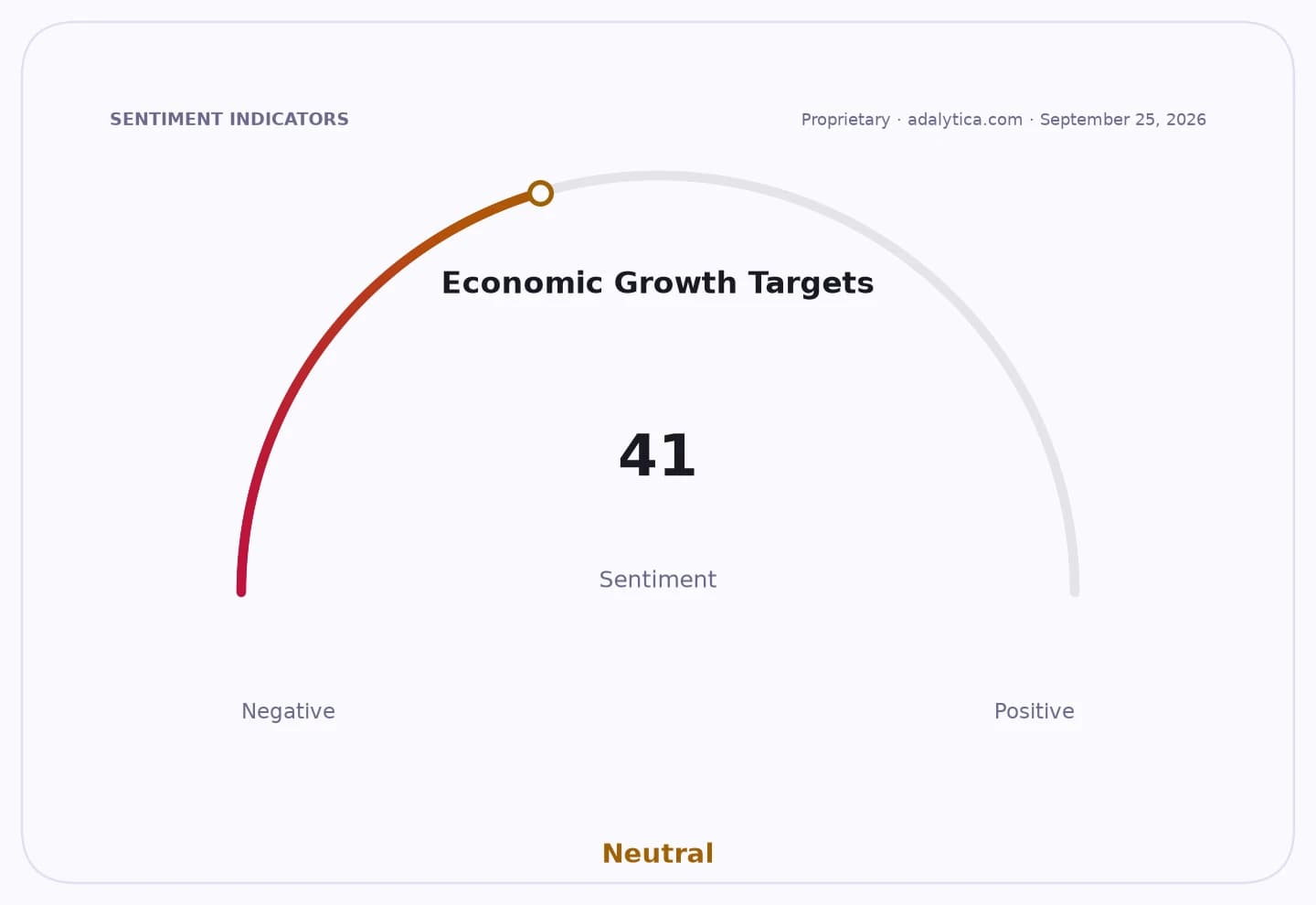
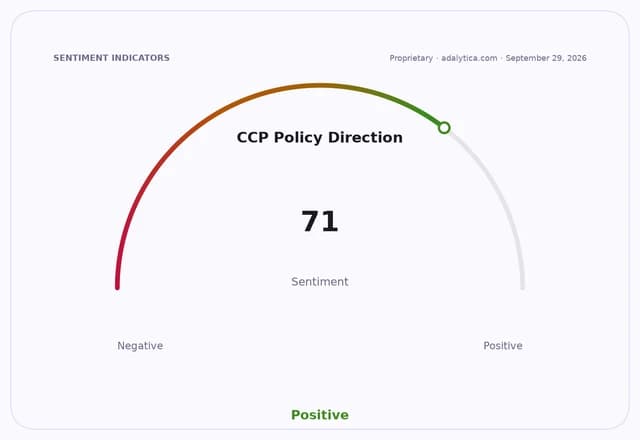
Sentiment IndicatorsⓘProprietary · adalytica.com · September 29, 2026
This is a snapshot — live sentiment, awareness and momentum for 130+ markets update continuously in the dashboard.Open AlphaPulse
For investors, the immediate implication is not a direct market shock but a higher governance bar across the parts of the economy most dependent on state funding, policy support and local execution. Local governments, infrastructure contractors, state-owned enterprises and firms reliant on public procurement could face more frequent scrutiny, more remediation costs and slower disbursement if audit findings trigger delays or follow-up reviews. That is especially relevant in a period when China is already trying to stabilize growth without loosening control.
The rules also underscore a familiar tension in Chinese policy: the leadership wants cleaner balance sheets and fewer leakages, but it is pursuing that goal through tighter supervision rather than broader liberalization. In practice, that can improve capital efficiency over time, but it can also raise near-term friction for project pipelines, procurement cycles and administrative approvals. The message to local officials is clear — audit interference will be documented, reported and punished.
The timing is notable for markets watching China through the lens of policy credibility. With Chinese equities still trading at depressed levels relative to global peers, investors are looking for evidence that Beijing can improve the quality of growth, not just the quantity. More rigorous audit enforcement could support that narrative over the medium term by curbing waste and improving fiscal discipline. But in the short term, it also raises the risk that some spending programs and state-linked activity will face added delay.
That makes the policy more relevant than the headline alone suggests. It is part of a broader campaign to consolidate central authority over the machinery of the state, including the flow of money, the use of resources and the conduct of local officials. For global investors, the takeaway is straightforward: China is trying to make its system more controllable, even if that comes at the cost of speed.
For equity investors, that favors quality over leverage and discipline over policy dependence. Companies and sectors with transparent governance, lower exposure to local-government budgets and less reliance on discretionary state spending should be better positioned than those tied to opaque procurement or fragile public finances. The audit rewrite is a reminder that in China, policy risk is often a governance story first and a macro story second.
| Entity | Gains | Losses |
|---|---|---|
| Central government | ▲Tighter control | ▼More policy burden |
| Local governments | ▲Clearer rules | ▼Less discretion |
| State-owned enterprises | ▲Cleaner oversight | ▼Higher scrutiny |
| Contractors reliant on public spending | ▲Better discipline | ▼Slower payments |