China’s stock market looks set to surrender part of Monday’s rebound, a reminder that the rally still lacks the kind of conviction investors want before calling a durable bottom.
China Stocks Face Pullback After Monday Rebound

The Shanghai Composite jumped 1.08% on Monday to 3,638.03, snapping a two-day losing streak, but the setup for Tuesday is softer: U.S. technology shares weakened again, crude oil slid sharply, and the global tone is cautious. For Chinese equities, that matters because the market has been moving on a mix of stimulus hopes and fast-moving sentiment rather than a clean improvement in earnings or growth.
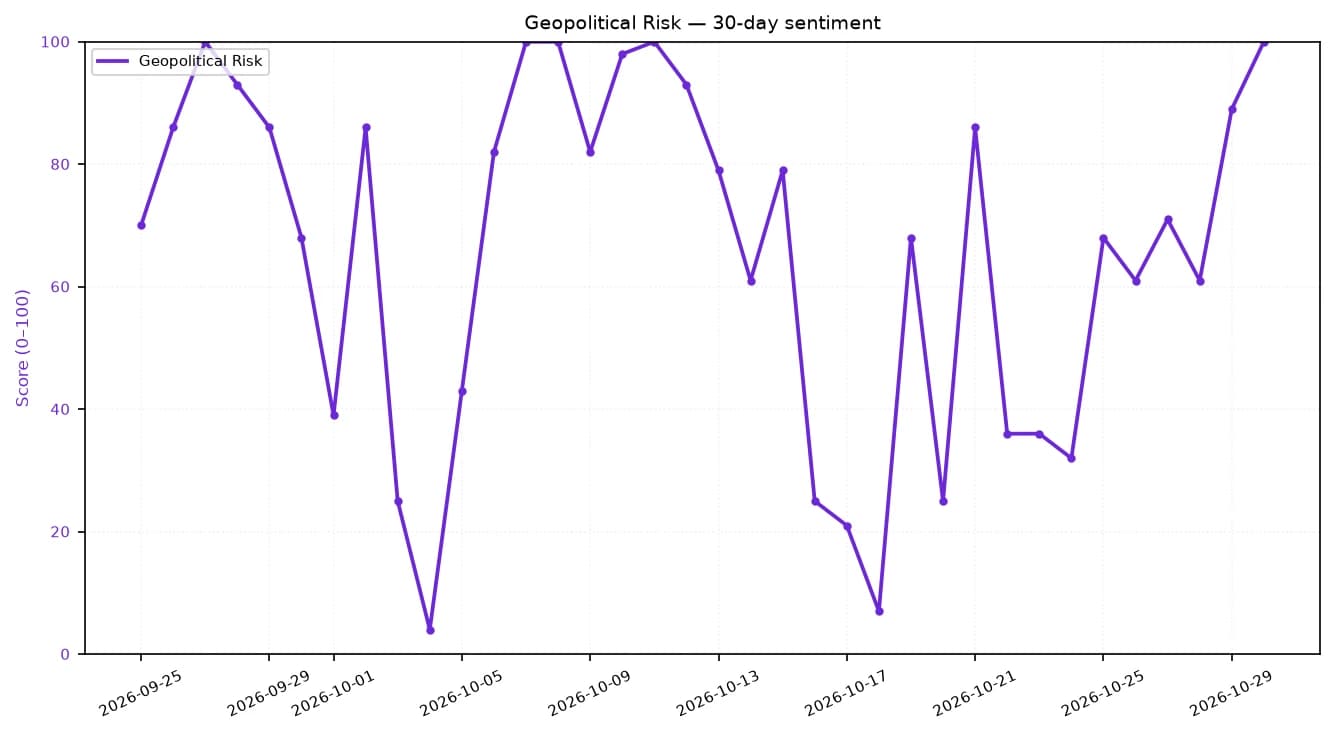
Sentiment Indicators
That makes the latest move economically significant. When a market can rally one day and hand back gains the next, it usually means investors are still debating whether policy support is enough to offset slowing activity, pressure in property, and concern over the pace of the recovery. The Shanghai index’s move between 3,594.77 and 3,648.13 on Monday shows buyers are willing to step in, but only selectively. The broader Shenzhen Composite rose 1.94%, helped by technology, finance and utilities, yet energy stocks lagged, underscoring how narrow leadership remains.
The overseas backdrop is not helping. The Nasdaq fell 1.07% on Monday as investors again worried about the outlook for artificial intelligence stocks, while energy shares were hit after crude oil dropped 7.45% on reports of talks aimed at easing the U.S.-Iran conflict. For China, that combination matters in two ways: weaker global tech sentiment can spill over to mainland and Hong Kong growth shares, while lower oil prices may ease some inflation pressure but also reflect softer expectations for world demand.
That tension is showing up in China-focused exchange-traded funds. The iShares MSCI China ETF, FXI, closed at 33.19, still below its 50-day moving average of 34.09 and its 200-day average of 35.46. Its relative strength index was 40.1, which suggests the fund is neither deeply oversold nor showing strong momentum. The broader iShares MSCI China ETF, MCHI, finished at 49.40, also below both its 50-day and 200-day moving averages, with an RSI of 25.8, a level that points to weak price action but also hints the market may be getting stretched to the downside.
For long-term investors, that is the real story behind a one-day bounce and a possible giveback. China stocks are still trading as a policy-driven market, not a fundamentals-driven one. Until growth data improve and the authorities prove they can stabilize confidence without just leaning on headlines, rallies are likely to remain vulnerable. Traders may chase the bounce, but patient investors should treat it as a watchlist market, not a rush-in market.
| Entity | Gains | Losses |
|---|---|---|
| Chinese policymakers | ▲Time to stabilize sentiment | ▼Pressure to deliver results |
| Bullish traders | ▲Tactical rebound opportunities | ▼Quick profit-taking risk |
| China ETF investors | ▲Potential oversold bounces | ▼Weak trend and volatility |
| Global risk assets | ▲Easier oil and cautious positioning | ▼Tech-led selloff spillover |