India-focused exchange-traded funds are under pressure as the market prices a higher geopolitical risk premium after fresh alerts on the China border, with the move reinforcing demand for defense, infrastructure and domestic security spending.
India ETFs Slip as Border Tensions Rise
The most investable takeaway is not the headline tension itself, but what it does to capital allocation. When border anxiety rises, governments tend to accelerate procurement, logistics upgrades, surveillance systems and road-building in remote terrain — a mix that can benefit Indian defense contractors, infrastructure firms and suppliers tied to military mobility. At the same time, risk appetite for broader India exposure can soften, especially in vehicles like the iShares MSCI India ETF, INDA, which has slipped to $47.48 from $53.42 earlier this year and is now trading below its 50-day moving average of $47.87 and well under its 200-day average of $49.17.
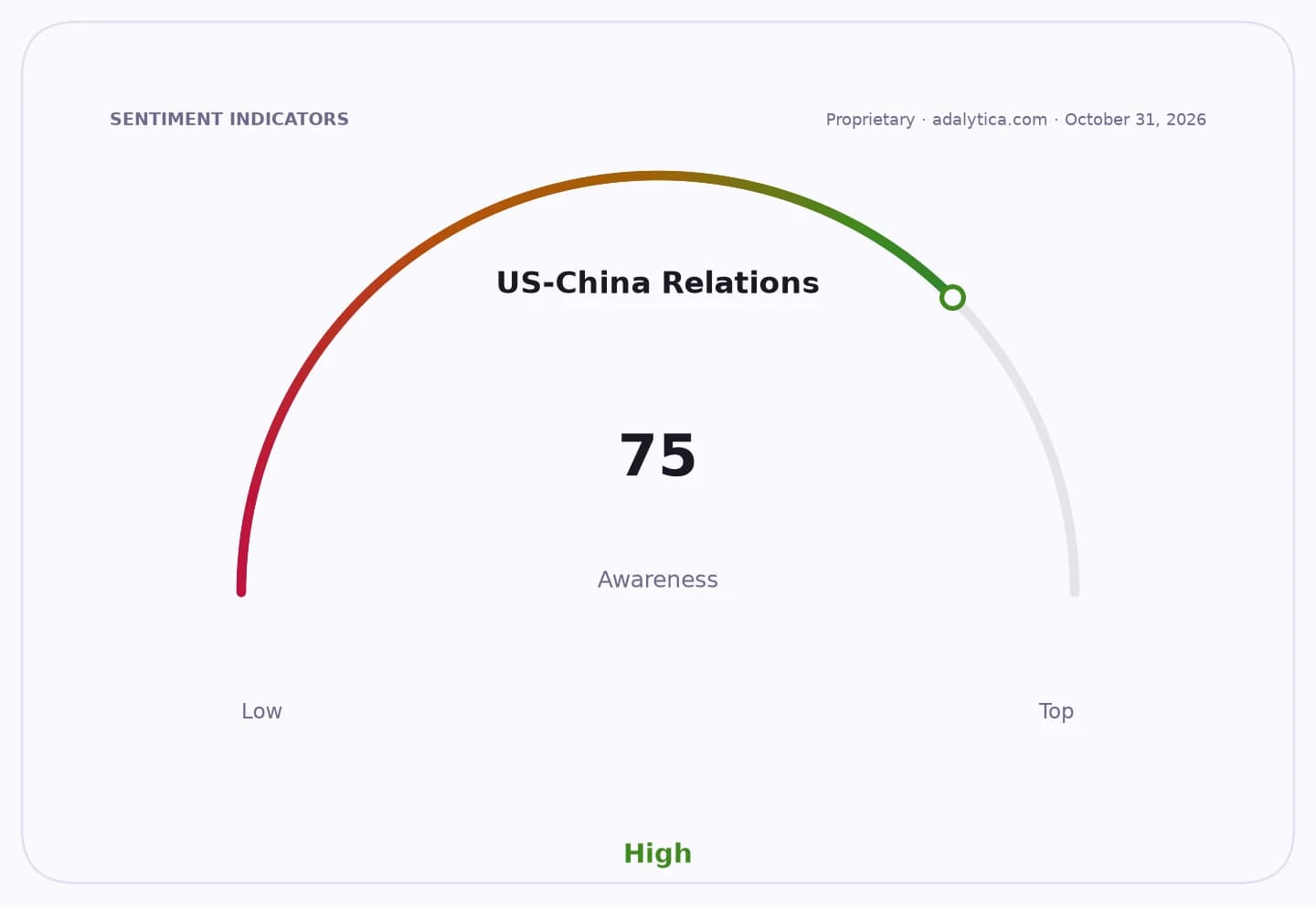
Sentiment Indicators
That technical backdrop matters because it shows the market has already started to de-rate the trade. INDA’s relative strength index is at 60.3, still constructive, but the fund has not recovered its longer-term trend even after a brief rebound from the October low. For investors, that creates a split screen: broad India beta looks vulnerable if border tensions keep escalating, while selective exposure to defense and strategic infrastructure could outperform if New Delhi responds with more spending and faster execution.
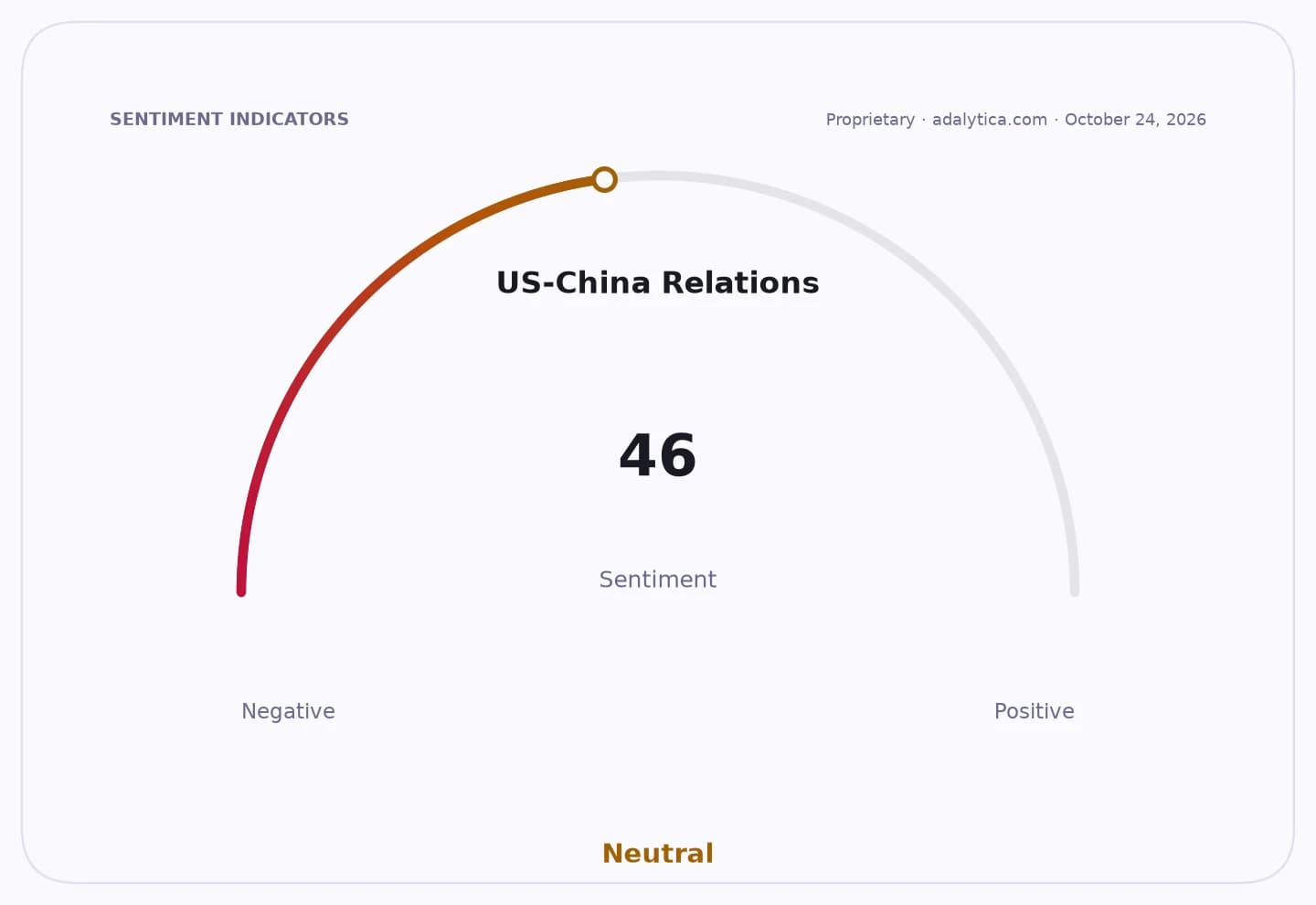
The pressure is not confined to India. China-facing sentiment is also getting more complicated across Asian markets, with the broader US-China relations gauge from Adalytica showing a sharp one-day improvement in awareness even as the relationship remains only neutral. That kind of volatility usually means traders are reacting faster than policymakers can calm the situation, which is exactly when tactical positioning matters most.
Hong Kong remains another useful proxy. The EWH ETF closed at $22.42, back near its 50-day average of $22.37 and just below its 200-day average of $22.57, suggesting investors are treating the region as a barometer for China risk rather than a standalone story. China equities through FXI look weaker still, with the fund at $33.01, below both its 50-day average of $34.19 and its 200-day average of $35.52. In other words, markets are not merely pricing a diplomatic flare-up — they are pricing a wider cautionary stance toward China-linked assets.
Our thesis is that the market underestimates how quickly border tensions can redirect money into security and industrial capex. If the situation on the China border remains tense, the winners are likely to be companies that sell into defense readiness, transport resilience and domestic infrastructure buildout. The losers are the broad passive exposure trades that rely on calm relations and uninterrupted regional growth. For investors, this is a moment to favor the picks-and-shovels of national security over the country ETFs that merely carry the headline risk.
| Entity | Gains | Losses |
|---|---|---|
| Indian defense contractors | ▲procurement tailwind | ▼valuation discount risk |
| Infrastructure builders | ▲border capex demand | ▼delayed project flows |
| INDA ETF holders | ▲tactical rebound possible | ▼higher geopolitical premium |
| FXI/EWH investors | ▲defensive rotation pockets | ▼China-linked risk sentiment |