China’s call for countries to respect the non-interference principle comes as the election countdown tightens and markets are already treating geopolitical friction as a direct risk to Chinese assets and broader global stability.
China ETF FXI and MCHI Fall on Geopolitical Risk
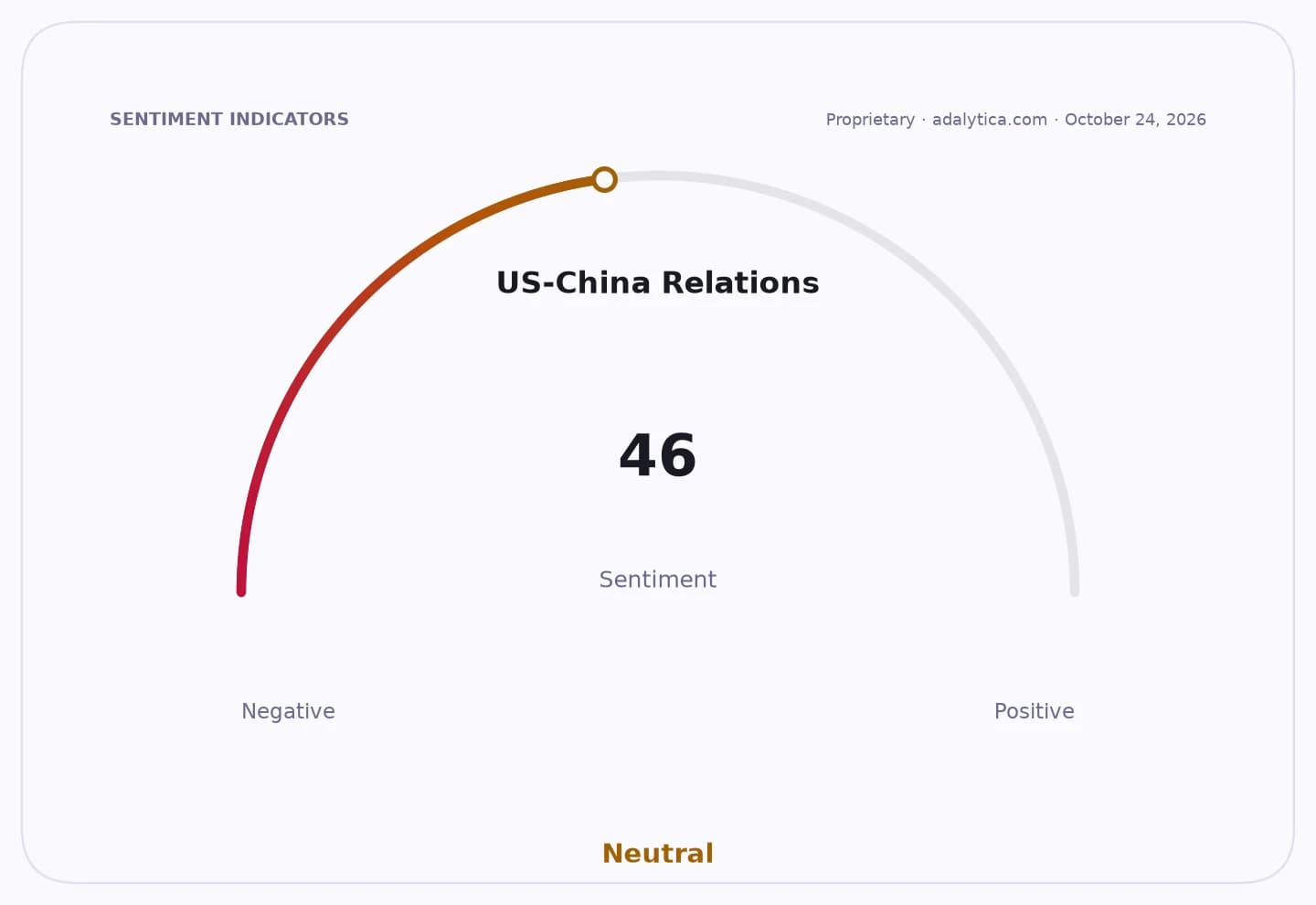
US-China Relations
The warning matters because election periods often sharpen scrutiny of outside influence, trade policy and diplomatic alignment, all of which can move capital flows, sentiment and risk appetite well beyond the ballot box. For investors, the message lands against a backdrop of weaker Chinese equity pricing and rising caution in China-linked funds.
Sentiment Indicators
The iShares China Large-Cap ETF, FXI, closed at $32.69 on Oct. 29, down from $32.46 the previous session and well below its 50-day moving average of $34.24 and 200-day moving average of $35.56. Its relative strength index was 26.3, a conventional technical reading that points to deeply oversold conditions, while the MACD remained negative at -0.491.
The iShares MSCI China ETF, MCHI, ended at $48.96, also below its 50-day moving average of $52.57 and 200-day moving average of $55.60. Its RSI of 10.2 suggests extreme downside pressure by standard technical measures, even as the fund has been under sustained selling since early October.
US-China Relations — 30-day sentimentadalytica.com
Explore this data interactively — full history, time series and cross-market comparisons.
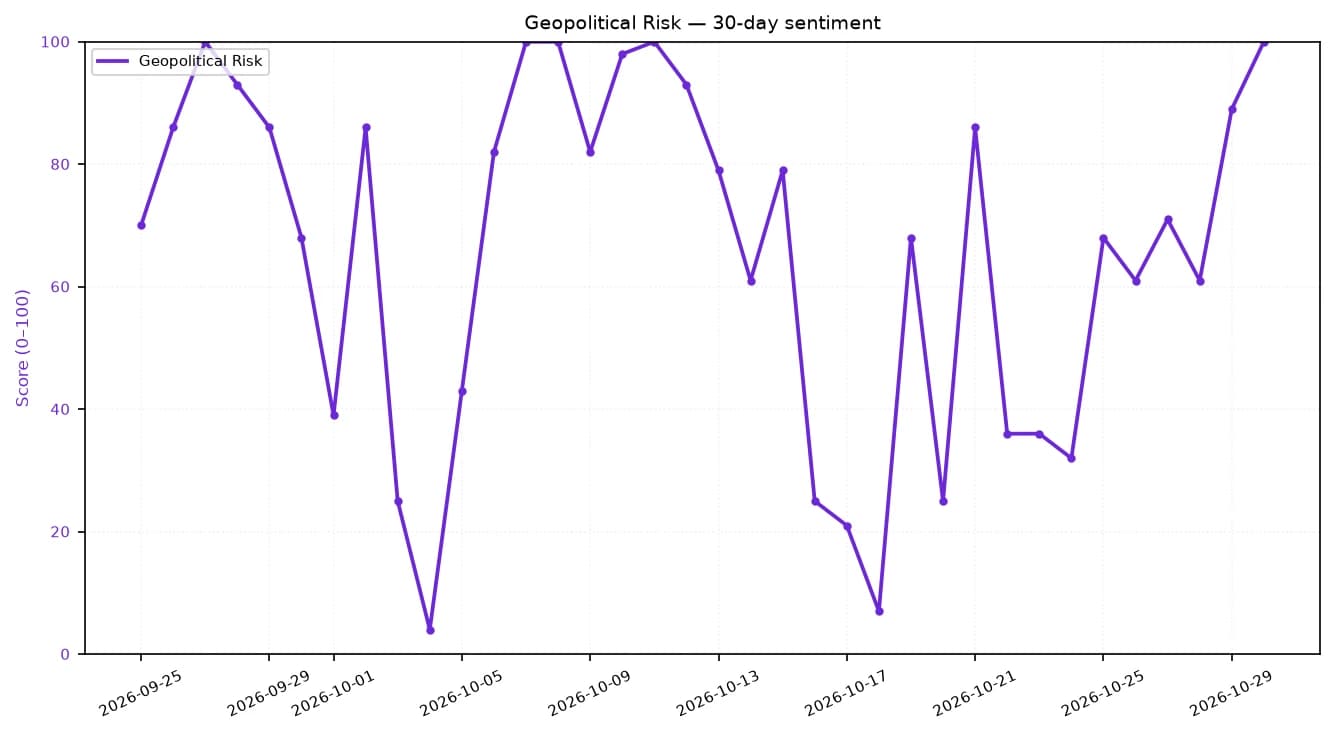
The market backdrop is consistent with a broader deterioration in China-related risk appetite. Adalytica’s US–China Relations Sentiment gauge sits at 68, labeled neutral, but awareness has jumped 20 points in a day and 29 points over a week, showing how quickly investors are focusing on the diplomatic narrative. Its Global Stability Sentiment reading is at 100, or extreme greed, while awareness has dropped to 7, signaling heavy attention on geopolitical flashpoints.
For investors, the main issue is whether the election becomes a catalyst for a more confrontational policy tone or a period of restraint. That distinction will shape how traders position in Chinese equities, EM risk, currencies and sectors sensitive to cross-border policy shifts.
The next catalyst is the election result itself, along with any comments from Beijing or major capitals on legitimacy, foreign influence and bilateral ties.
| Entity | Gains | Losses |
|---|---|---|
| Chinese authorities | ▲Control of election narrative | ▼External scrutiny |
| FXI holders | ▲Potential oversold bounce | ▼Further geopolitical pressure |
| MCHI holders | ▲Rebound if tensions ease | ▼Ongoing risk-off selling |
| Global investors | ▲Clarity after vote | ▼Near-term volatility |