China is gathering representatives from almost 100 countries this week in a bid to put itself at the center of the debate over global governance, a move that matters for trade, technology rules and the geopolitical climate investors are already pricing into emerging markets.
China Hosts Global Governance Forum in Xiong'an
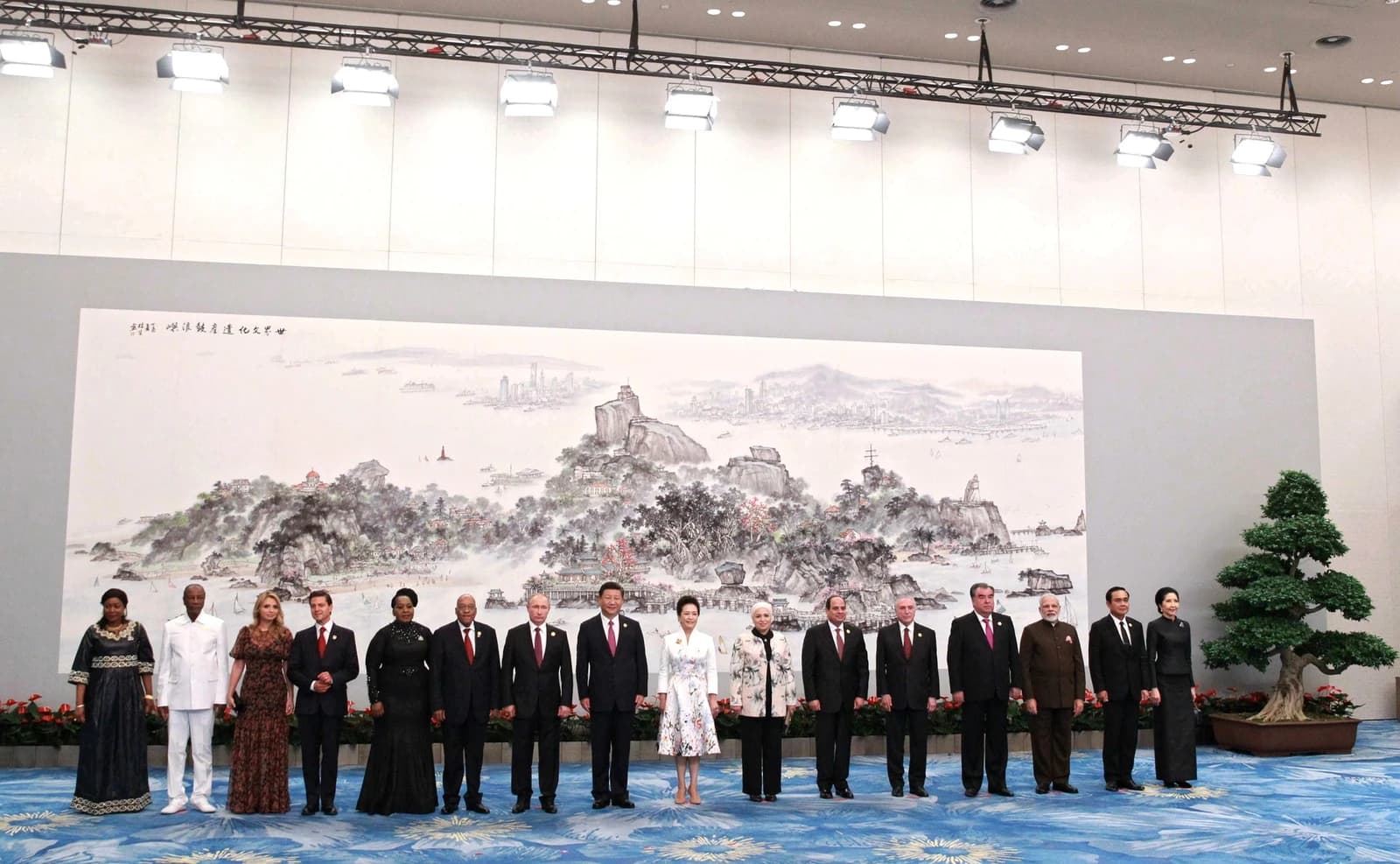
The forum, set for Oct. 23-25 in Xiong'an in Hebei province, will focus on reforming the global governance system, the role of the United Nations, climate change, artificial intelligence and international trade, according to the Chinese People’s Institute of Foreign Affairs, or CPIFA. Delegations from the Global South, Europe and the Americas have confirmed attendance, underscoring Beijing’s effort to cast the event as a broad multilateral gathering rather than a China-only diplomatic exercise.
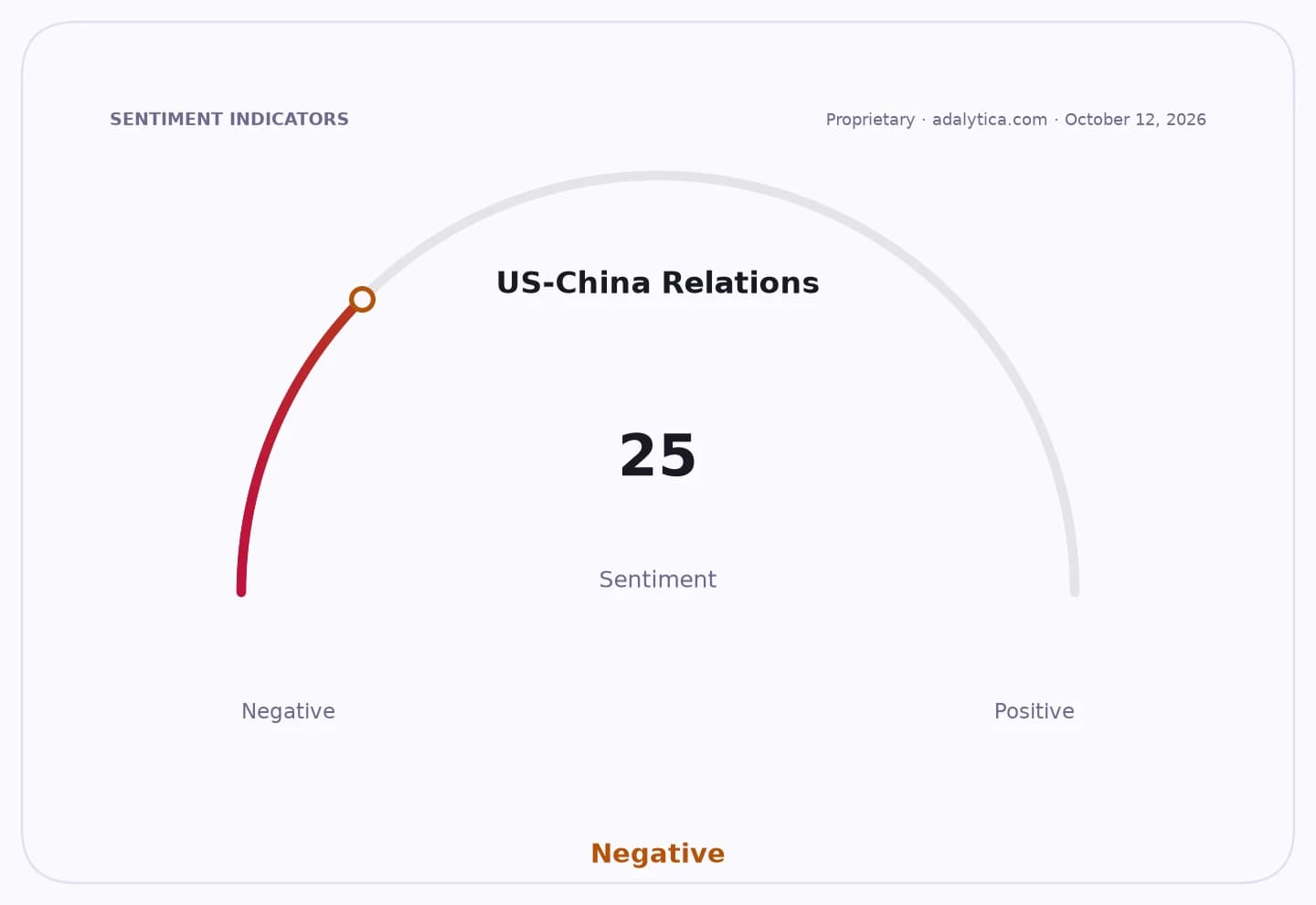
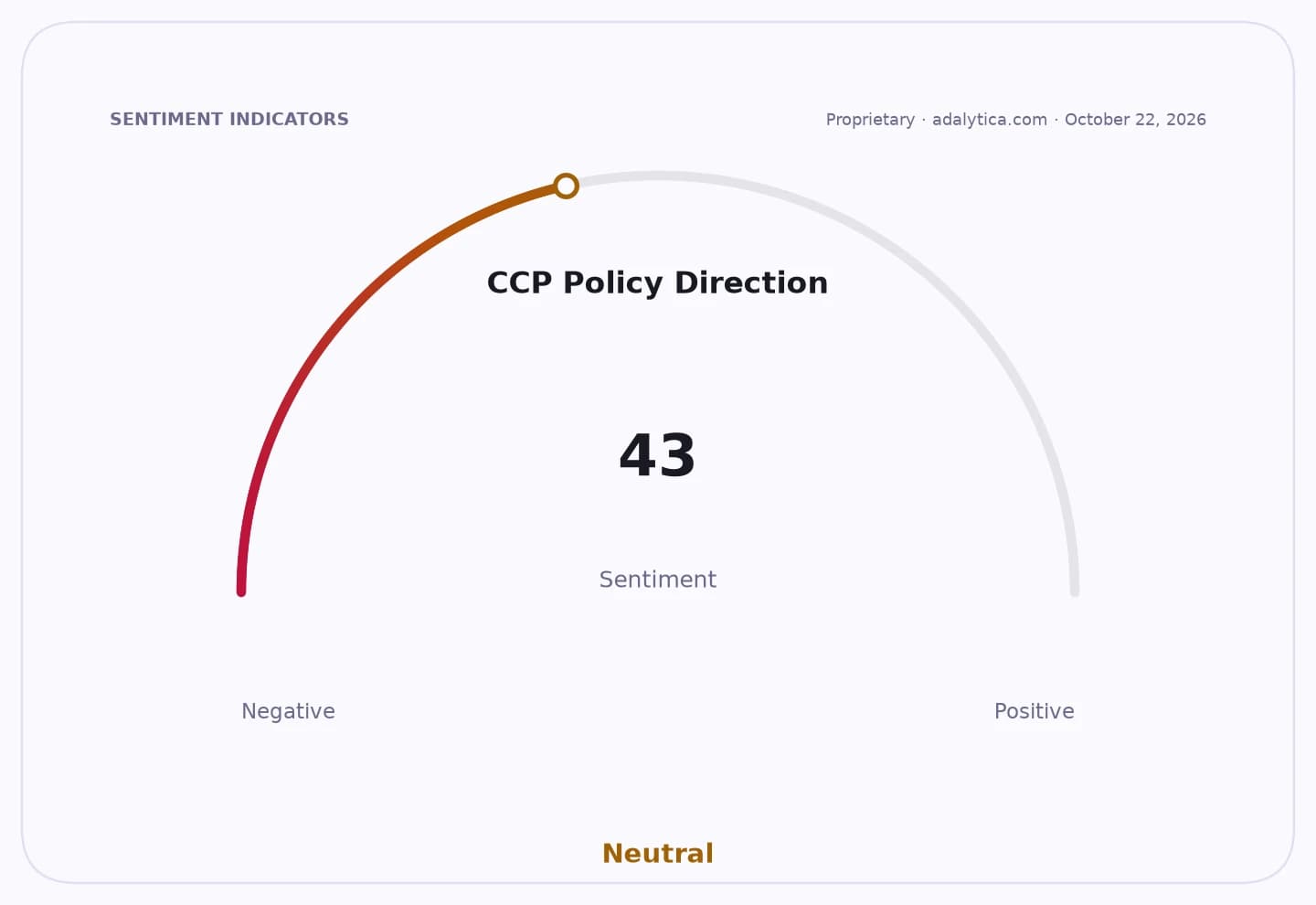
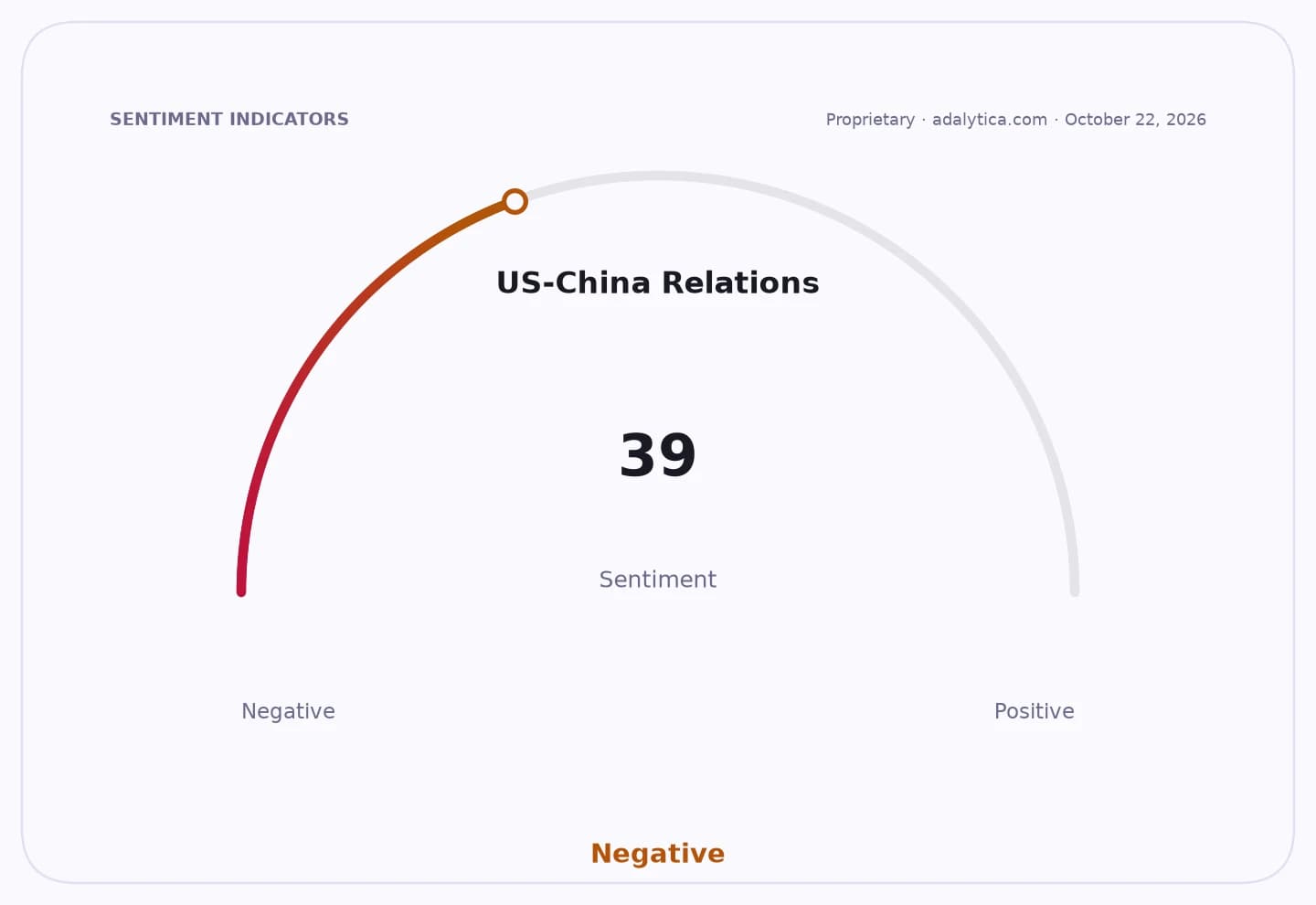
Sentiment IndicatorsⓘProprietary · adalytica.com · October 22, 2026
This is a snapshot — live sentiment, awareness and momentum for 130+ markets update continuously in the dashboard.Open AlphaPulse
For Beijing, the significance is economic as much as diplomatic. China is trying to shape the rules around trade, AI and climate cooperation at a time when supply chains remain strained by tariffs, industrial policy and geopolitical fragmentation. A successful forum would reinforce China’s claim that the existing international order needs adjustment — and that Beijing wants a larger hand in drafting whatever comes next.
Investors will read the gathering through the lens of risk appetite for China and broader emerging markets. Chinese equities, as reflected by the FXI ETF, have slipped to $32.94 from $40.34 in January and are trading below both their 50-day and 200-day moving averages, while EEM is holding above its longer-term average but remains technically fragile with RSI readings around 33.7 and a negative MACD. That suggests markets are still cautious on China and the developing world even as officials try to project diplomatic momentum.
The timing also intersects with renewed geopolitical strain. China has recently sharpened warnings to Taiwan after a South China Sea confrontation and has been emphasizing maritime interests and closer coordination with Russia, keeping regional tensions elevated. Against that backdrop, a high-profile forum on “restoring trust and cooperation” gives Beijing a stage to argue for stability, even as global investors remain wary of policy shocks.
The Xiong'an setting is deliberate too. Beijing has long billed the new district as a “city of the future,” and the forum is designed to showcase not just diplomacy but China’s longer-term economic model, where state planning, technology ambition and global outreach are closely linked.
The main question for markets is whether the event produces any concrete signals on trade, AI governance or China’s effort to reframe multilateral institutions. If it does, the forum could feed into sentiment on Chinese assets and emerging-market flows; if not, it will still underscore Beijing’s determination to keep pushing its case for a more China-friendly global order.
| Entity | Gains | Losses |
|---|---|---|
| China | ▲Diplomatic influence | ▼None immediately |
| Global South participants | ▲More forum access | ▼Limited policy clarity |
| Western policymakers | ▲Broader dialogue | ▼Agenda-setting leverage |
| FXI and China bulls | ▲Potential sentiment boost | ▼Continued policy skepticism |