China’s push into electric vehicles, batteries and artificial intelligence is turning from a trade-policy dispute into a direct challenge to Germany’s export-led industrial model, with a DIW economist warning that Berlin’s reliance on “technology openness” risks leaving key sectors without scale, speed or strategic direction.
China Tech Push Pressures German Industry

The warning matters because Germany’s biggest manufacturers are being squeezed in the very industries expected to drive future growth. China is no longer just a low-cost supplier or a major end-market for German cars; it is now a state-backed competitor across EVs, battery supply chains and advanced technologies. President Xi Jinping’s latest emphasis on scientific and technological self-reliance, including the awarding of China’s top science prize in Beijing, underlines that this is a long-term industrial strategy rather than a cyclical export surge.
For Germany, the economic stakes are unusually high. Autos remain central to manufacturing output, skilled employment and exports, while batteries and AI will shape the next generation of industrial competitiveness. A policy stance that keeps every technological pathway open — combustion engines, e-fuels, hydrogen, battery-electric vehicles and multiple AI strategies — may preserve political flexibility, but it can dilute investment and delay the scale needed to compete with China’s more concentrated industrial push.
Investors are already pricing in that pressure. Volkswagen preference shares closed at 71.52 euros on July 9, down about 28% from 99.79 euros at the start of the year and trading below both their 50-day and 200-day moving averages, conventional technical indicators watched by market participants. Mercedes-Benz closed at 43.90 euros, roughly 24% below its Jan. 2 level and also below its 50-day and 200-day averages. The weakness signals concern that legacy German carmakers face margin pressure, slower EV adoption in Europe and intensifying competition from Chinese manufacturers.
Chinese challengers are not immune to the slowdown. BYD’s U.S.-listed shares closed at $10.81 on July 10, below their 50-day and 200-day moving averages and down from April levels, reflecting broader investor caution toward the EV sector. But the strategic asymmetry remains: Chinese groups benefit from a deep domestic battery ecosystem, scale in EV production and a policy framework explicitly designed to dominate emerging technologies.
The DIW argument cuts against easy answers. Tariffs may buy time, but they do not create competitive battery plants, software expertise or AI infrastructure. Subsidies can help, but only if tied to clear industrial priorities. Germany’s dilemma is that open markets helped build its export success, while China’s managed approach is now exploiting the transition to new technologies faster than Europe can coordinate its response.
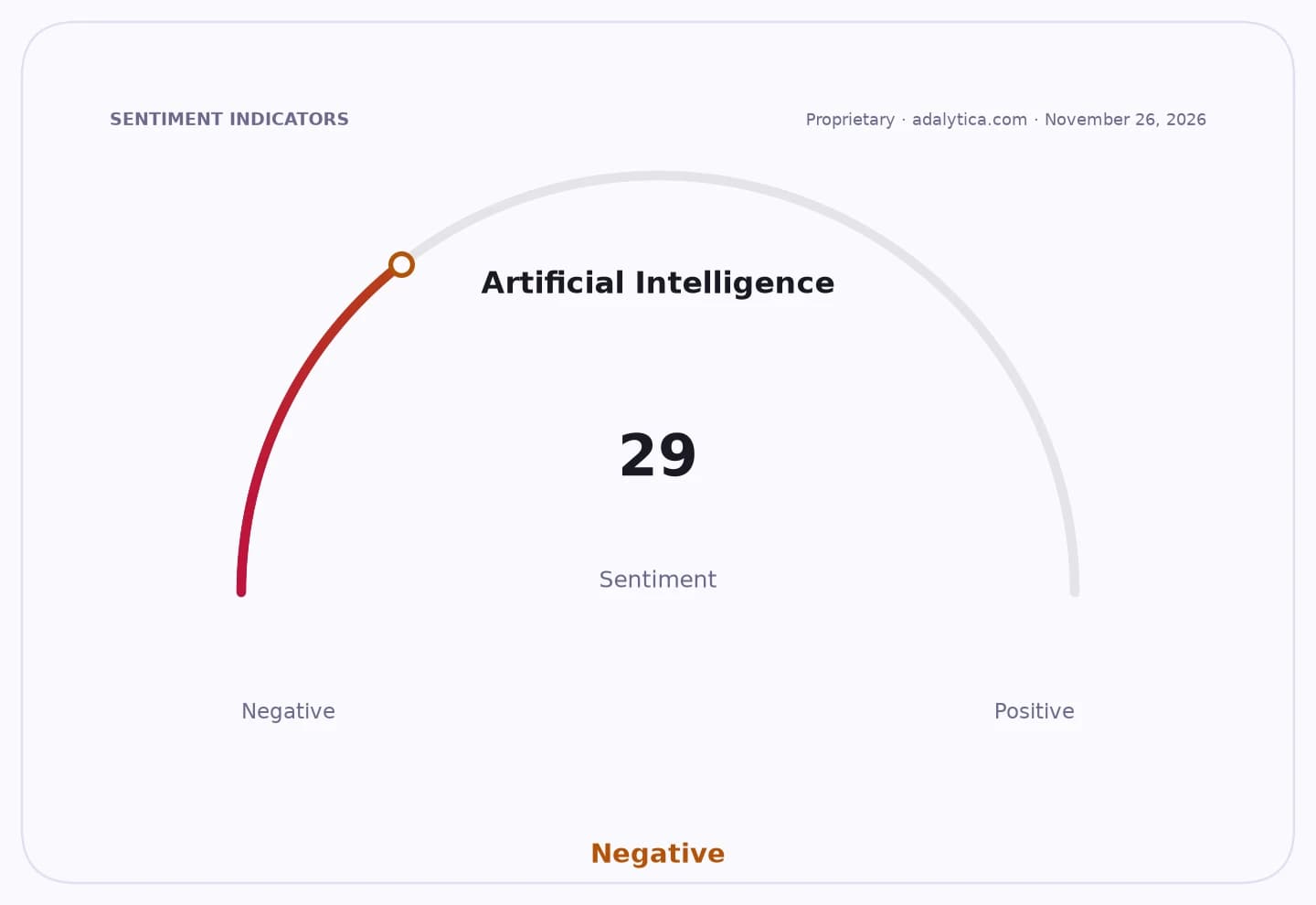
The AI dimension broadens the threat beyond autos. Proprietary indicators from Adalytica.com show AI sentiment at a neutral 33, down 59 points over 30 days, suggesting investor enthusiasm has cooled even as governments continue to treat AI as a strategic technology. For German industry, that makes execution harder: companies need to invest heavily in automation, data systems and software just as capital markets are less forgiving and core businesses are under pressure.
The emerging narrative is not simply China versus Germany, or free trade versus protectionism. It is a test of whether Europe’s largest economy can move from a consensus-driven, technology-neutral stance to a more focused industrial policy without abandoning the openness that made it competitive. The risk for Berlin is that by trying to keep every option alive, it falls behind in the technologies where scale and speed matter most.
The next phase will hinge on whether Germany and the European Union can pair defensive trade tools with faster permitting, targeted investment and clearer technology choices. Without that shift, China’s advance in EVs, batteries and AI will keep weighing on German manufacturers — and on investors trying to value an industrial base in transition.
| Entity | Gains | Losses |
|---|---|---|
| Chinese technology manufacturers | ▲Scale and policy backing | ▼Exposure to trade barriers |
| German automakers | ▲Time from EU defenses | ▼Margin and market-share pressure |
| German policymakers | ▲Leverage to reset strategy | ▼Credibility if policy stays diffuse |
| Investors in legacy autos | ▲Lower valuations create optionality | ▼Prolonged transition risk |