Coffee prices are under renewed pressure after Brazil’s 2026/27 arabica harvest neared completion, with faster exports and improving supply prospects outweighing lingering concerns about crop quality and late-season weather.
Coffee prices fall as Brazil harvest nears completion

The most important market driver is Brazil, the world’s top coffee producer and exporter. According to Cepea data cited by Comunicaffe, arabica harvesting across most producing regions was close to finished by the end of August after dry weather sped fieldwork, even though progress still lagged last year because heavier winter rain disrupted picking and drying in some areas.
Sentiment IndicatorsⓘProprietary · adalytica.com · September 7, 2026
This is a snapshot — live sentiment, awareness and momentum for 130+ markets update continuously in the dashboard.Open AlphaPulse
That matters because Brazil sets the tone for global coffee balances. The slower pace and wetter conditions have raised concern that the crop may be one of the lowest-quality in recent years, but the bigger near-term effect has been to keep beans moving into the market and reinforce supply pressure into the new season.
Futures have already responded. In London, robusta for September 2026 fell 4.2% last week to $3,344 a metric ton, while the November contract dropped 2.8% to $3,430. In New York, arabica for September 2026 slid 6.2% to 324.25 cents a pound, and the December contract fell 5.5% to 295.6 cents.
Brazilian exports are also accelerating. Cecafé said Brazil shipped 3.03 million 60-kilogram bags in July, the first month of the 2026/27 crop year, up 9.9% from a year earlier. Cepea said exports could have been even higher if June and July rains had not slowed harvest and drying in key arabica regions such as Minas Gerais and São Paulo.
For investors, the message is that the near-term coffee rally has lost momentum as supply expectations improve. Arabica and robusta traders are now focused less on this crop’s harvest pace and more on September and October weather, when flowering for the 2027/28 crop begins and any El Niño risk could reshape the next leg of the market.
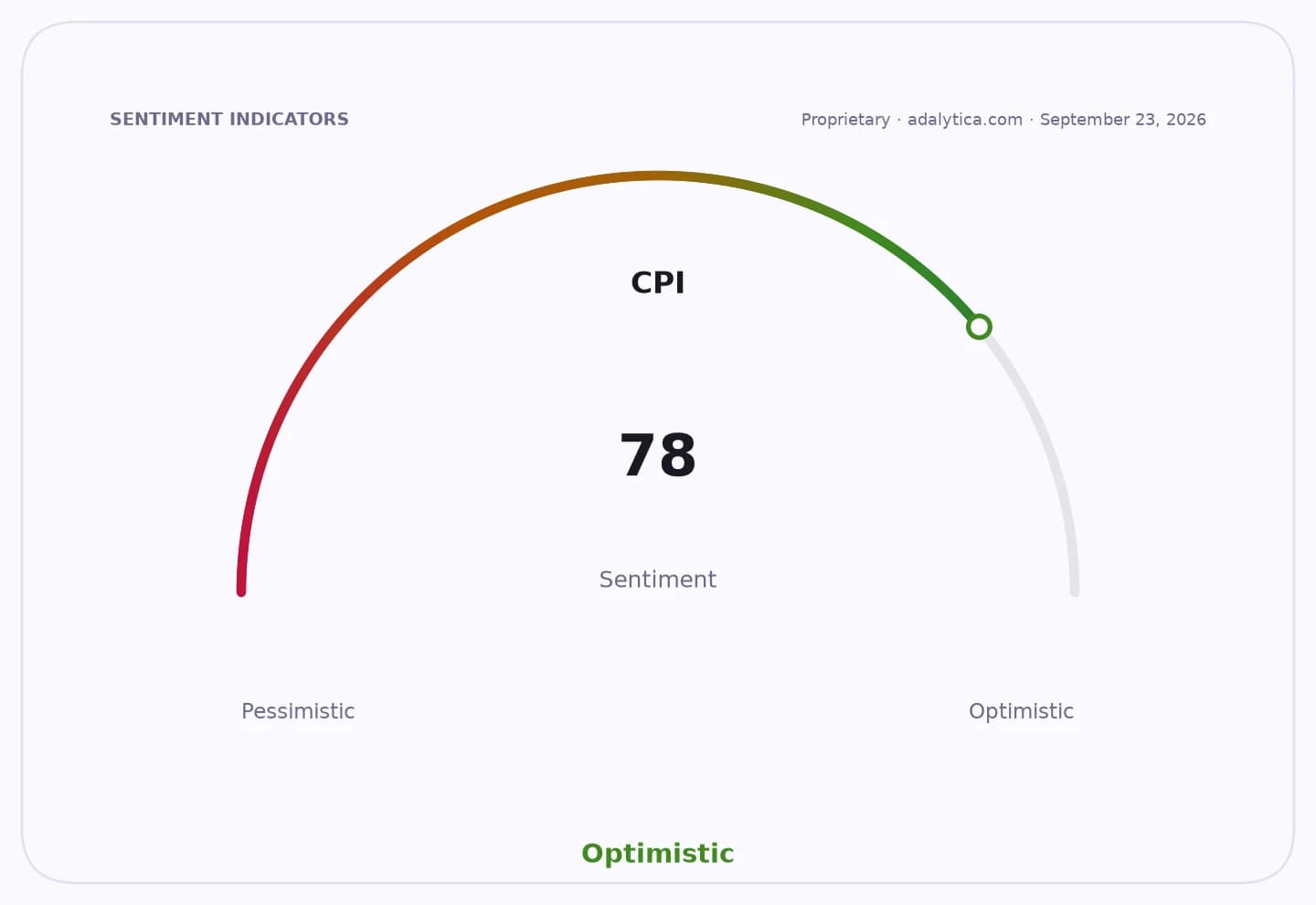
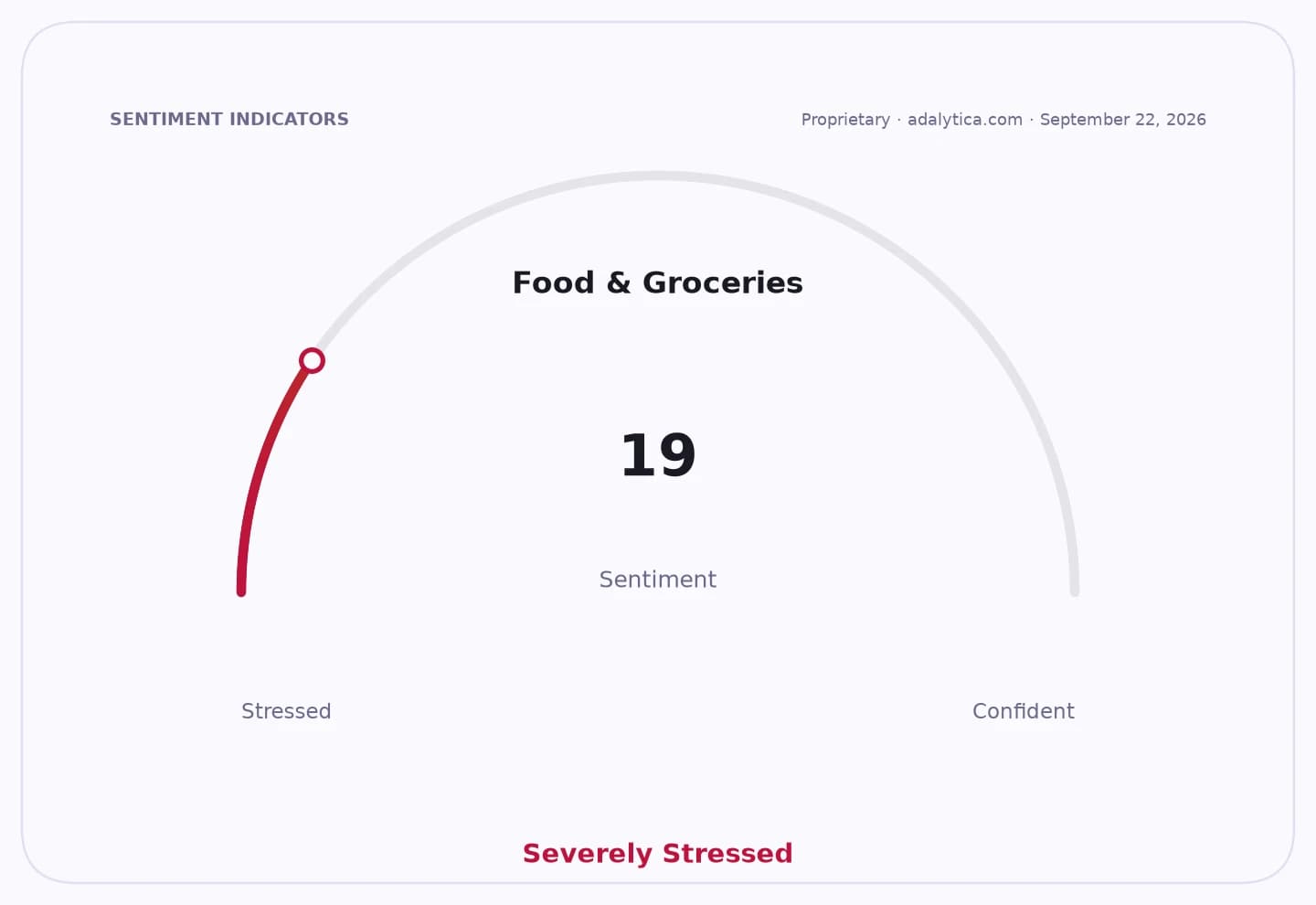
The broader backdrop is still one of volatility. Coffee roasters and retailers face thinner margins if beans stay elevated, but a prolonged pullback would ease input costs for buyers and pressure producers and traders long positioned for a tighter market. Adalytica’s CPI sentiment reading sits in extreme fear, underscoring how sensitive consumers remain to food inflation, even as U.S. consumer spending sentiment stays weak.
| Entity | Gains | Losses |
|---|---|---|
| Roasters and retailers | ▲Lower bean costs | ▼Less pricing power |
| Coffee importers/buyers | ▲Easier sourcing | ▼Fewer shortage premiums |
| Brazilian exporters | ▲Faster shipment flow | ▼Weaker futures pricing |
| Producers/traders long coffee | ▲Harvest-quality concerns | ▼Supply-driven price declines |