Tolima’s yellow corn producers have shown they can help meet industrial demand even as El Niño tightened conditions across Colombia, with a Bayer-linked farming network reporting a 15% increase in the national harvest and underscoring a broader effort to reduce supply gaps in a crop central to animal feed and food processing.
Colombia Yellow Corn Harvest Rises 15% in Tolima
The economic significance is straightforward: stronger domestic corn output eases pressure on import needs, supports farm income and gives processors a more reliable local supply at a time when weather volatility has raised the cost of securing grain. For Colombia, where corn is a key input for the livestock chain and industrial users, a better harvest helps cushion food inflation risks and improves the balance between rural production and downstream demand.
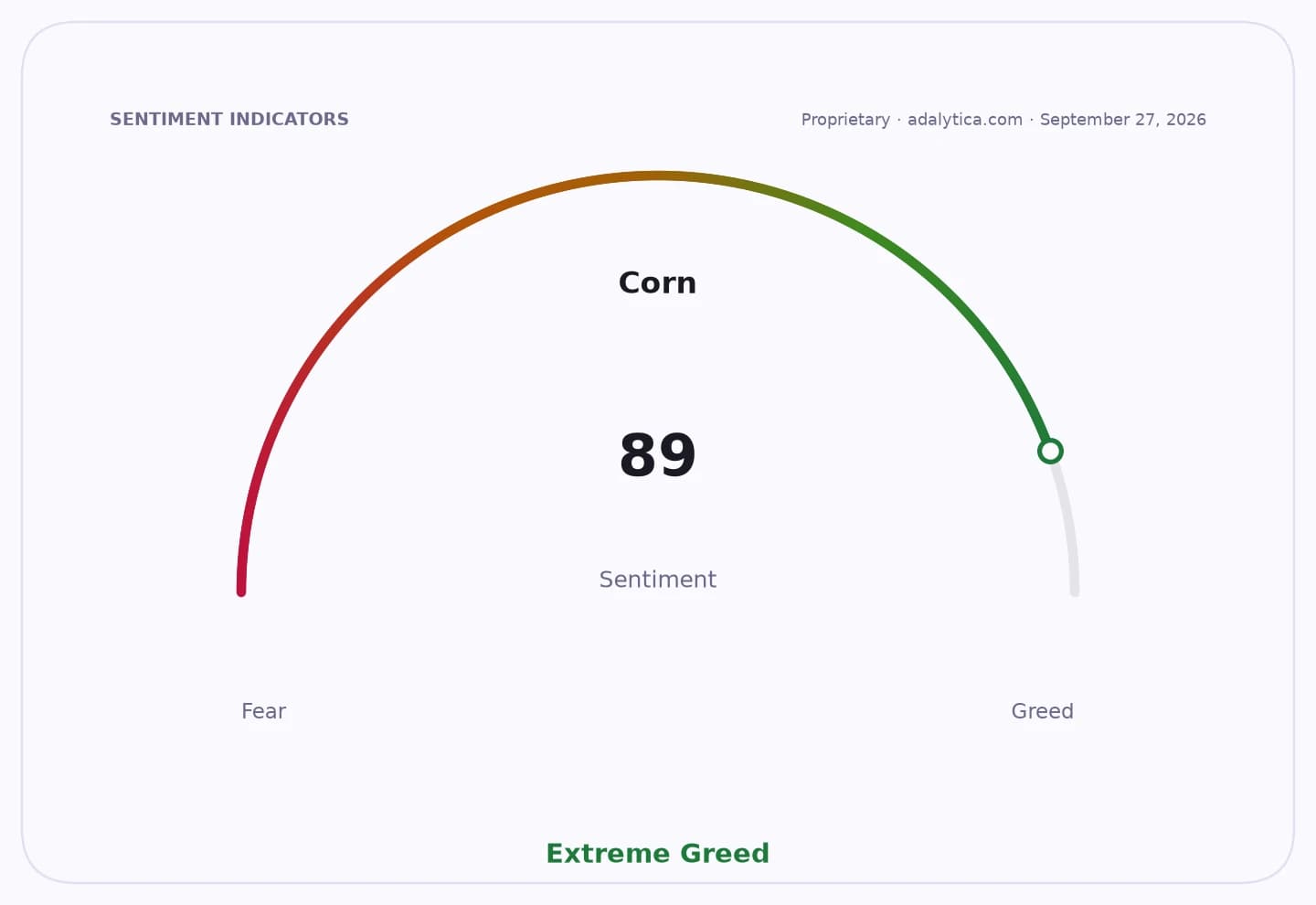
Sentiment IndicatorsⓘProprietary · adalytica.com · September 27, 2026
This is a snapshot — live sentiment, awareness and momentum for 130+ markets update continuously in the dashboard.Open AlphaPulse
The Tolima story matters because it suggests that yield gains are coming not just from planted area but from agronomic adaptation. Seven thousand farmers working with Bayer have lifted production despite drought stress, a sign that seed technology, crop management and extension support can still offset part of the climate hit. That makes Tolima more than a regional success story: it is evidence that Colombia’s corn sector can scale if productivity gains hold.
For investors, the message is mixed but important. Farm input suppliers and agritech providers benefit from a model that appears to be working, while importers and traders may face less upside from scarcity-driven pricing if domestic supply continues to improve. Feed makers and livestock producers stand to gain from a steadier local pipeline, though the risk remains that El Niño-related weather swings could quickly reverse recent gains.
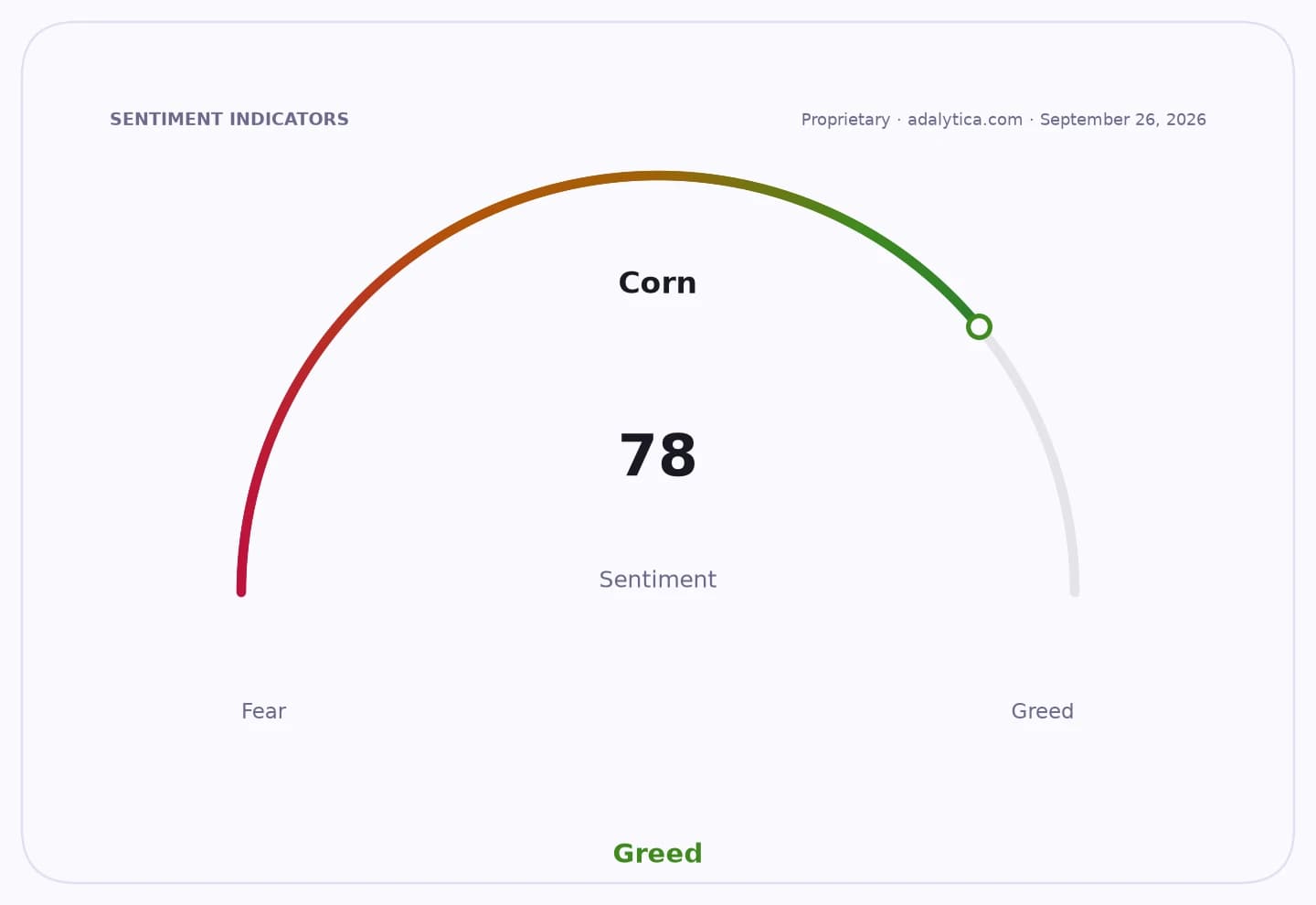
That tension is showing up in the broader market backdrop. Technical readings on corn futures point to a strong but potentially stretched rally, with the price above both its 50-day and 200-day moving averages and RSI readings near overbought territory. That suggests the market has already priced in some supply optimism, leaving room for volatility if weather, policy or export rules shift. Adalytica’s Corn Fear & Greed Index also points to extreme greed, while awareness remains in extreme fear territory, a combination that often reflects crowded positioning alongside uncertainty about the durability of the move.
Policy remains a key swing factor. The agriculture ministry has denied opening corn exports, which keeps the domestic supply picture more relevant for local users than global buyers. Industry leaders are still pressing for government support, arguing that farmers need help to avoid backsliding after a period of climate stress. If that support translates into better seeds, irrigation, credit and logistics, Tolima’s gains could become a template for other producing regions.
For now, the clearest takeaway for investors is that Colombian yellow corn is not as supply-constrained as it looked earlier in the year. The bull case is that productivity gains persist and domestic processors secure cheaper, more stable feedstock. The bear case is that climate volatility, policy hesitation and high input costs erode margins before the sector can lock in those gains. The next test is whether Tolima’s harvest improvement can be repeated at scale in the next planting cycle.
| Entity | Gains | Losses |
|---|---|---|
| Tolima corn farmers | ▲Higher yields, better revenues | ▼Weather risk remains |
| Bayer-linked growers | ▲Proven productivity gains | ▼Dependence on input support |
| Feed and food processors | ▲More local supply stability | ▼Less pricing leverage |
| Corn importers/traders | ▲— | ▼Softer scarcity premium |