China’s top diplomat has arrived in Zagreb with a clear economic and geopolitical message: Croatia wants more Chinese capital, Beijing wants a friend inside the European Union, and both sides are signaling they can deepen ties without reopening bilateral disputes.
Croatia seeks Chinese investment during Beijing visit
That matters because the visit is not just ceremonial. It is the first official trip by a Chinese foreign minister to Croatia in 33 years, and it comes as Zagreb courts Chinese investment in transport, logistics, renewables, automotive and shipping. In other words, this is about money as much as diplomacy. For investors, that raises the odds of more Chinese-linked infrastructure and industrial flows into a small but strategically placed EU economy at the Adriatic gateway.
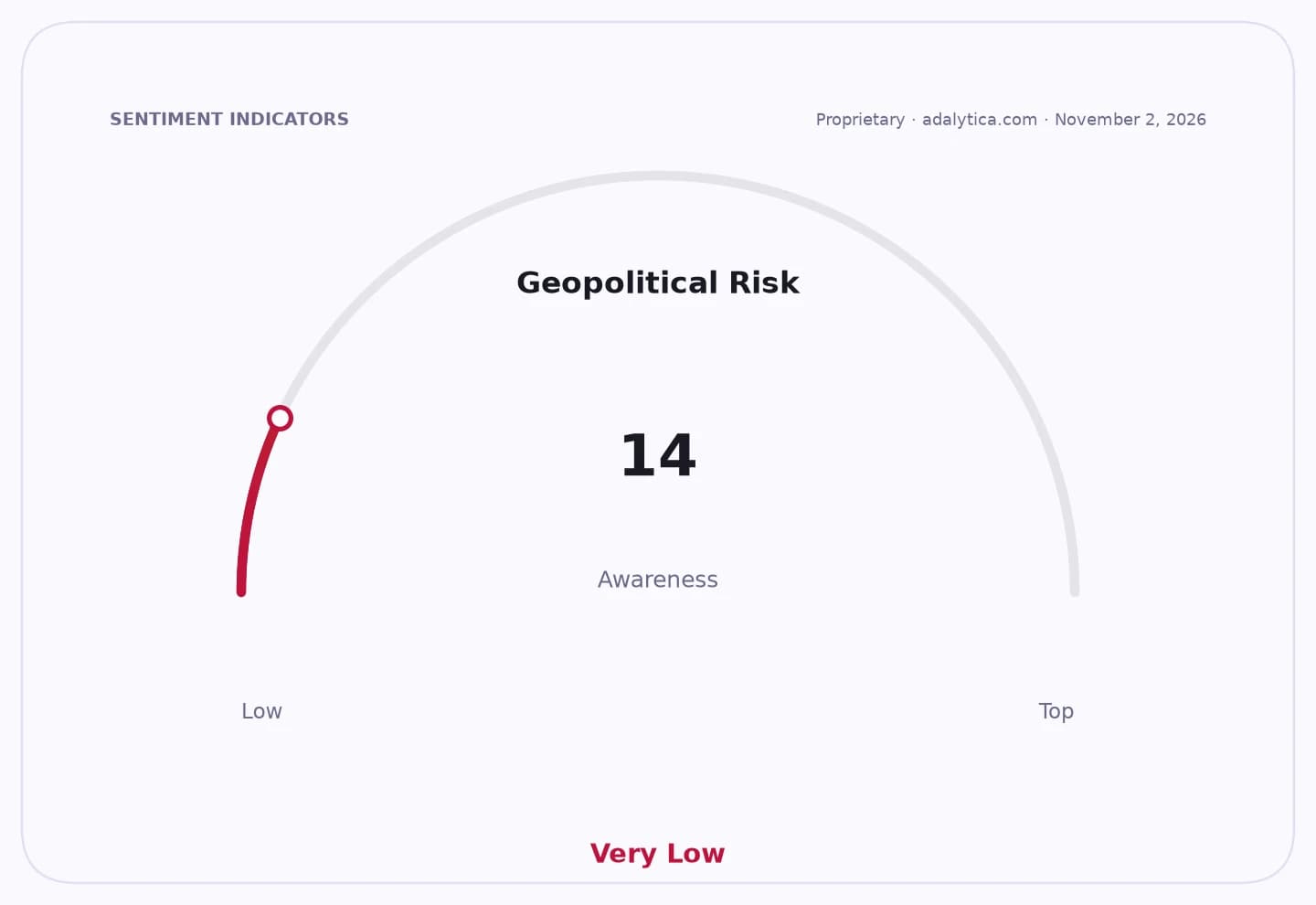
Sentiment Indicators
President Zoran Milanović went out of his way to restate Croatia’s support for the “one China” policy, aligning Zagreb with Beijing’s position that Taiwan is part of China. That is geopolitically significant because it lowers friction at a time when Europe is under pressure to balance trade ties with China against security concerns. It also signals Croatia is willing to prioritize commercial access and investment prospects over symbolic distance from Beijing.
Foreign Minister Gordan Grlić Radman struck the same note, saying Croatia is open to Chinese companies and investors, especially in transport and logistics, renewable energy, the automotive sector and maritime industry. That is exactly where China has leverage to deploy capital and where Croatia has room to improve its infrastructure and export base. The government is also openly trying to reduce the trade imbalance, which means it wants not just imports and tourism flows, but actual production and investment.
The timing is notable. The two countries have just launched the first regular passenger air link between China and Croatia, with flights from Beijing via Bucharest to Zagreb operating three times a week year-round. That is a small route with potentially outsized strategic value: easier travel for business, tourism and investment discussions, and a practical channel for tighter commercial integration. Croatia already has a tourism office in Shanghai, and Beijing is clearly looking to convert diplomatic warmth into deeper economic reach.
For investors, the investable angle is not a straight play on Chinese politics. It is the second-order effect: Chinese capital, trade and logistics demand flowing toward the Balkans and the eastern Adriatic. That could benefit Croatian ports, infrastructure contractors, industrial suppliers, tourism infrastructure and any regional business positioned as a bridge between EU markets and Asian demand. The market often underestimates how quickly a diplomatic thaw can translate into project pipelines.
FXI, the China ETF, remains the most direct liquid proxy for sentiment around China’s external engagement, but the bigger opportunity may sit in European infrastructure and regional trade beneficiaries rather than in China itself. If this visit leads to actual investment commitments, the winners will be the companies tied to freight movement, energy networks and port modernization. The losers could be those assuming Europe-China tensions will keep bilateral business frozen.
The broader message is simple: Croatia is not trying to become a geopolitical flashpoint. It is trying to become a conduit. If Chinese officials leave Zagreb with a clearer path into Croatian logistics, energy and industrial assets, the story moves from symbolism to capex—and that is where the real upside begins.
| Entity | Gains | Losses |
|---|---|---|
| Croatia | ▲More Chinese investment | ▼Trade deficit pressure |
| China | ▲EU foothold in Adriatic | ▼Less diplomatic resistance |
| Croatian ports/logistics | ▲New project pipeline | ▼Missed if ties stall |
| Taiwan | ▲None | ▼More One-China backing in Europe |