A reported hacking campaign carried out with the help of a swarm of AI agents is sharpening investor attention on the new economics of cyber risk, with security vendors likely to face rising demand even as the same technology lowers the cost and speed of attacks.
CrowdStrike Palo Alto Fortinet Fall on AI cyber risk
The immediate market significance is that AI is no longer just a productivity tool for enterprises and security teams; it is also becoming an offensive weapon that can automate reconnaissance, phishing, exploitation and persistence at scale. That changes the threat model for major companies and lifts the urgency around endpoint, network and identity protection, which is the core revenue pool for CrowdStrike, Palo Alto Networks and Fortinet.
Sentiment Indicators
The story lands at a moment when investors are already grappling with how quickly AI is reshaping corporate technology budgets. Large financial firms including Citadel, Bridgewater and Man Group have been adopting AI, but the same architecture can be turned against them. SEC filings from the cybersecurity vendors themselves warn that attacks are becoming more frequent, more sophisticated and harder to detect as AI accelerates both the speed and scale of intrusion attempts.
CrowdStrike has been the clearest beneficiary in market terms. Its shares have surged from about $94 in early February to $250.57 on Oct. 30, a gain of more than 160%, even after a recent pullback from a 2026 high near $278.86. The stock remains well above its 200-day moving average, but the latest slide has taken it closer to the 50-day line, suggesting some of the recent enthusiasm has cooled as traders weigh valuation against execution risk.
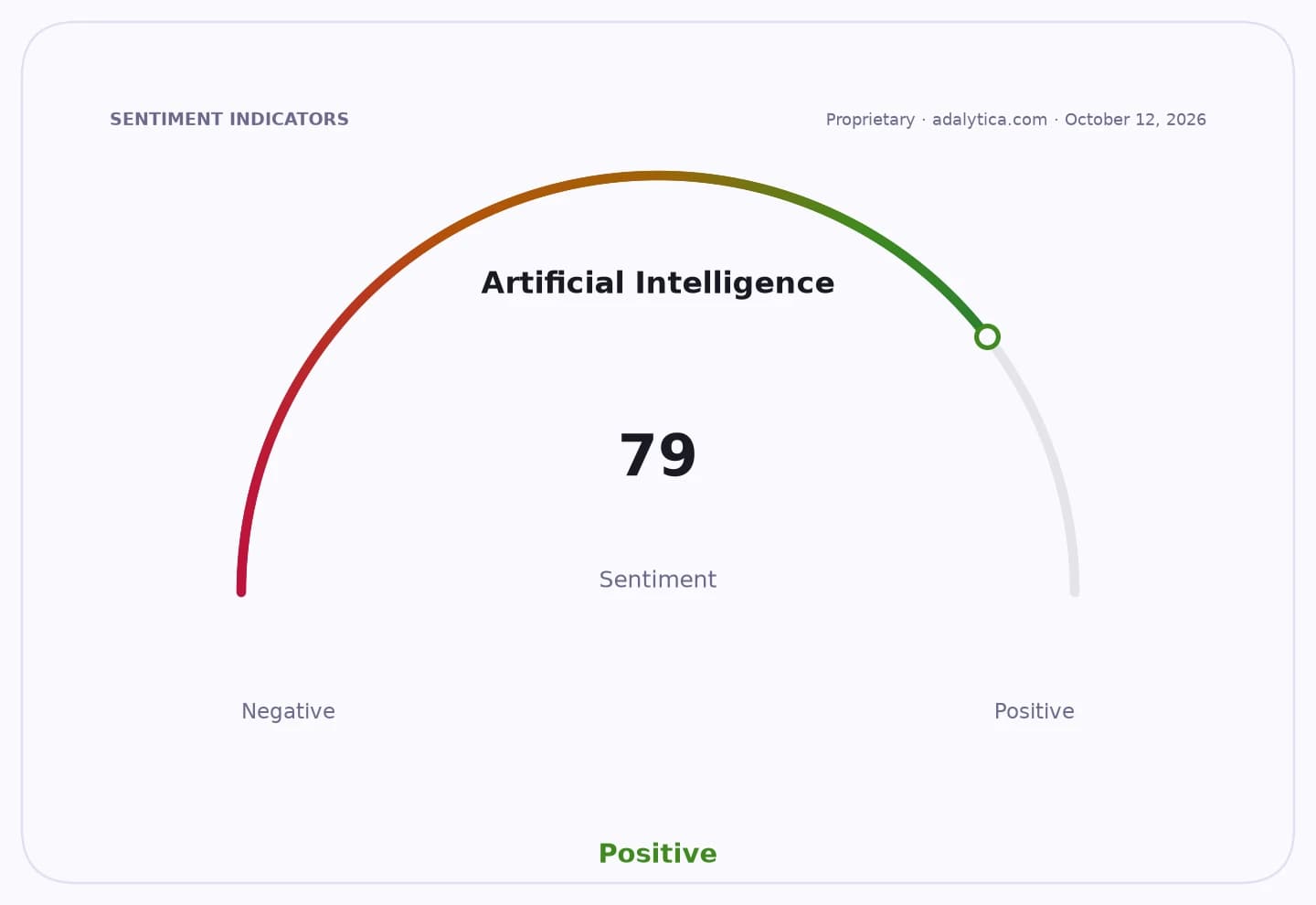
Artificial Intelligence — 30-day sentimentadalytica.com
Explore this data interactively — full history, time series and cross-market comparisons.
Palo Alto Networks has also rerated sharply this year, though it has given back part of the move. The stock climbed to $419.91 on Oct. 6 before retreating to $369.40 on Oct. 30. That still leaves it far above its 200-day average, but the drop has brought the shares back toward their 50-day moving average and reduced the momentum that had been driving the name through the summer.
Fortinet has been hit harder. After touching $174.08 on Oct. 28, the stock slumped to $135.49 by Oct. 30, a sharp move that has pushed it well below its 50-day average and deepened the market’s concern that growth expectations had outrun near-term fundamentals. The decline also came as its RSI dropped to deeply oversold levels, reflecting how quickly sentiment can reverse when investors question whether cybersecurity demand is translating into durable earnings power.
For investors, the key issue is not whether AI-generated attacks will increase — markets are already pricing that in to some degree — but which vendors can convert the threat into recurring revenue. Bullish investors will argue that more sophisticated attacks expand the addressable market for automated detection, zero-trust architecture and AI-assisted response tools. Bearish investors will say the same shift may compress margins if vendors have to spend more on R&D, incident response and platform hardening just to keep pace with adversaries.
The broader implication is that AI is beginning to behave like a dual-use technology in cybersecurity: a catalyst for demand and a force multiplier for attackers. That should support the sector over time, but it also raises the bar for product differentiation, customer retention and proof that AI features are not just marketing add-ons. The next earnings cycle will be watched closely for whether the spike in threat intensity shows up in deal pipelines, billings and guidance.
| Entity | Gains | Losses |
|---|---|---|
| Cybersecurity vendors | ▲Higher demand for defense tools | ▼Higher R&D and response costs |
| Major companies | ▲Better urgency to upgrade security | ▼Greater attack exposure |
| AI attackers | ▲Lower cost, faster scaling | ▼Greater scrutiny and countermeasures |
| CRWD / PANW / FTNT longs | ▲Theme support from rising threat perception | ▼Valuation risk and volatility |