German equities slid on Friday after fresh signs that inflation is proving stickier than investors had hoped, reviving the prospect that European Central Bank policy will stay restrictive for longer.
DAX Falls as German Inflation Expectations Rise

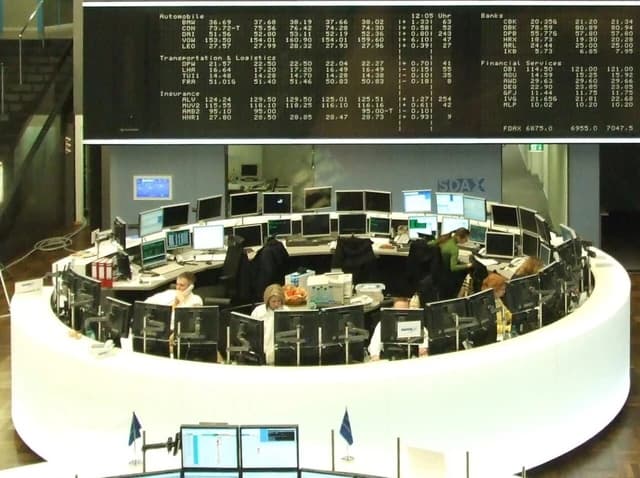
The DAX fell 0.8% to 25,525.28 as euro-zone consumers nudged up their 12-month inflation expectations to 3% from 2.9%, while Germany’s producer prices jumped 4.6% in August, the fastest pace since April 2023 and well above forecasts. For a market built on the assumption that the worst of the price shock is behind it, that combination matters: it keeps real rates elevated, delays any meaningful easing cycle and raises the risk that earnings multiple expansion stalls just as growth-sensitive sectors are looking for support.
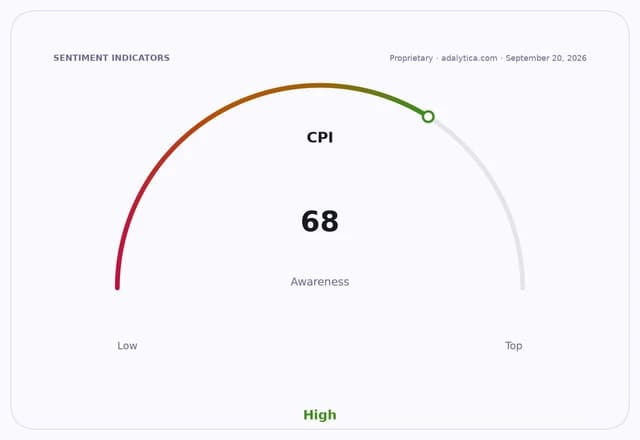
Sentiment IndicatorsⓘProprietary · adalytica.com · September 20, 2026
This is a snapshot — live sentiment, awareness and momentum for 130+ markets update continuously in the dashboard.Open AlphaPulse
That is the real market issue here. When inflation expectations move up and producer prices accelerate, central banks have less room to pivot, and the discount rate that underpins equity valuations stays higher for longer. In Europe, that hits cyclicals, banks, industrials and rate-sensitive defensives in different ways, but the common thread is the same: liquidity becomes scarcer and investors demand a bigger risk premium.
The sector damage was broad. Deutsche Telekom fell more than 4%, Volkswagen slipped 1.7%, and SAP, Mercedes-Benz, Allianz, Deutsche Boerse, Zalando, BMW and Deutsche Bank all lost ground. The weakness underscores how quickly a macro inflation scare can overpower company-specific narratives, even in names with strong franchises. Infineon Technologies was the standout winner, rising 3.5% after Nvidia’s chief executive projected chip sales would double over the next year, a reminder that AI capex remains one of the few secular growth stories strong enough to cut through macro noise.
Germany’s producer-price report is especially important because it suggests inflation pressure is not confined to consumers. Factory-gate prices feed into corporate margins, wage negotiations and eventually consumer prices, creating a more stubborn inflation backdrop than headline CPI alone implies. The European Central Bank’s consumer survey only reinforces that risk: if households start baking in higher prices, the central bank faces a tougher job anchoring expectations without choking off growth.
Investors should read this as a rotation signal as much as a macro warning. If inflation remains sticky, long-duration equities, expensive growth and highly levered domestic cyclicals are vulnerable. The relative winners are firms with pricing power, structural demand and exposure to secular capex themes such as semiconductors, grid infrastructure and AI-linked equipment. That is why Infineon’s strength matters more than a one-day move: it shows where capital is still willing to hide when macro volatility returns.
With the Bank of Japan also tightening and global policymakers still uneasy about price pressures, the market is moving back into a regime where every inflation print matters. Until Europe gets clearer evidence that price growth is cooling decisively, the DAX is likely to stay choppy and investors should favor quality balance sheets, exporters with global demand and AI infrastructure beneficiaries over domestic rate-sensitive laggards.
| Entity | Gains | Losses |
|---|---|---|
| Infineon / AI chip suppliers | ▲Stronger demand narrative | ▼Macro selloff risk |
| ECB hawks | ▲More room to stay restrictive | ▼Dovish easing hopes |
| German exporters | ▲Pricing power in global markets | ▼Domestic demand sensitivity |
| DAX cyclicals and rate-sensitive stocks | ▲— | ▼Higher-for-longer inflation fears |