The Dax edged higher on Wednesday, but gains were limited as a hotter-than-expected US inflation report jolted bond and equity markets and revived concern that the Federal Reserve may have to keep policy restrictive for longer.
Dax edges higher as US inflation lifts yields

Frankfurt’s blue-chip index closed at 25,299 points, up 0.2%, after briefly extending its advance in early trade before running out of momentum. The muted move masked a more important shift in market psychology: investors are again pricing in a world of stickier inflation, higher US yields and less room for richly valued equities to absorb bad news.
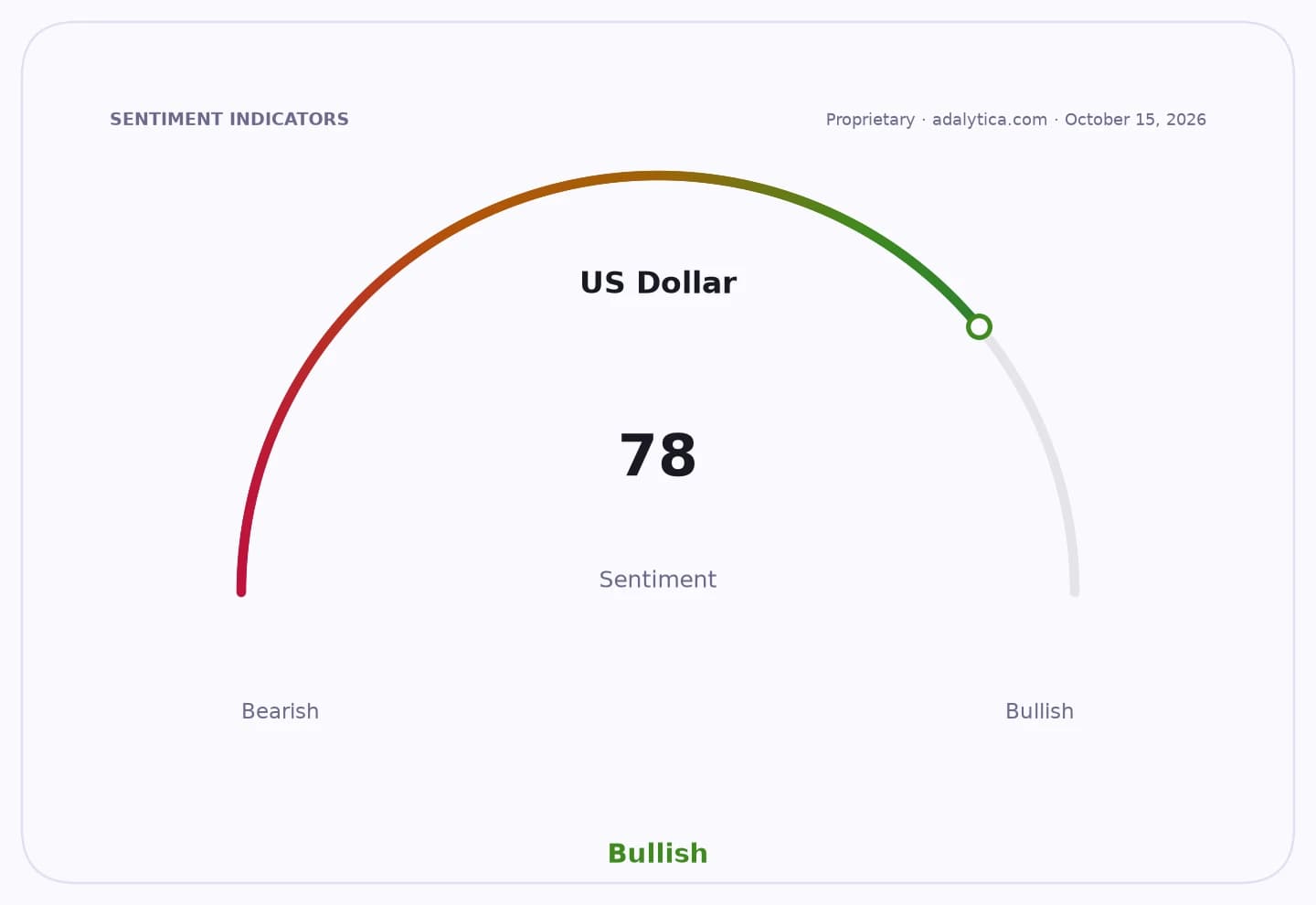
Sentiment IndicatorsⓘProprietary · adalytica.com · October 15, 2026
This is a snapshot — live sentiment, awareness and momentum for 130+ markets update continuously in the dashboard.Open AlphaPulse

The trigger was September US consumer price data showing prices rose 0.6% on the month and 3.7% from a year earlier, both above expectations. The report pointed to renewed pressure from gasoline, diesel and airfare, while the core measure also firmed more than forecast, suggesting inflation is not only energy-driven but still spreading through the broader economy.
That matters because it complicates the Federal Reserve’s job at a sensitive point in the cycle. If inflation proves harder to tame, policymakers may have to keep rates elevated for longer or, depending on the next data set, consider tightening further. Either path keeps pressure on longer-dated Treasury yields and sustains the discount rate that investors use to value stocks, especially in sectors where earnings are far out in the future.

For European markets, the immediate effect was a tilt away from risk. The Dax’s modest rise came against a backdrop of nervy trading across equities and bonds, while the S&P 500 slipped in the wake of the CPI release. Adalytica’s CPI sentiment gauge was already flashing “Greed” at 83, with awareness at “Extreme Greed” on 95, underscoring how sensitive positioning had become before the inflation print hit.
The bond-market reaction is especially relevant for Frankfurt. Higher US yields tend to lift global borrowing costs and can pull capital toward fixed income, where returns are increasingly competitive versus equities. That dynamic is a direct headwind for European stocks, which are trading in a higher-rate environment even as growth remains patchy. Deutsche investors are also recalibrating after recent selling in otherwise solid US earnings names and renewed interest in sovereign bonds.
Within the Dax, the day’s strongest performers included Rheinmetall, MTU, Airbus and Merck, while Siemens Energy and Volkswagen lagged. That split is consistent with a market that is still willing to pay for idiosyncratic earnings drivers and defence spending, but less comfortable with rate-sensitive cyclicals and companies exposed to weaker consumer demand or financing conditions.
Energy prices added to the discomfort. Brent crude rose to $105.70 a barrel, reinforcing the sense that inflation risk is being fed by the same input-cost pressures that central banks cannot directly control. European gas prices eased slightly, but remained high enough to imply household energy bills would stay elevated if the current level persists.
The euro also softened to $1.1122, a move that fits the broader pattern of dollar strength when US rate expectations rise. A firmer dollar can tighten financial conditions outside the US and weigh on European exporters’ earnings translations, even if it offers some offset to competitiveness.
The main investor takeaway is that the inflation story has moved back to the centre of the macro debate. If the recent US print proves temporary, equities could recover some of the ground lost to higher real yields. If not, the market may be entering a more prolonged phase of valuation compression, with government bonds again challenging stocks for capital. For the Dax, that leaves the index vulnerable to swings in US rate expectations even when domestic fundamentals are unchanged.
| Entity | Gains | Losses |
|---|---|---|
| Dax exporters | ▲Weaker euro support | ▼Higher global yields |
| US Treasuries | ▲Safer income appeal | ▼Inflation-driven selling |
| Growth stocks | ▲None | ▼Higher discount rates |
| Energy producers | ▲Higher crude prices | ▼Consumer demand pressure |