US inflation came in hotter than expected in September, and that was enough to nudge Vienna’s ATX lower as investors quickly priced in a more hawkish Federal Reserve. The Austrian benchmark finished down 0.13% at 6,619.12 points, a modest move on the surface, but one that reflects how sensitive European equities remain to shifts in US rate expectations.
Austria ATX Falls on Hotter US Inflation
The headline consumer-price reading rose 3.7% from a year earlier, up from 3.4% in August and slightly above the 3.6% economists had expected. The driver was clear: higher fuel and heating-oil costs pushed prices higher and revived the market’s fear that inflation is not yet fully under control. When inflation stays sticky, central banks can keep rates elevated for longer, and that matters far beyond Wall Street. It affects borrowing costs, currency moves, earnings multiples and the appetite for risk assets across Europe.
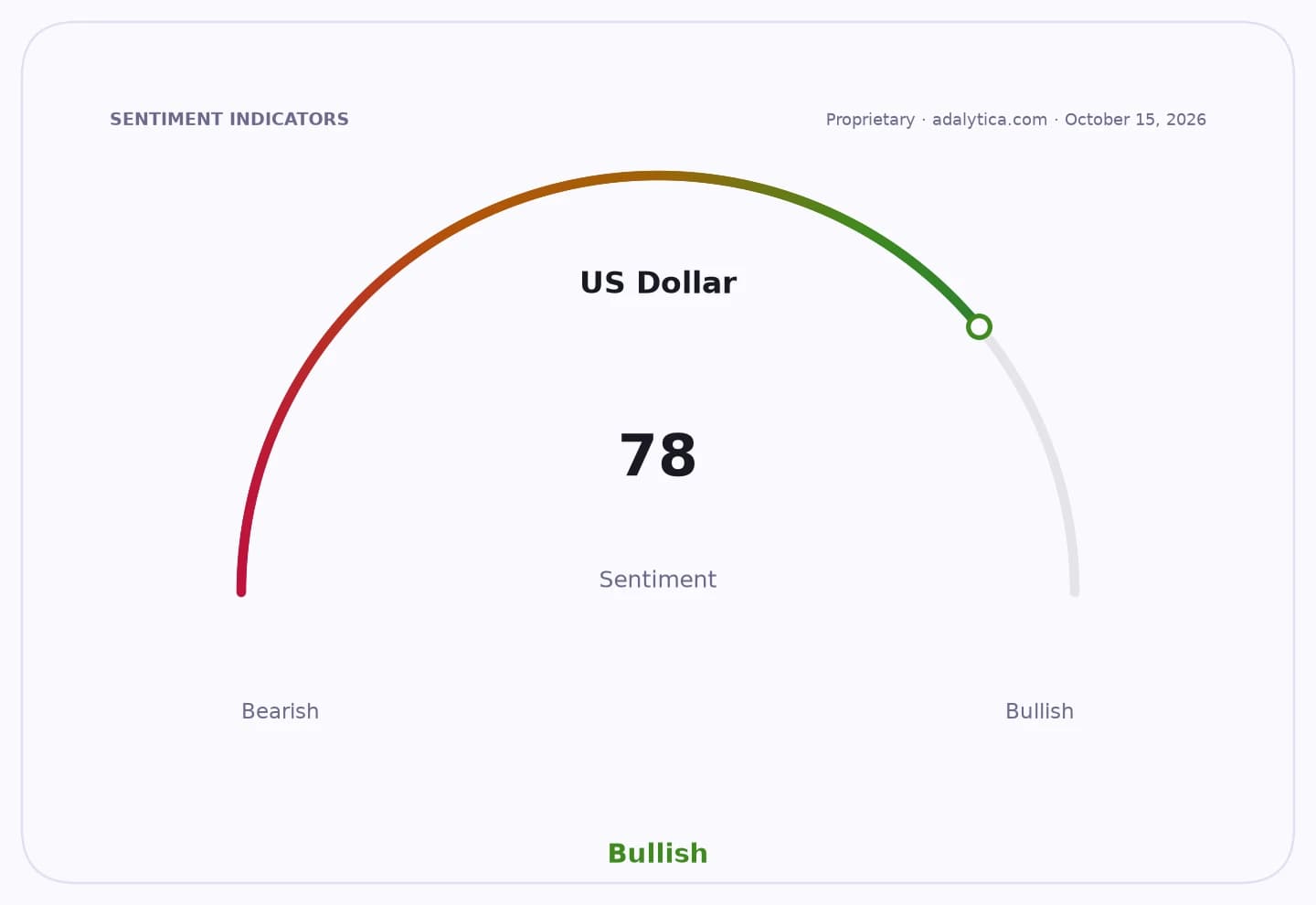
Sentiment IndicatorsⓘProprietary · adalytica.com · October 15, 2026
This is a snapshot — live sentiment, awareness and momentum for 130+ markets update continuously in the dashboard.Open AlphaPulse
For investors, the issue is not just one day’s decline in the ATX. Higher-for-longer US rates tend to support the dollar, pressure global equity valuations and make cyclical and rate-sensitive stocks harder to own. That showed up in the broader tape, with Wall Street selling off and the prospect of another Fed move helping lift Treasury yields. In Europe, that kind of backdrop usually means less room for complacency in banks, industrials and exporters alike.
The ATX’s loss was limited because the domestic news flow was thin, but the index still reflected the push and pull of a market looking for direction. Banks traded unevenly: Erste Group gained 0.3%, while Bawag fell 1.2% and Raiffeisen Bank International lost 1.4%. Among heavyweight industrial and commodity names, Wienerberger added 1.9%, Voestalpine rose 0.6% and OMV gained 0.9%.
For long-term investors, this is a reminder that macro shocks can move local markets even when company-specific news is scarce. The ATX remains well above its 200-day moving average, which suggests the broader trend is still constructive, but the recent pullback and weaker momentum in the index show how quickly sentiment can cool when inflation surprises to the upside. That is especially relevant for sectors tied to global growth and financing conditions.
The bigger picture in Austria is still one of sluggish but positive growth rather than recession. Wifo and IHS kept their 2026 GDP forecasts at 0.9% and 0.8%, respectively, while warning that high inflation is squeezing real household incomes. They expect inflation of 3.3% and 3.1% this year, easing only gradually thereafter. That combination — modest growth, stubborn inflation and tighter global financial conditions — argues for selectivity rather than chasing the index.
For investors, the lesson is simple: inflation still has the power to reset markets, even in places far from Washington. If you’re building wealth over years, not weeks, the ATX’s small drop is less important than which businesses can keep growing earnings through a tougher rate environment. That makes quality, balance-sheet strength and dividend reliability worth watching closely.
| Entity | Gains | Losses |
|---|---|---|
| US dollar | ▲Firmer on Fed bets | ▼Euro and risk assets |
| US Treasury yields | ▲Rise on tighter-policy bets | ▼Bond prices |
| Austrian exporters/commodity names | ▲OMV, Voestalpine, Wienerberger gain | ▼Rate-sensitive valuations |
| Austrian banks | ▲Erste outperforms | ▼Bawag, RBI weaken |