Swiss stocks opened sharply lower on Thursday as a fresh surge in oil prices and sovereign bond yields soured risk appetite and pressured interest-rate-sensitive and cyclical names on the Zurich exchange.
Swiss stocks fall as oil and yields rise
The SMI fell 1.05% to 13,662.95 points by about 0920 GMT, with almost the entire index in the red as investors digested a combination of higher energy costs, rising government borrowing costs and lingering tension in the Middle East. Brent rose 3.58% to $103.79 a barrel and WTI gained 3.42% to $91.30, extending a move that feeds directly into inflation expectations and complicates the outlook for central banks.
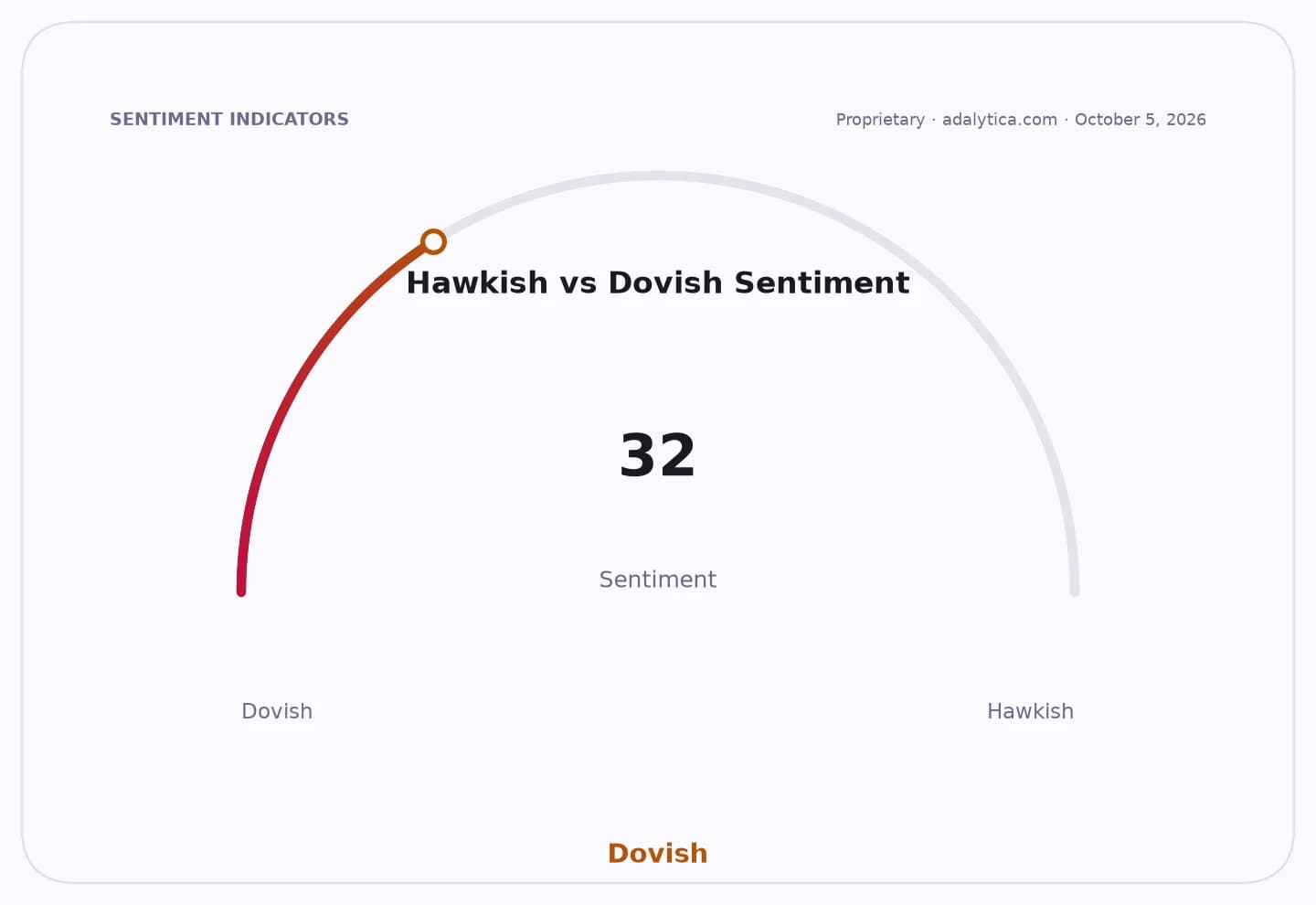
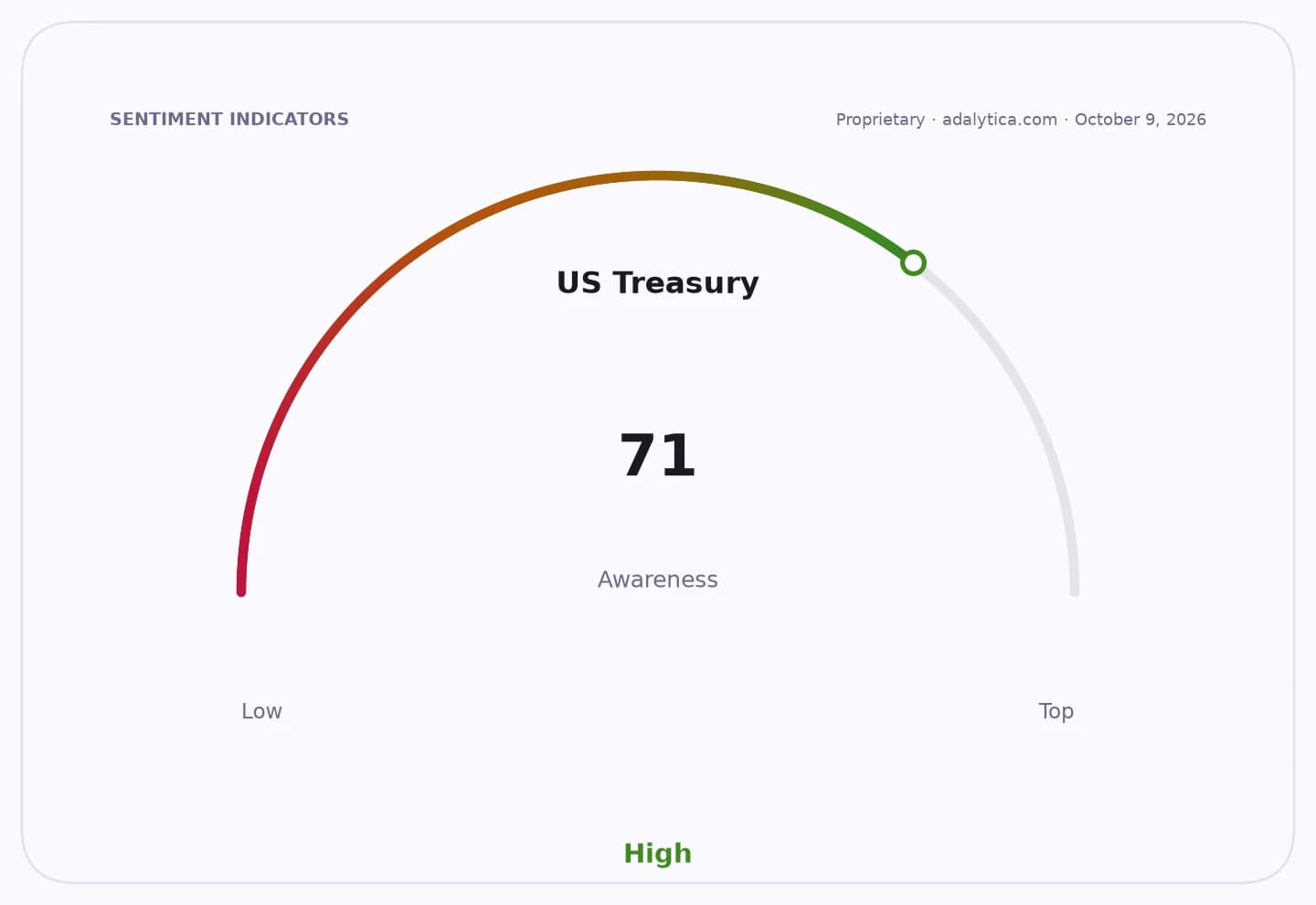
Sentiment IndicatorsⓘProprietary · adalytica.com · October 9, 2026
This is a snapshot — live sentiment, awareness and momentum for 130+ markets update continuously in the dashboard.Open AlphaPulse
At the same time, the US 10-year Treasury yield climbed to 5.31%, near its highest level since 2002, while France’s 10-year government bond premium over Germany widened to 140 basis points, underscoring the pressure on sovereign debt markets. Higher yields matter for equities because they raise discount rates, increase financing costs and make defensive income assets relatively less attractive to stocks. They also threaten mortgage and credit costs for households, adding another drag on demand.
The move comes just as investors are reassessing how long central banks will keep policy tight. Minutes from the Federal Reserve’s latest meeting suggested the September rate hike may not be the last, reinforcing a message that inflation risks remain a priority. The European Central Bank is due to publish its own minutes later in the day, a release that could sharpen expectations for euro-zone rates and keep pressure on European equities.
In Zurich, the market breadth was weak. Only five of the 30 blue-chip names advanced, while Helvetia Baloise was flat and the rest retreated. Lindt led the gainers with a 1.6% rise, helped by its defensive profile, followed by Swisscom and Sonova. Sonova also got a lift from Goldman Sachs, which raised its target price and upgraded the hearing-aid maker to “buy”.
Losses were broader among the heavyweights that typically set the direction of the index. Roche slipped 1.8%, ABB fell 1.3% and Novartis declined 1.1%, while Nestlé eased 0.5%. The worst performer was Straumann, down 3.6%, with Richemont off 2.2% and VAT Group down 2.0% despite supportive broker commentary.
The macro backdrop is doing the damage here more than company-specific news. For Swiss investors, the combination of pricier oil and higher yields hits both ends of the equity market: energy inflation can squeeze margins and consumer purchasing power, while higher rates reduce the present value of future earnings and raise funding costs across sectors. That is particularly relevant for a market like Switzerland’s, where large-cap healthcare, industrial and consumer names are sensitive to global growth and to moves in international bond markets.
The broader read-through is that equity markets remain vulnerable to any further escalation in Middle East risks or additional upside in sovereign yields. If oil stays elevated and long-dated bond rates remain near cycle highs, Swiss defensives may continue to outperform cyclicals, but even that relative shelter could prove limited if investors keep selling risk assets. The next catalysts are the ECB minutes and any further move in oil or Treasury yields, which will determine whether Thursday’s decline becomes a one-day flush or the start of a deeper reassessment of valuation across European stocks.
| Entity | Gains | Losses |
|---|---|---|
| Oil producers | ▲Higher crude prices | ▼Energy consumers |
| Swiss defensives | ▲Relative safe-haven demand | ▼Cyclical stocks |
| Borrowers | ▲— | ▼Higher financing costs |
| Equity valuations | ▲— | ▼Higher discount rates |