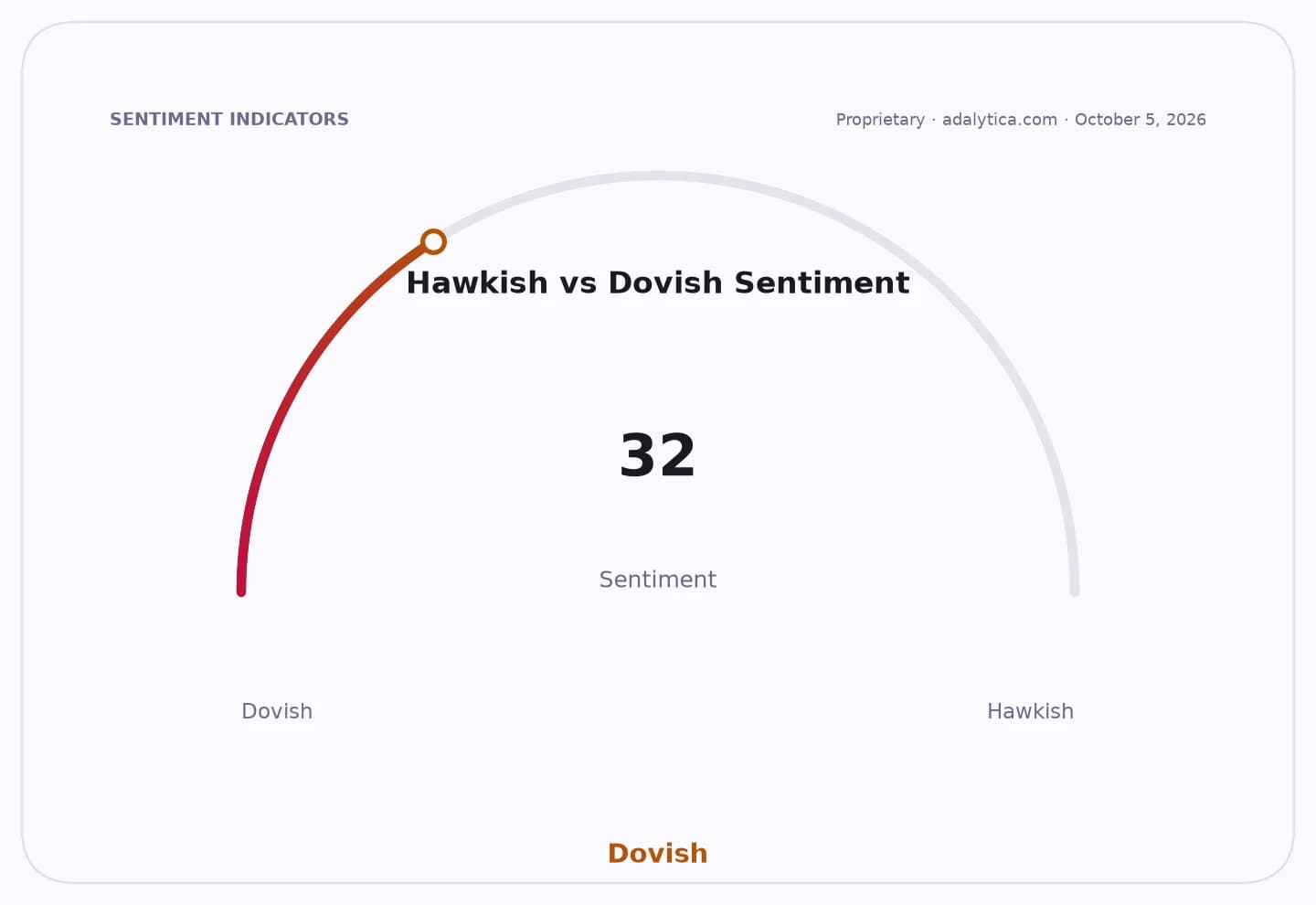
European stocks slipped on Thursday as a jump in oil prices and a global bond sell-off reignited fears that inflation will stay sticky and central banks will have to keep rates higher for longer.
European stocks fall as oil and yields jump
That combination matters because it squeezes corporate margins, raises borrowing costs and re-prices the entire equity market lower, especially in rate-sensitive sectors such as banks, telecoms and domestic cyclicals. The pan-European STOXX 600 fell 0.9% to 624.77, after losing 1% on Wednesday, while Germany's DAX dropped 0.7%, France's CAC 40 fell 0.8% and London's FTSE 100 slipped 0.4%.
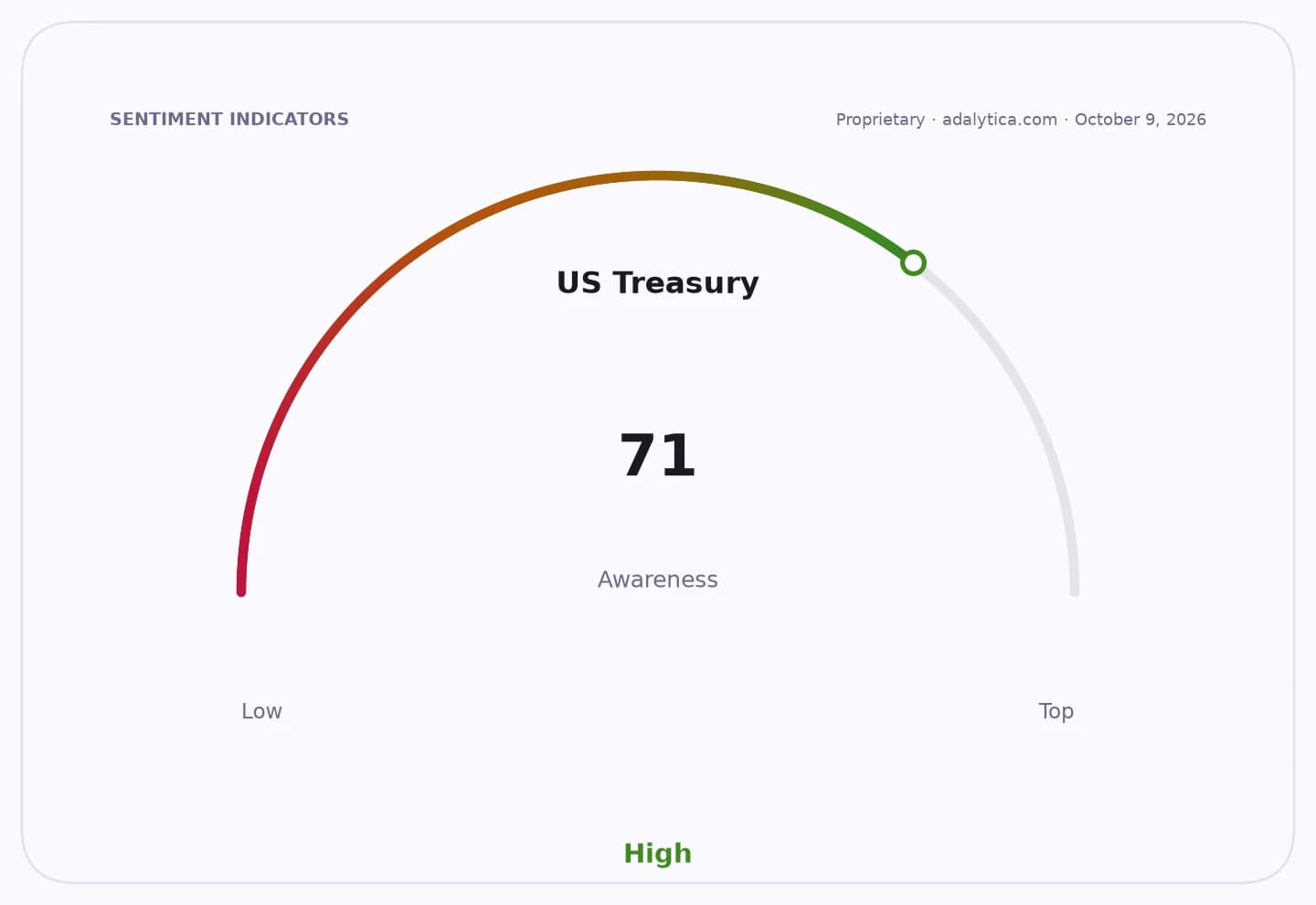
Sentiment IndicatorsⓘProprietary · adalytica.com · October 9, 2026
This is a snapshot — live sentiment, awareness and momentum for 130+ markets update continuously in the dashboard.Open AlphaPulse
The catalyst was a sharp move in energy and fixed income markets. Brent crude futures pushed above $104 a barrel after reports the White House had asked the Pentagon to prepare strike options against Iran that could be carried out before the U.S. midterm elections. At the same time, U.S. Treasury yields surged back toward multi-decade highs, with the 10-year near 5.32% and the 30-year around 5.71% after Federal Reserve minutes showed unanimous support for another rate increase by year-end.
For investors, the message is clear: the inflation trade is back. Higher oil prices feed directly into transport, industrial and consumer costs, while rising bond yields tighten financial conditions and compress equity valuations. In Europe, that is especially painful because growth is already fragile. Germany's exports unexpectedly fell 0.8% in August, after a 0.5% drop in July, while imports rose 0.9%, underscoring how external demand is losing steam just as input costs climb.
The sector reaction reflected that squeeze. Banks fell as euro zone yields climbed toward recent peaks, with Commerzbank, BNP Paribas and Lloyds down 1% to 2%. Energy stocks were the main beneficiaries, with BP, Shell and TotalEnergies all gaining more than 1% as crude surged nearly 4%.
Stock-specific moves were still driven by earnings and capital returns, but the market backdrop set the tone. Tesco jumped nearly 4% after raising its profit outlook and boosting buybacks, while Imperial Brands rose 2.4% after reaffirming guidance and unveiling a 1.5 billion pound buyback for fiscal 2027. Aberdeen gained 1.3% after saying it would cut its stake in Standard Life, while Vodafone fell about 1% after lifting cost-saving targets for its merged U.K. business.
My view is that the market is underestimating how quickly this bond-and-oil combination can reset leadership in Europe. If inflation pressure persists, the winners are likely to be energy, select defensives and companies with pricing power or aggressive capital returns. The losers are the rate-sensitive, balance-sheet-heavy names that depend on cheap funding and stable demand. For investors, this is the kind of macro inflection point that argues for owning quality cash generators and energy exposure, while staying cautious on banks and economically exposed European cyclicals.
| Entity | Gains | Losses |
|---|---|---|
| Energy majors (BP, Shell, TotalEnergies) | ▲Higher crude prices | ▼None from this move |
| European banks | ▲Higher margins if rates stay elevated | ▼Mark-to-market pressure, funding costs |
| Consumer defensives (Tesco, Imperial Brands) | ▲Pricing power, buybacks | ▼Broader margin squeeze if input costs rise |
| Exporters / cyclicals | ▲None | ▼Softer external demand, stronger cost pressure |