European stocks are trying to claw back from three-month lows as softer U.S. jobs data sharply lowered the odds of another Federal Reserve rate hike, giving battered markets a much-needed lift even as fresh violence in the Middle East keeps the recovery fragile.
European Stocks Rise on Softer U.S. Jobs Data
The Stoxx 600 rose 0.4% in early trade, with Germany’s DAX up 0.2%, Britain’s FTSE 100 ahead 0.7% and Italy’s FTSE MIB gaining 0.8%. The move follows three straight weeks of declines that had pressured valuations across the region and pushed investors into a more defensive stance.
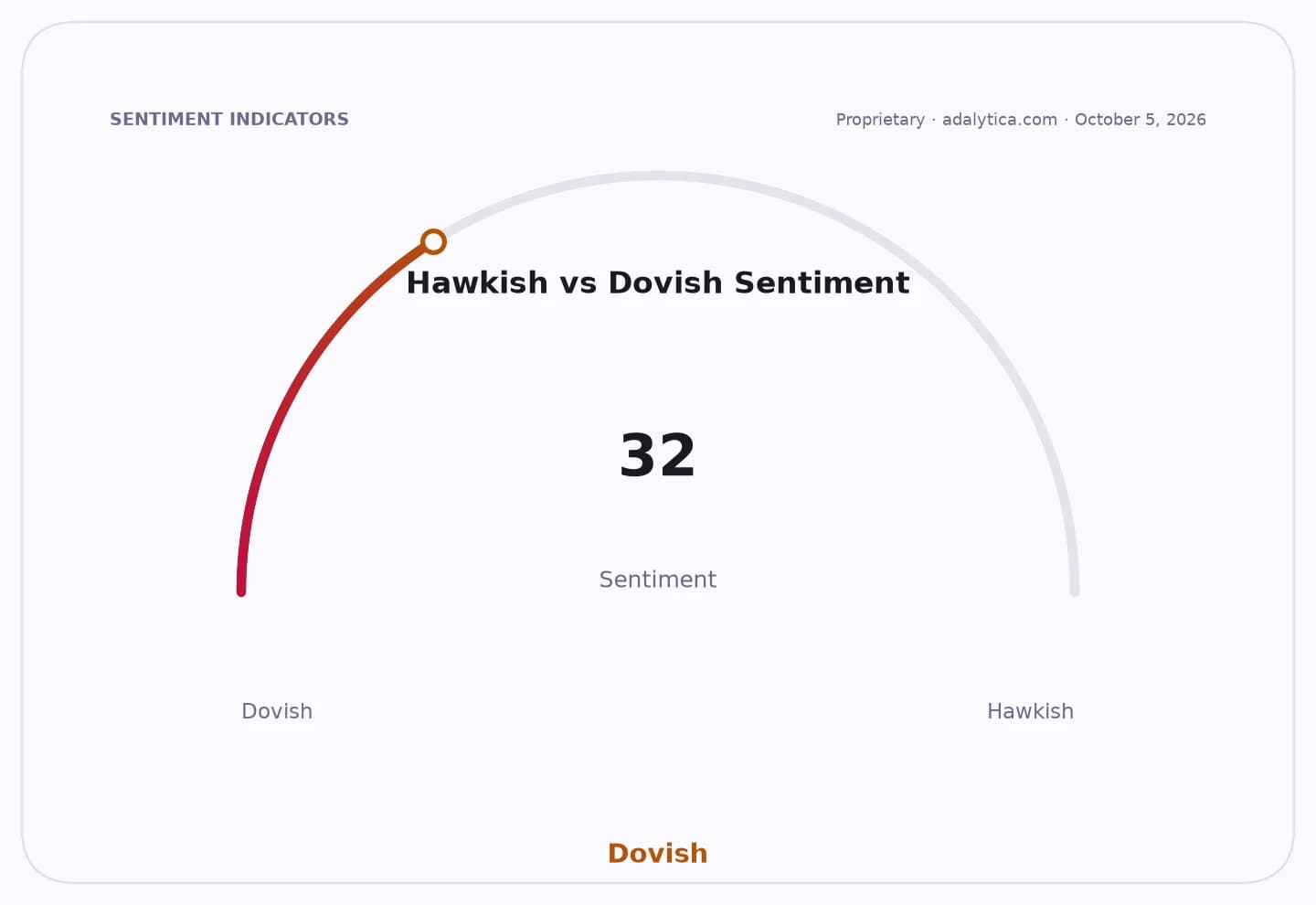
Sentiment IndicatorsⓘProprietary · adalytica.com · October 5, 2026
This is a snapshot — live sentiment, awareness and momentum for 130+ markets update continuously in the dashboard.Open AlphaPulse
What matters most is not the size of the bounce, but the shift in the policy backdrop. Friday’s weaker-than-expected U.S. payrolls report and downward revisions to the prior two months have changed the global rates narrative. CME FedWatch now puts the chance of a U.S. rate hike at roughly 20%, down from about 65% a week earlier. That sudden repricing pulled U.S. Treasury yields off multi-decade highs and is feeding directly into European equities, especially interest-rate-sensitive sectors such as property, utilities and other long-duration assets.
For investors, this is the first real opening in weeks for a broad relief rally. If the Fed is closer to pausing than tightening again, the discount rate on future earnings stops rising, and beaten-down European cyclicals and quality growth names can breathe again. The market is also looking ahead to September flash PMI data in the euro zone, which will test whether the region’s slowdown is deepening or merely cooling after a punishing run of higher energy costs and tighter financial conditions.
But the rebound is still living on borrowed time. The internationaly recognized Yemeni government backed by Saudi Arabia said it launched a major military operation to retake Houthi-held areas, raising the risk of a new front in the seven-month regional conflict. The Houthis responded by saying they fired ballistic missiles and drones at Saudi Aramco energy facilities south of Riyadh. That has revived the oil market’s geopolitical premium and could keep Brent elevated if supply fears intensify.
That is the real tug of war for markets now: easing Fed pressure is supporting equities, while Middle East escalation threatens to reawaken inflation fears and complicate central bank decisions on both sides of the Atlantic. ECB officials Isabelle Schnabel and Philip Lane are due to speak, and investors will be parsing every word for signs that Frankfurt stays hawkish even as growth weakens.
The trade from here is straightforward. If you believe the Fed is done hiking, the best near-term upside remains in rate-sensitive European sectors and broad-market ETFs tied to the Stoxx 600. But if Middle East risk keeps oil bid, the stronger relative winners may be energy producers and defense names, while import-heavy sectors and consumer cyclicals remain vulnerable. The market is still offering a window to position early before the next policy or geopolitical shock closes it.
| Entity | Gains | Losses |
|---|---|---|
| European equities / Stoxx 600 | ▲Lower rate pressure | ▼Oil-driven inflation fears |
| Rate-sensitive sectors | ▲Falling bond yields | ▼Any hawkish ECB surprise |
| Energy producers | ▲Higher Brent premium | ▼Demand-sensitive industries |
| Importers / consumers | ▲Softer U.S. rates | ▼Higher fuel costs |