The DAX edged only 0.09% higher to 25,254 at the start of the week, underperforming a broadly firmer Europe as investors weighed falling odds of another Federal Reserve rate increase against still-elevated bond yields and lingering fiscal strain in core markets.
DAX Edges Higher as Bond Yields Pressure Gains

The muted move matters because it shows German equities are not yet getting the same support as Wall Street or parts of the broader region, even as the macro backdrop is turning slightly more constructive for risk assets. A weaker-than-expected US jobs report has reduced expectations for another Fed hike in October, helping lift the S&P 500 0.66% and reinforcing hopes that US policy will stay on hold longer. But that relief is being offset by the bond market, where the 10-year US Treasury yield rose to 5.31% after the ISM services survey pointed to softer activity but also the strongest rise in input prices in more than four years. In Europe, the German 10-year yield moved up to about 3.49%, while concern over French public finances kept pressure on euro-area sovereign debt.
Sentiment IndicatorsⓘProprietary · adalytica.com · October 7, 2026
This is a snapshot — live sentiment, awareness and momentum for 130+ markets update continuously in the dashboard.Open AlphaPulse
For German stocks, that combination is important because the DAX sits at the intersection of global cyclicals, exporters and rate-sensitive financials. Higher long-term yields typically cap valuation multiples, especially for growth and duration-heavy sectors, while also tightening financial conditions for the broader market. At the same time, lower Brent crude prices — down 1.89% to $100.32 a barrel after higher Middle East exports and G7 pledges to release 100 million barrels from strategic reserves — offered some relief to inflation expectations and transport-intensive companies. That helped offset, but not eliminate, the drag from bond yields.
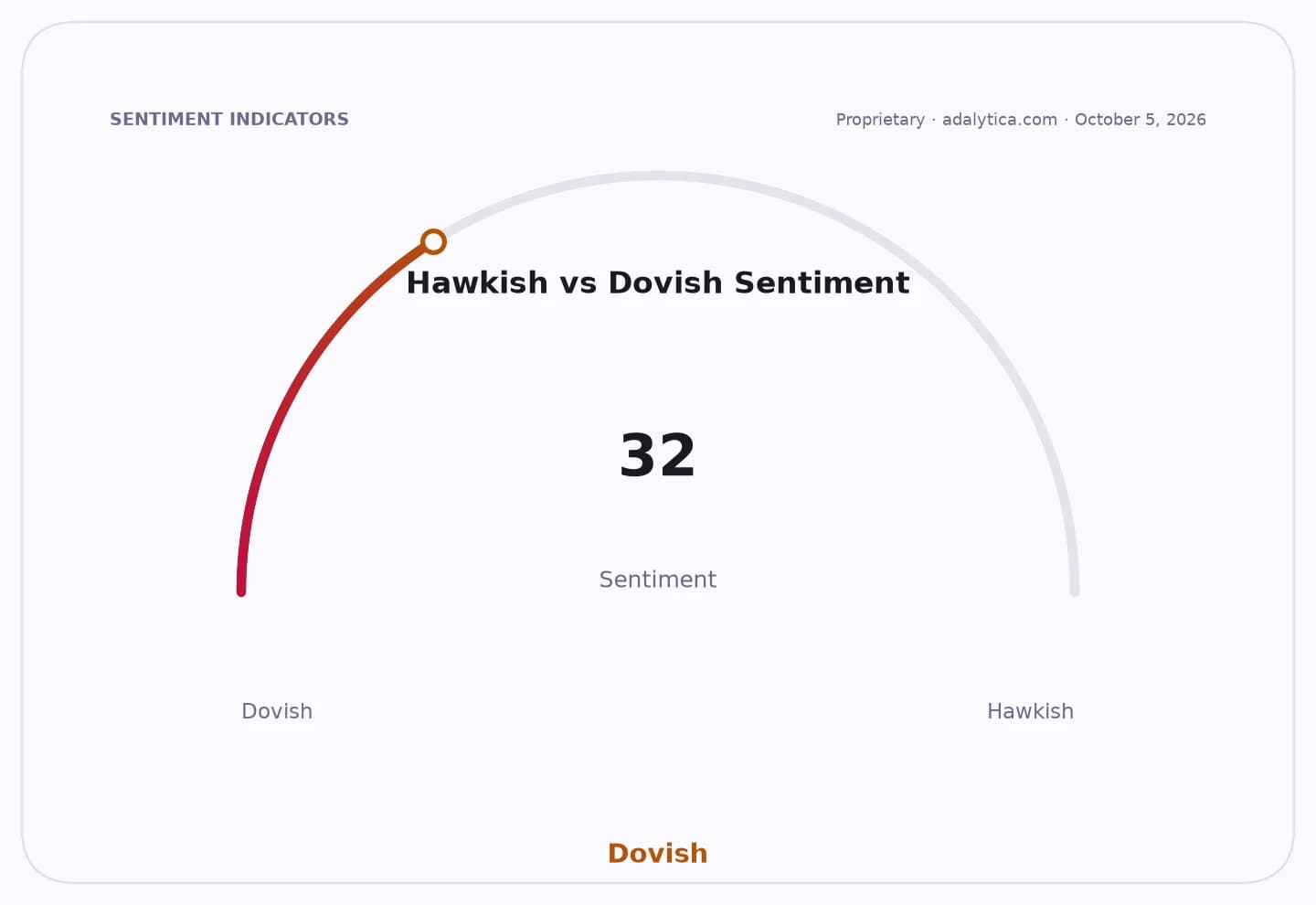
Market structure also suggests caution rather than conviction. The DAX’s tiny gain came with little intraday volatility, a sign that buyers were unwilling to chase prices despite the more supportive tone on other European exchanges. Adalytica’s euro trade signals showed sentiment at neutral, even as awareness remained at an extreme level, reflecting how closely traders are watching the interplay between Fed expectations, energy prices and sovereign-debt stress.
The immediate bull case for the DAX is that a pause from the Fed, softer oil and still-solid US risk appetite could eventually spill over into European equities, particularly if yields stabilize. The bear case is that persistently high long-term rates, plus political and fiscal uncertainty in Europe, continue to keep German equities capped below their peers. For investors, the week now hinges on whether the easing in policy fears can overpower the bond-market drag that has kept the DAX’s advance measured.
| Entity | Gains | Losses |
|---|---|---|
| DAX bulls | ▲Lower Fed-hike odds | ▼Higher bond yields |
| German exporters | ▲Softer oil costs | ▼Cautious global demand |
| US equities | ▲Fed pause hopes | ▼Treasury yield pressure |
| European bondholders | ▲None | ▼French fiscal worries |