German government bonds are becoming the market’s refuge again as a fresh global selloff in debt pushes investors toward the safest and deepest corner of Europe’s fixed-income market.
German Bunds Draw Haven Demand in Global Bond Selloff

That flight to quality matters because it says less about confidence in growth and more about fear of inflation, heavier borrowing needs and stubbornly high interest rates. When traders dump longer-dated U.S., French and other sovereign bonds while buying Bunds, they are effectively voting for caution: the market is pricing a world in which central banks cannot declare victory over inflation, and governments may have to pay more to finance themselves.
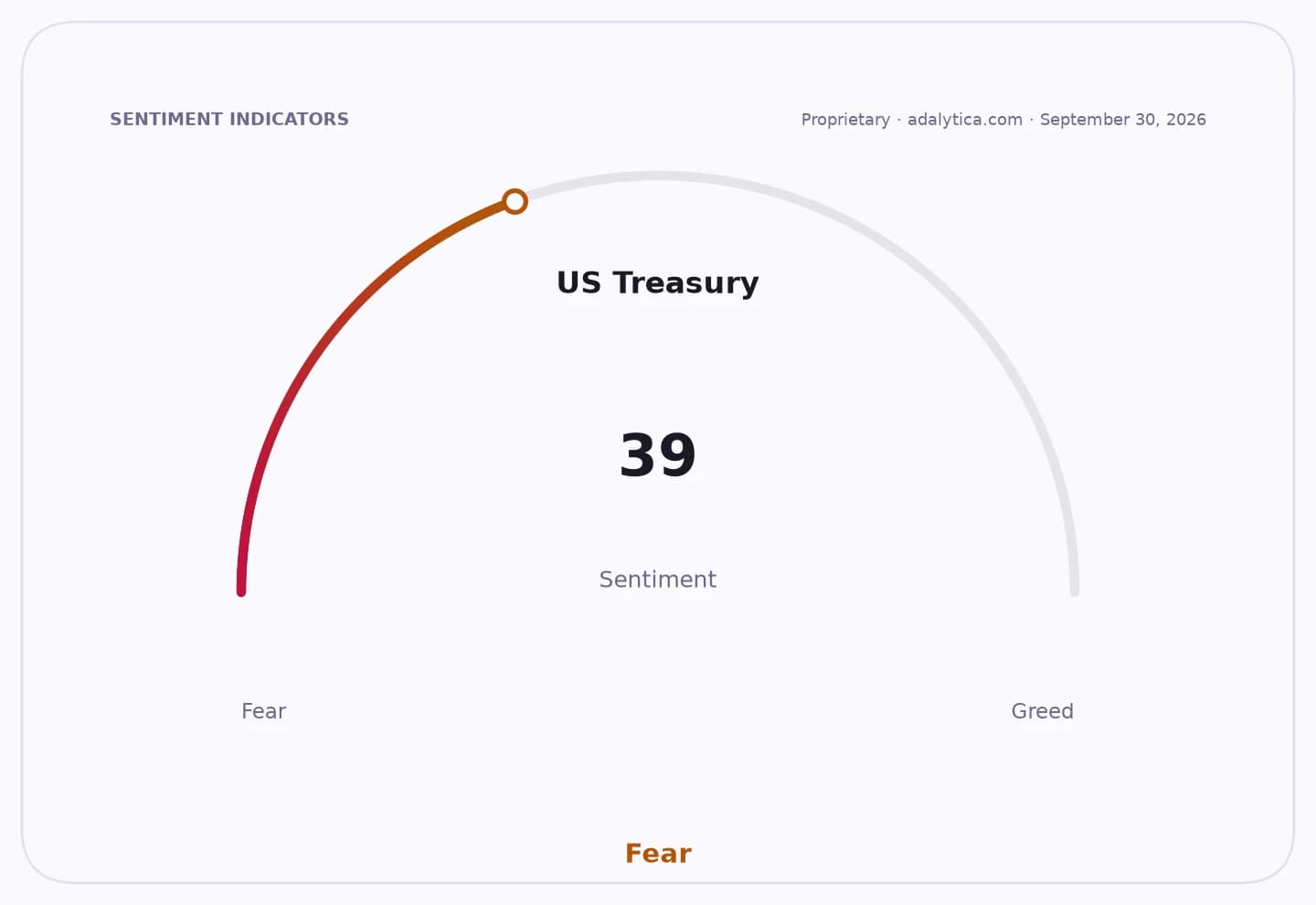
Sentiment IndicatorsⓘProprietary · adalytica.com · October 2, 2026
This is a snapshot — live sentiment, awareness and momentum for 130+ markets update continuously in the dashboard.Open AlphaPulse

The clearest signal is in the benchmark U.S. Treasury market, where the 10-year yield is around 5.32% and the 2-year is near 4.90%, levels that keep global yields elevated and pressure bond prices everywhere. In Europe, that backdrop has helped the Bund stand out. German debt has outperformed even as the rest of the sovereign bond market has been hit by renewed inflation fears, oil-price worries and heavier fiscal concerns, especially in France. When investors reach for Bunds, they are not chasing return — they are buying protection.
For investors, that has two important implications. First, the bond rout is not a short-term technical wobble; it is a reminder that duration risk is back. Long-dated bonds can lose value quickly when inflation expectations rise or when markets start to doubt how soon rates will come down. The recent slide in the iShares 20+ Year Treasury Bond ETF, or TLT, underscores that point. TLT fell to about $77.71 on Oct. 1, well below its 50-day moving average of roughly $81.24 and its 200-day average of $83.76, with its RSI in the high 20s — a sign of heavy selling pressure in standard technical terms. The iShares 7-10 Year Treasury Bond ETF, IEF, has also weakened, slipping to $89.30, below both its 50-day and 200-day averages.
Second, the pattern reinforces the case for selectivity. Investors who need income may still find short- and intermediate-duration bonds more appealing than long-duration paper, while equity investors should expect a higher-rate world to keep rewarding balance-sheet strength, pricing power and durable free cash flow. That is especially true if inflation remains sticky: the latest U.S. CPI trend shows prices still running elevated, and Adalytica’s CPI sentiment gauge sits at “Extreme Greed,” suggesting inflation remains a front-of-mind market risk rather than a fading headline.
The bigger narrative is that sovereign debt is once again being judged on relative safety, not just yield. German Bunds are drawing capital because they are seen as the cleanest shelter when global bond markets get stormy. That can help stabilize parts of Europe’s financial system, but it also tells you investors are still uneasy about the macro backdrop — from fiscal strain to central-bank credibility.
For long-term investors, the takeaway is straightforward: the bond market is warning that volatility around inflation and rates is not over. Bunds may continue to attract haven flows if the selloff broadens, but the broader lesson is to stay diversified, keep duration risk under control and treat any sudden calm in rates as temporary until inflation truly cools.
| Entity | Gains | Losses |
|---|---|---|
| German Bunds | ▲Haven inflows | ▼Price pressure eases elsewhere |
| U.S. Treasuries | ▲Safety demand at the margin | ▼Long-duration holders |
| French and other euro debt | ▲Relative selling pressure | ▼Borrowers facing higher costs |
| Bond investors in TLT/IEF | ▲Potential re-entry points later | ▼Current long-duration positions |