US borrowing costs have jumped back to levels that can reshape the housing market, with the average 30-year mortgage rate rising to 7%, the highest since the Trump era, even as European government bond yields eased only modestly after a bruising selloff.
US mortgage rates rise to 7% as Treasury yields climb
That matters because mortgage rates do not move in a vacuum: they are tethered to Treasury yields, and this week’s rise in long-dated US yields pushed the 10-year note to levels last seen in 2007. The 30-year Treasury yield also climbed to about 5.5%, its highest since 2004, underscoring how inflation fears, heavier government borrowing and a rebound in oil prices are keeping the cost of money elevated across markets.
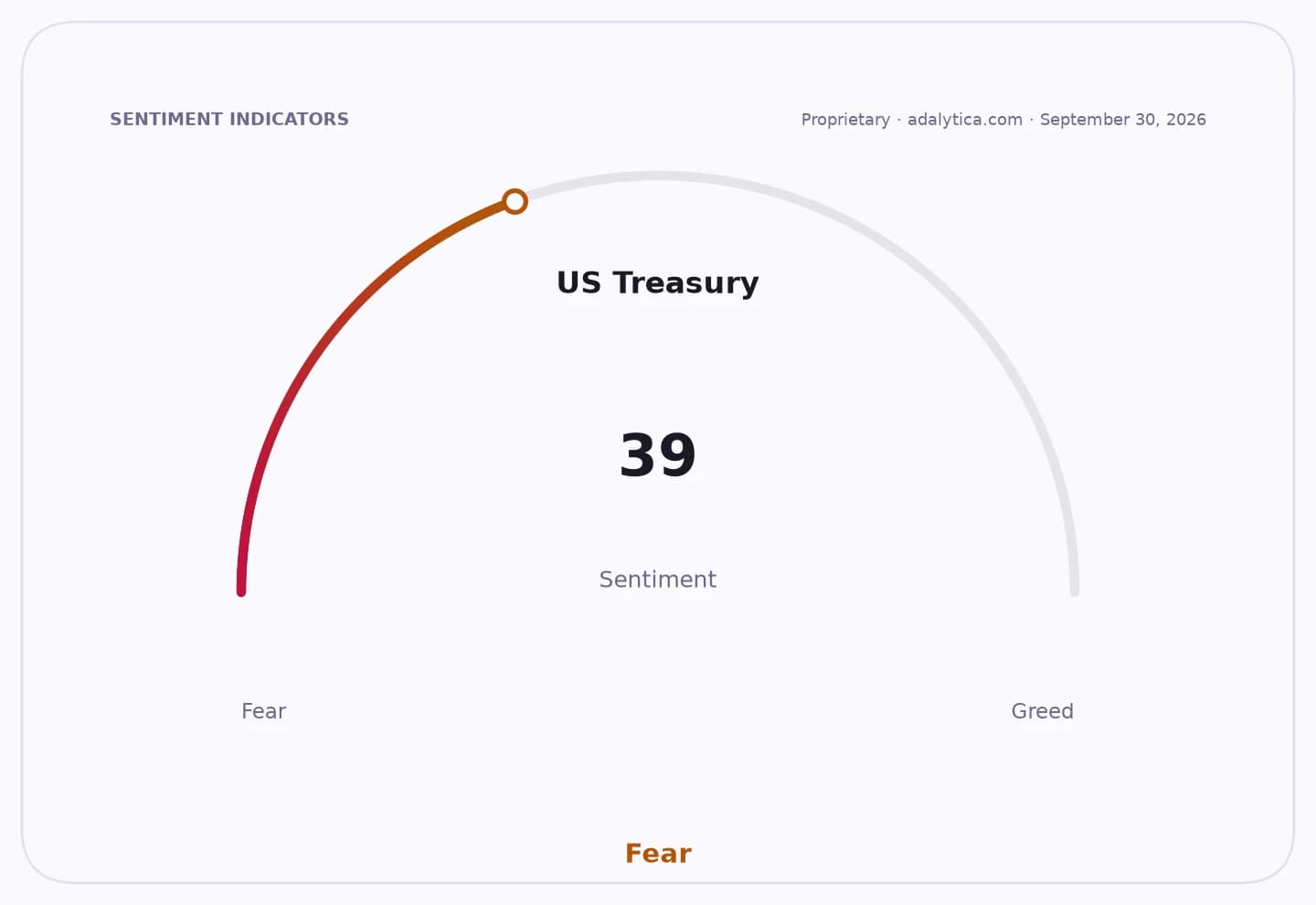
Sentiment IndicatorsⓘProprietary · adalytica.com · September 30, 2026
This is a snapshot — live sentiment, awareness and momentum for 130+ markets update continuously in the dashboard.Open AlphaPulse
For homeowners and would-be buyers, the jump is immediate and painful. A 7% mortgage rate raises monthly payments, reduces affordability and can slow turnover in an already strained housing market. For investors, that is more than a housing story. Higher rates can compress valuations across rate-sensitive sectors, pressure homebuilders and lenders, and keep cash and short-duration assets attractive relative to long-duration growth plays.
The contrast with Europe is telling. French 10-year bond yields slipped to around 4.67% from roughly 4.70%, while German 10-year bund yields eased to about 3.59%. But the relief was thin. The spread between French and German borrowing costs widened beyond 110 basis points, the broadest since the euro-area debt crisis in 2012, after a credit downgrade and mounting concern about France’s debt load and political risk.
DGS10 vs DGS2 — macro contextadalytica.com
Explore this data interactively — full history, time series and cross-market comparisons.Open AlphaPulse
In other words, both sides of the Atlantic are dealing with the same core problem: investors want more compensation to lend for longer. In the US, the concern is stubborn inflation and swelling debt issuance. In France, it is fiscal fragility and election risk. Either way, higher sovereign yields feed into private borrowing costs and make it harder for policymakers to count on cheap money to cushion a slowdown.
That is why this move matters well beyond the daily bond tape. If long-term yields stay elevated, the housing recovery gets tougher, government financing gets more expensive and equity markets lose one of their old supports. Bond prices have not been acting like the safe haven investors relied on in past selloffs, which makes portfolio construction more important, not less. For long-term investors, the message is simple: own quality, stay diversified and be prepared for a world where borrowing costs may stay higher for longer than markets hoped.
| Entity | Gains | Losses |
|---|---|---|
| Savers and cash holders | ▲Higher yields on safe assets | ▼Less need to chase risk |
| Homebuyers and homeowners | ▲None | ▼Higher monthly payments |
| US Treasury borrowers | ▲None | ▼Costlier debt service |
| French government bonds | ▲Slight yield relief | ▼Wider risk premium |