France’s borrowing costs have risen to their highest level since 2008, and the widening gap with German debt is now flashing a sharper warning about the euro zone’s second-largest economy.
France 10-year yields hit highest since 2008

Ten-year French government bond yields have climbed to about 4.70%, up from 3.25% at the end of February, while the spread over comparable German bunds has pushed above 100 basis points for the first time since 2012. That move matters because it is not just part of a global selloff in sovereign debt: it shows investors are demanding a larger premium for holding French paper than for most other developed-market borrowers, reflecting growing concern over Paris’s stagnant growth, entrenched deficits and political paralysis.
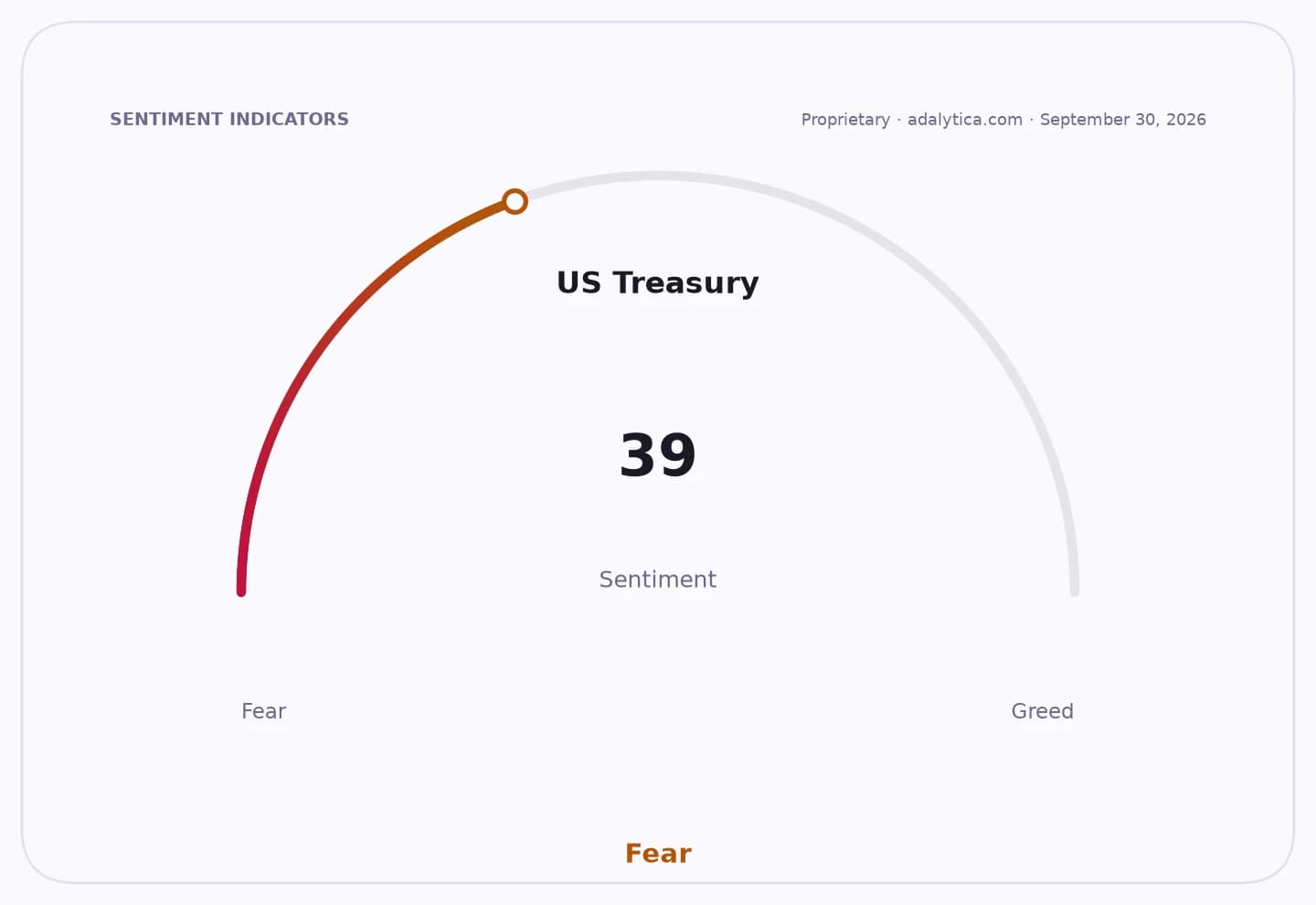
Sentiment IndicatorsⓘProprietary · adalytica.com · September 30, 2026
This is a snapshot — live sentiment, awareness and momentum for 130+ markets update continuously in the dashboard.Open AlphaPulse

The backdrop is a broad rise in global yields. US 10-year Treasury yields have moved back above 5% at points this month, the highest since 2007, while German 10-year yields have reached their highest levels since 2009. But France is underperforming even within that trend. The French 10-year yield is now materially above Germany’s, underscoring a country-specific risk premium that has widened rather than narrowed as higher rates squeeze highly indebted states.
At the heart of the market’s concern is France’s fiscal position. Public debt stands at 115.6% of GDP, a level that has barely budged since 2020, while the deficit has hovered near 5% of GDP for four straight years. The latest budget plan still points to a deficit around 5% in 2027, despite a tax-and-spend model that leaves the state spending more than half of national output. In normal times, that scale of borrowing might be manageable. In an era of structurally higher rates, slow growth and an aging population, it becomes far more expensive to finance.
The economic backdrop is doing little to reassure markets. INSEE now expects growth of just 0.4% this year, down from a prior 0.7% forecast, leaving France close to stagnation even as debt servicing costs rise. That combination is especially difficult for a sovereign because nominal growth is too weak to erode the debt ratio quickly, while higher yields feed directly into refinancing costs over time.
Politics are amplifying the problem. President Emmanuel Macron’s camp has lost its majority, parliament is fragmented and neither the center nor the opposition blocs appear able to impose a credible fiscal consolidation. The next presidential election is not due until 2027, but investors are already discounting the likelihood of policy gridlock persisting well before then. That helps explain why the spread between French and German debt has returned to levels last seen during the euro zone crisis, when markets were openly questioning the long-term solvency of some member states.
France’s central bank governor Emmanuel Moulin has already acknowledged the situation is “worrying and unsatisfactory,” language that, while measured, amounts to a public admission that market pressure is becoming harder to dismiss. The risk for policymakers is that rising yields can become self-reinforcing: higher financing costs worsen the deficit outlook, which in turn justifies still higher risk premia.
For investors, the key issue is not whether France will face an immediate funding crisis. It is that France is moving from being treated as a core euro-zone borrower to something closer to a semi-peripheral risk within the bloc. That has implications for holders of French sovereign debt, for European banks and insurers with large domestic bond books, and for the European Central Bank, which may eventually face renewed pressure to prevent intra-eurozone fragmentation.
The bull case is that French debt still sits inside the euro area’s monetary framework, with the ECB able to lean against disorderly spread widening if needed. The bear case is that without credible fiscal repair, the market keeps repricing France relative to Germany and, over time, relative to other high-grade sovereigns as well. For now, the message from bond traders is straightforward: France is no longer being priced like a routine euro-zone borrower.
| Entity | Gains | Losses |
|---|---|---|
| German bunds | ▲Safe-haven premium | ▼Lower relative yield appeal |
| French bondholders | ▲Higher coupons on new debt | ▼Capital losses on existing holdings |
| ECB / euro zone stability tools | ▲Test case for intervention | ▼Pressure from widening spreads |
| French government | ▲Time from ECB backstop | ▼Higher financing costs and tighter policy choices |