Portugal’s borrowing costs edged lower across the curve on Thursday, reflecting a broader decline in euro-zone sovereign yields and a mild easing in global rate pressure that matters for fiscal financing and risk appetite in European debt markets.
Portugal 10-year yield falls below 4%
At 08:40 in Lisbon, Portugal’s 10-year yield slipped to 3.922% from 3.941% a day earlier, while the 5-year dropped to 3.556% from 3.580% and the 2-year fell to 3.300% from 3.332%. The move kept Portuguese debt aligned with declines in Spain, Greece and Italy, and in step with Germany at the long end, where the 10-year Bund yield eased to 3.542% from 3.580%.
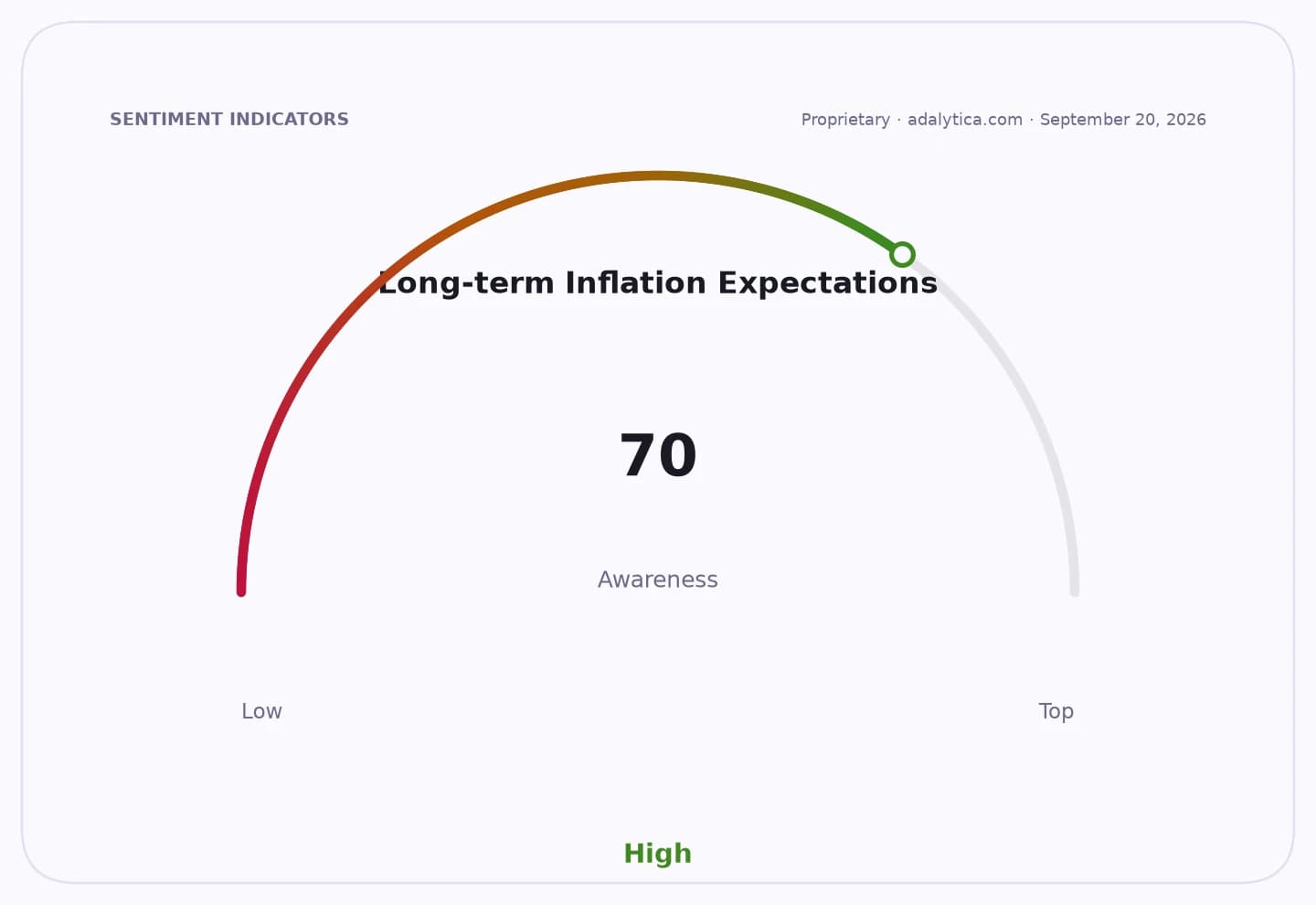
Sentiment IndicatorsⓘProprietary · adalytica.com · September 29, 2026
This is a snapshot — live sentiment, awareness and momentum for 130+ markets update continuously in the dashboard.Open AlphaPulse
For Portugal, lower yields reduce the immediate cost of funding public debt and support the state’s refinancing profile at a time when sovereign borrowing remains highly sensitive to shifts in the global rates backdrop. Even small moves matter: a 10-year yield below 4% signals that investors are still willing to buy Portuguese paper at levels that remain elevated by historical standards, but not so high as to imply acute stress.
The broader signal is that investors are trimming term premiums across Europe rather than repricing Portugal in isolation. Spain’s 10-year yield fell to 4.025%, Greece’s to 4.357% and Italy’s to 4.485%, suggesting that peripheral debt is being pulled lower by the same market forces. That relative stability is important because it indicates no fresh country-specific shock is driving the market, even as sovereign debt levels remain a central issue for the region.
The move also comes against a backdrop of firmer global borrowing costs. US 10-year Treasury yields were still above 5.1%, highlighting how Europe’s sovereign market is not simply following Wall Street lower. Instead, investors appear to be distinguishing between the euro zone’s credit structure and the more aggressive move higher in US rates, where long-term financing costs have risen sharply and are weighing on everything from federal budgets to corporate investment plans.
That divergence matters for investors holding European sovereigns, bank debt and rate-sensitive equities. Lower government yields can support bond prices and ease funding conditions for lenders and corporate borrowers, while also improving the relative appeal of higher-yielding peripheral debt versus core bunds. But the benefit is limited if the decline reflects only a short-lived pause in volatility rather than a durable turn in the inflation and policy outlook.
For now, the market is saying that Portugal and its southern European peers remain tradable rather than troubled. The key test will be whether this easing in yields persists through the next round of economic data, central-bank guidance and debt issuance, or whether global rate pressure reasserts itself and pushes financing costs back up.
| Entity | Gains | Losses |
|---|---|---|
| Portugal government | ▲Lower refinancing costs | ▼Higher-yield backdrop eases less |
| Euro-zone bondholders | ▲Modest price support | ▼Less carry if yields keep falling |
| Spain, Greece, Italy | ▲Synchronized yield relief | ▼No country-specific spread advantage |
| US Treasury market | ▲None | ▼Higher relative funding burden |