World stocks edged higher on Friday as investors positioned for next week’s U.S. bank earnings and fresh inflation data, even as Treasury yields stayed near multi-decade highs and crude oil remained elevated.
Stocks Rise Ahead of Bank Earnings and Inflation Data

The move underscores a market that is still willing to buy risk, but only selectively. With the benchmark U.S. 10-year yield at 5.261% after touching a 24-year high earlier this week, and Brent crude holding near $104 a barrel, investors are weighing whether stronger growth and resilient corporate profits can offset tighter financial conditions and higher input costs.
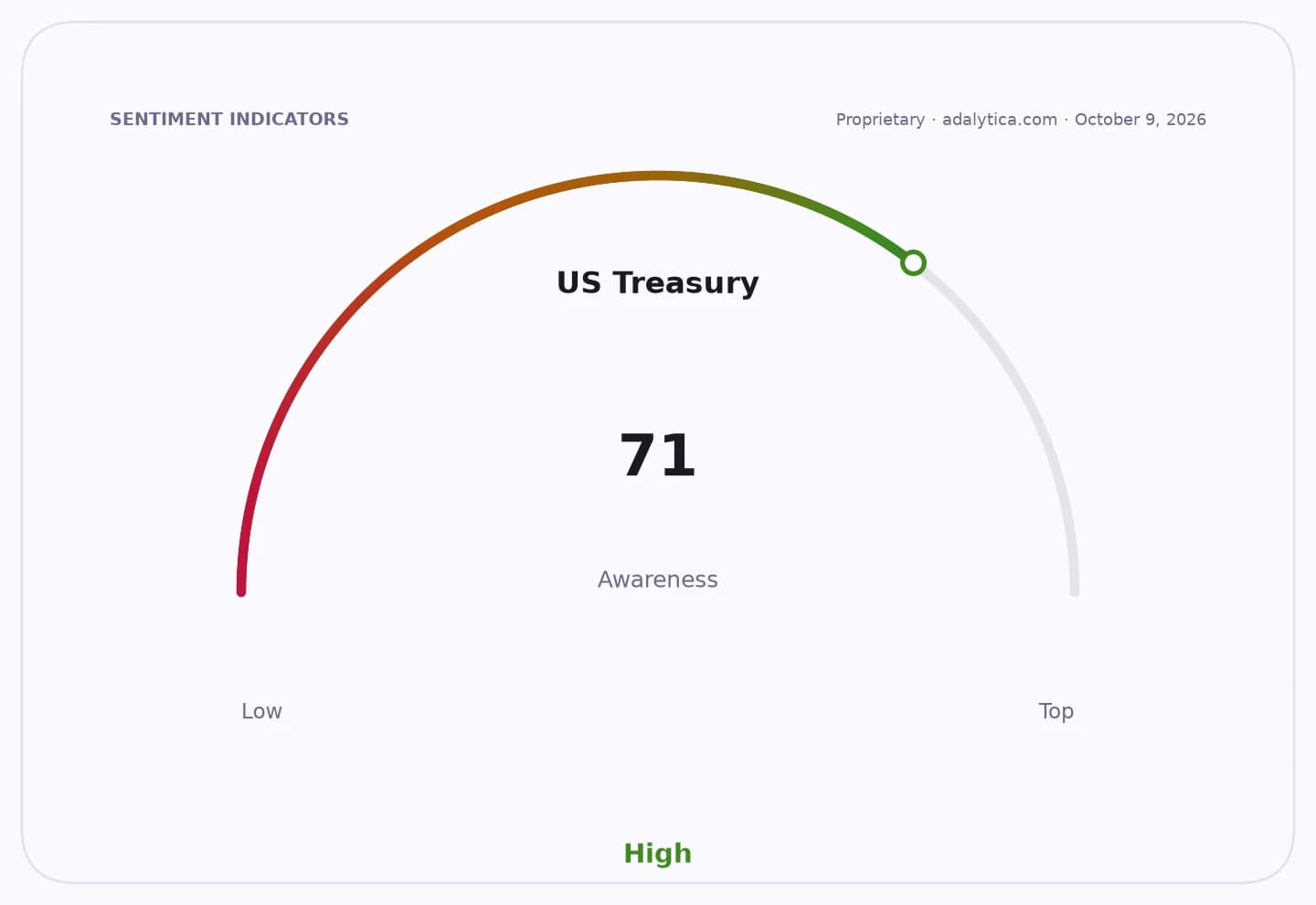
Sentiment IndicatorsⓘProprietary · adalytica.com · October 12, 2026
This is a snapshot — live sentiment, awareness and momentum for 130+ markets update continuously in the dashboard.Open AlphaPulse
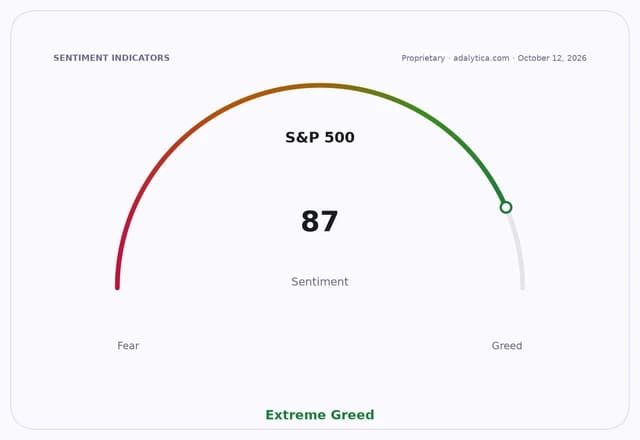
The S&P 500 and Nasdaq both gained about 0.6% on the day, helping all three major U.S. stock indexes post weekly advances. European shares rose 1% and Asia-Pacific stocks outside Japan added 0.6%, suggesting the latest leg higher is broad, though not uniform.
That resilience is being tested by a market increasingly focused on earnings quality rather than just artificial intelligence enthusiasm. Wells Fargo strategist Doug Beath said the S&P 500’s narrow participation suggests investors believe large technology companies can better absorb higher oil prices and rising yields, while other parts of the market remain more vulnerable. A weak tech showing next week, he warned, could trigger a broader pullback.
The first big read on corporate health arrives with results from Goldman Sachs, JPMorgan Chase, Wells Fargo and other U.S. lenders. Their reports will be watched not just for trading and lending trends, but for what they say about credit demand, deposit costs and the ability of companies to manage a higher-rate environment.
Bond markets remain the other major pressure point. U.S. Treasuries fell Friday as traders looked ahead to upcoming inflation reports and the Federal Reserve’s Oct. 27-28 meeting, while European borrowing costs eased slightly after a recent selloff driven by inflation fears and concerns over France’s fiscal outlook. The 10-year French spread over German Bunds narrowed to about 138 basis points, but investors remain wary of Europe’s debt and political risks.
Energy prices are also still complicating the outlook. Oil futures rose 0.4% even after President Donald Trump said Russia had agreed to supply more than 300,000 tons of diesel to the U.S. and global market. Diesel prices have cooled from records, but they remain above $6 a gallon in the U.S., keeping pressure on transport and industrial costs.
Sector moves showed the market’s selective tone. Telecom stocks fell on both sides of the Atlantic after SpaceX’s acquisition of low-band spectrum stoked competition worries, while chip shares slipped 0.4% as investors reassessed AI valuations and watched for a fresh wave of fundraising tied to AI infrastructure spending. That mix matters for investors because it suggests the market is still rewarding profit durability, but punishing any sign that long-duration growth stories may be stretched in a higher-rate world.
Gold rose about 1.5% to $4,193 an ounce, reflecting demand for hedges as the dollar softened and rate uncertainty persisted. The next catalyst is clear: inflation data and the opening salvo of bank earnings will show whether equities can keep climbing with yields near cycle highs, or whether higher borrowing costs finally force a broader reset.
| Entity | Gains | Losses |
|---|---|---|
| Large-cap tech | ▲Relative earnings support | ▼Valuation pressure |
| Banks | ▲Strong trading/loan trends | ▼Margin scrutiny |
| Oil producers | ▲Firmer crude prices | ▼Consumers and transport |
| Telecom carriers | ▲— | ▼Competition from SpaceX |