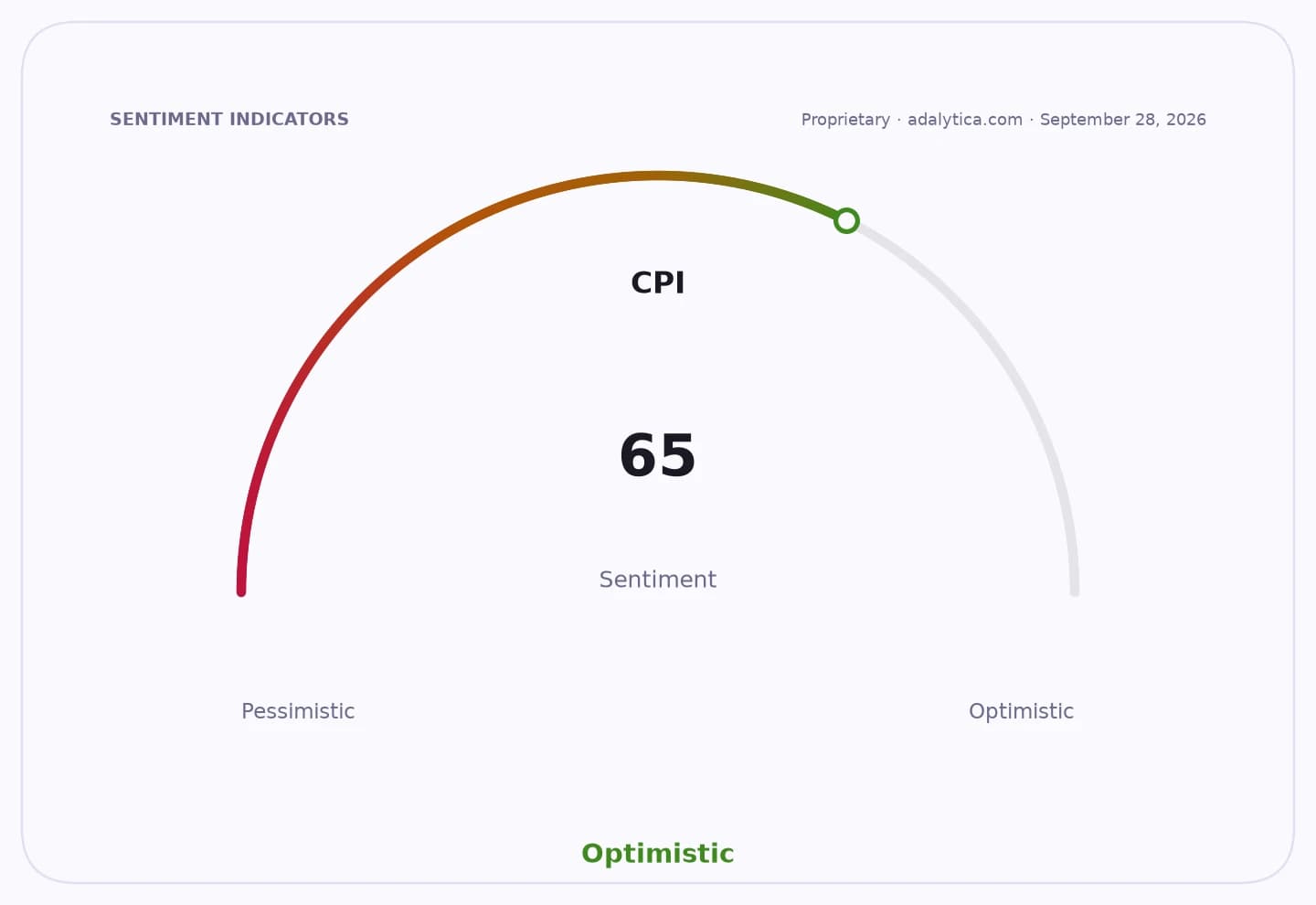
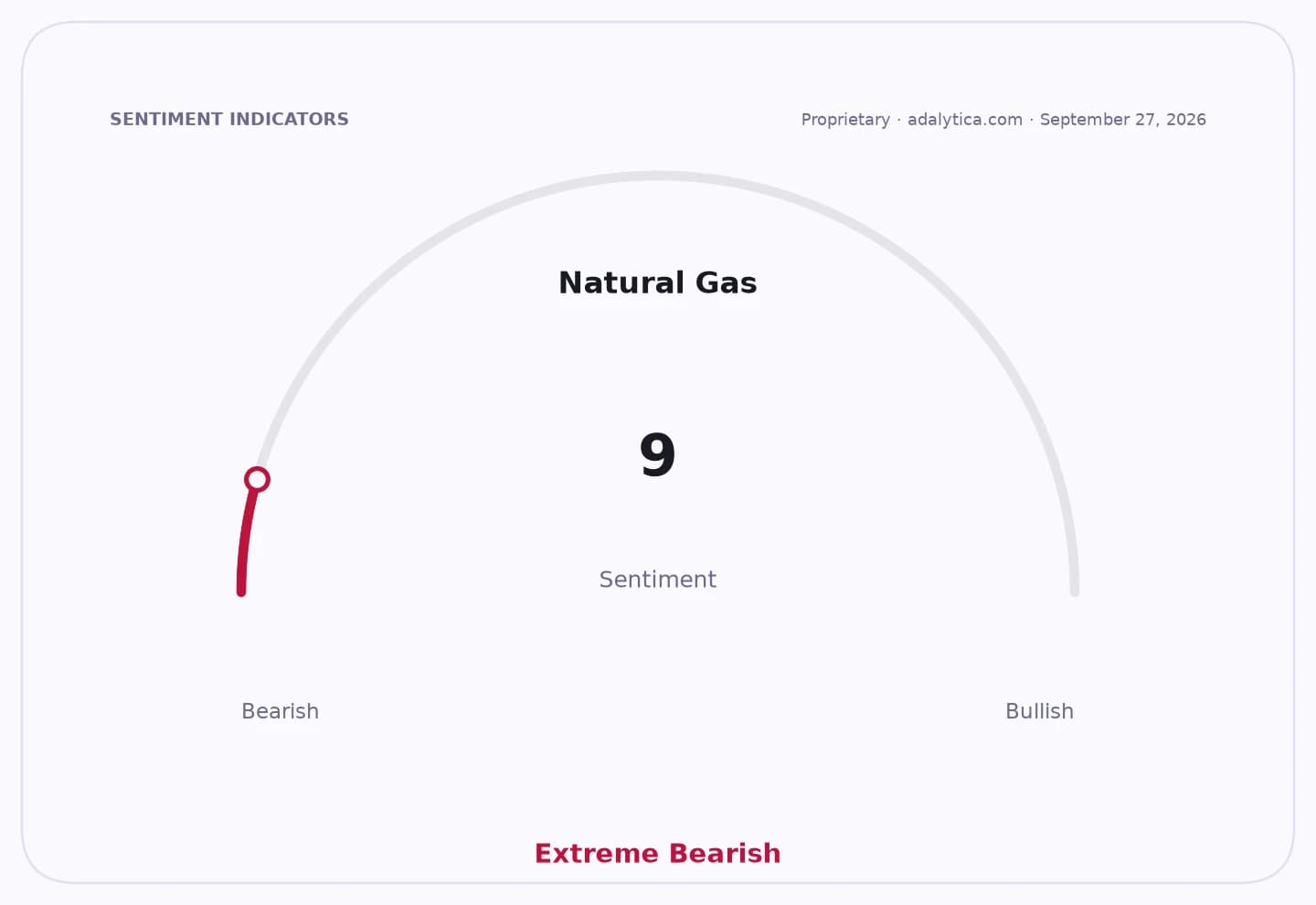
Euro area inflation accelerated to 3.8% in September, the highest rate in more than a year, as a sharp jump in energy prices threatened to keep the European Central Bank under pressure even after months of easing price growth.
Euro area inflation rises to 3.8% in September
Eurostat’s flash estimate showed inflation rising from 3.2% in August, with energy inflation climbing to 18.8% from 14.3% and accounting for the biggest contribution to the monthly increase. Services inflation also edged up to 3.2% from 3.0%, while food, alcohol and tobacco rose to 1.4% from 1.1%.
Sentiment IndicatorsⓘProprietary · adalytica.com · October 2, 2026
This is a snapshot — live sentiment, awareness and momentum for 130+ markets update continuously in the dashboard.Open AlphaPulse
The numbers matter because they suggest Europe’s disinflation process is losing momentum just as policymakers try to judge how far and how fast they can lower borrowing costs. Energy remains the main driver, but stickier services inflation points to broader price pressure that can take longer to fade.
For investors, the report supports the case for higher-for-longer rates in the euro area and keeps pressure on bond prices, while helping energy-linked assets and companies with pricing power. The data also complicates the outlook for rate-sensitive sectors such as housing, consumer discretionary and heavily leveraged corporates.
Non-energy industrial goods was the only major category to ease, slipping to 1.1% from 1.2%, underscoring how uneven the inflation slowdown remains. The latest reading is still a flash estimate, but it gives an early signal that the ECB may have less room to sound dovish at upcoming meetings.
The move adds to broader global inflation concerns that have pushed policymakers in Europe and elsewhere to stay cautious, and it leaves markets watching whether energy prices can cool enough to pull headline inflation back toward the ECB’s target.
| Entity | Gains | Losses |
|---|---|---|
| Energy producers | ▲Higher realized prices | ▼Consumers’ purchasing power |
| ECB hawks | ▲Stronger case for caution | ▼ECB doves |
| Bondholders | ▲None | ▼Eurozone sovereign bond prices |
| Eurozone consumers | ▲None | ▼Household budgets |