Deliveroo’s wage settlement lifts rider pay to 14 euros an hour and adds bonuses of up to 2,200 euros, marking a meaningful shift in the economics of food delivery just as investors are reassessing how much labor flexibility the gig model can preserve.
Deliveroo wage settlement raises rider pay in Europe
The agreement matters because delivery platforms have built their margins on variable contractor labor. Higher guaranteed pay and bonus commitments point to rising labor costs across Europe, where regulators and unions are pushing harder for better protections for couriers and more predictable income.
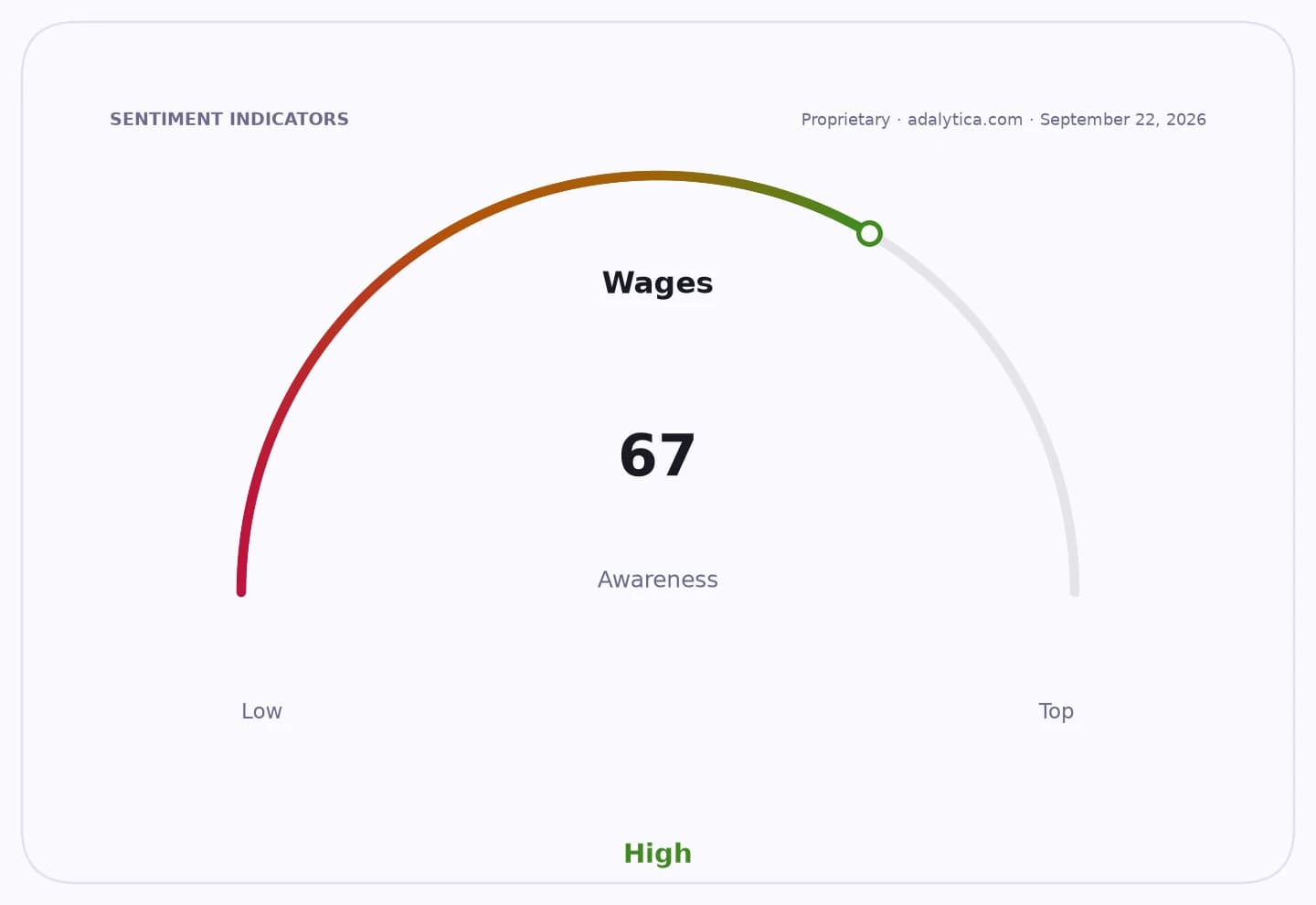
Sentiment IndicatorsⓘProprietary · adalytica.com · August 30, 2026
This is a snapshot — live sentiment, awareness and momentum for 130+ markets update continuously in the dashboard.Open AlphaPulse
For investors, the issue is not just Deliveroo’s cost base but the knock-on effect on the wider delivery sector. Any move that raises rider compensation can pressure take rates, squeeze contribution margins and make it harder for platforms to defend growth without passing costs on to restaurants, consumers or merchants.
The backdrop is already unfavorable for labor-heavy platforms. Wage expectations are firming while fuel and living costs remain elevated, keeping pressure on gig workers to demand fixed pay and bonus structures rather than pure piece-rate models. That raises the risk of higher operating costs just as delivery demand remains highly competitive.
Uber, which has exposure to delivery through its courier network, also faces the same broader industry pressure even if the company has a larger scale and a more diversified earnings base. Its shares were recently trading at 78.82 dollars, above the 50-day moving average of 73.69 dollars, while the relative strength index at 52.4 suggested the stock was not yet stretched.
DoorDash has shown a similar pattern, with shares at 236.74 dollars and trading close to its upper Bollinger Band, while the 79.5 RSI reading pointed to strong momentum. But the stock is still well above its 200-day moving average, underscoring how much of the sector’s valuation now depends on companies proving they can absorb labor inflation without slowing growth.
The next catalyst is whether other European markets or rivals follow Deliveroo’s lead, or whether the company tries to offset the higher wage bill through price increases, lower promotions or tighter courier scheduling. If wage demands keep rising, the economics of delivery may become more capital-intensive than the market has been pricing in.
| Entity | Gains | Losses |
|---|---|---|
| Deliveroo riders | ▲Higher hourly pay | ▼Less pay variability |
| Deliveroo | ▲Labor peace | ▼Higher wage costs |
| Uber/Delivery peers | ▲Competitive clarity | ▼Margin pressure |
| Consumers/restaurants | ▲Service continuity | ▼Higher delivery fees |