Docusign shares rose overnight after the company beat quarterly expectations and lifted its full-year forecast, reinforcing the case that its push into AI-powered agreement management is becoming a real revenue driver rather than a side project.
DocuSign beats estimates and raises forecast

The stock was up nearly 3% in after-hours trading heading into Friday, putting it on track for a second straight week of gains after a year that has still left the shares slightly lower. For investors, the key development is not just that Docusign topped estimates, but that its Intelligent Agreement Management platform is beginning to scale in a way that can support both growth and margins.
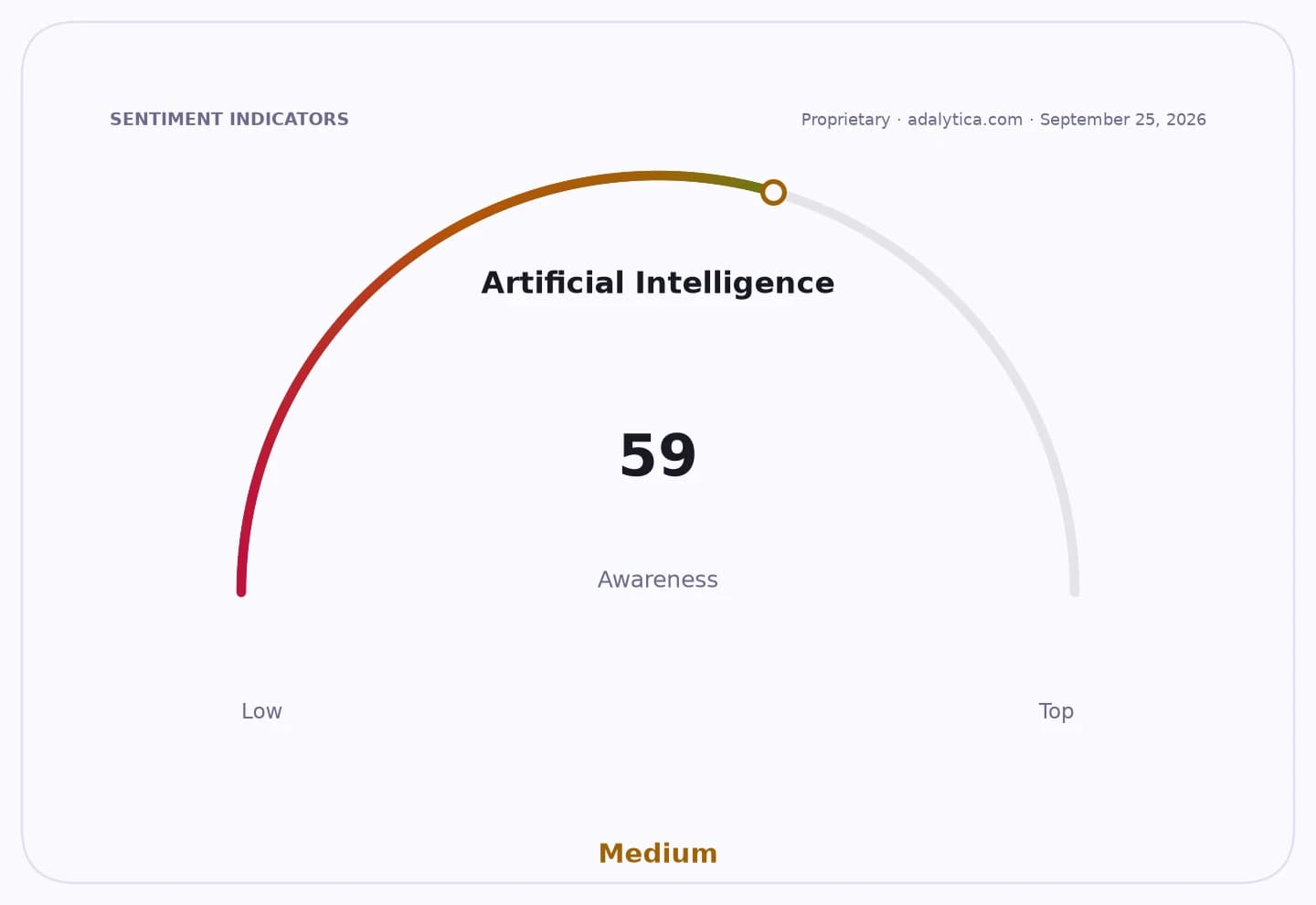
Sentiment IndicatorsⓘProprietary · adalytica.com · September 4, 2026
This is a snapshot — live sentiment, awareness and momentum for 130+ markets update continuously in the dashboard.Open AlphaPulse
Revenue in the fiscal second quarter rose 9% from a year earlier to $875.7 million, ahead of analyst expectations for $867.16 million, while adjusted earnings of $1.16 a share also beat the $1.09 consensus, according to Fiscal AI data. More importantly, management raised fiscal 2027 guidance, now expecting revenue of $3.499 billion to $3.507 billion and ARR growth of 8.5% to 9%. That matters because it suggests the company sees momentum extending beyond a single quarter and into its subscription base.
Chief Executive Allan Thygesen said IAM accounted for 15.1% of total annual recurring revenue, up from 12.6% in the prior quarter, as customers expanded use of AI-powered workflows and agreement-data tools. Docusign said more than 300 million documents have been added to Agreement Manager, giving the platform a larger data set to mine for insights and automation. In a market where enterprise software buyers are being asked to do more with less, that combination of workflow utility and data extraction is what gives the product strategy economic relevance.
The pitch to investors is that Docusign is moving from being a digital-signature utility to a broader agreement intelligence platform. Thygesen said IAM’s AI-native architecture processes workloads at lower marginal cost than products that route requests to external large language models, helping Docusign scale document ingestion while preserving gross margins. That is an important distinction. If the economics hold, AI can be additive to profitability rather than a drag on it, a concern that still hangs over many software vendors building new AI products.
There is also evidence that the platform is gaining credibility with larger enterprises. Docusign said Salesforce is using IAM as a central repository for agreements and related data, while Oppenheimer is applying it to onboarding and AI-enabled workflows. Those kinds of customer expansions matter because they can improve retention, deepen usage and make pricing more defensible than a basic e-signature product.
The broader investment case now turns on whether Docusign can sustain this re-rating. The bullish argument is that agreement data is an underused enterprise asset and that AI makes it more valuable, creating a new layer of recurring revenue on top of a mature core business. The bear case is that AI demand can be cyclical, competition is intense and management still has to prove that IAM can convert adoption into durable, high-margin growth at scale.
For now, the market is rewarding evidence of execution. The next catalysts will be whether IAM keeps taking a larger share of ARR, whether enterprise customers widen usage across more workflows, and whether Docusign can keep lifting guidance without sacrificing the margin profile that has helped support the shares.
| Entity | Gains | Losses |
|---|---|---|
| Docusign | ▲Higher ARR mix | ▼Legacy-only narrative |
| Enterprise customers | ▲Faster workflows | ▼Manual agreement handling |
| Shareholders | ▲Better growth outlook | ▼Skepticism on AI monetization |
| AI rivals | ▲Market validation | ▼Differentiation pressure |