Dominican rice policy is under fresh pressure as local producers argue that Washington’s complaint is being driven less by U.S. market access than by the Caribbean nation’s shift toward rice imports from Uruguay, Brazil, Guyana and other suppliers.
Dominican Republic rice tariff dispute with U.S.
That matters because rice is not just another agricultural commodity in the Dominican Republic: it is a politically sensitive staple, a source of income for tens of thousands of growers and a test case for how far the government can go in balancing food security with trade commitments under DR-Cafta. If the current tariff regime is loosened, cheaper imports could quickly reshape market share, margins and planting decisions across a sector already wrestling with heavy inventories.
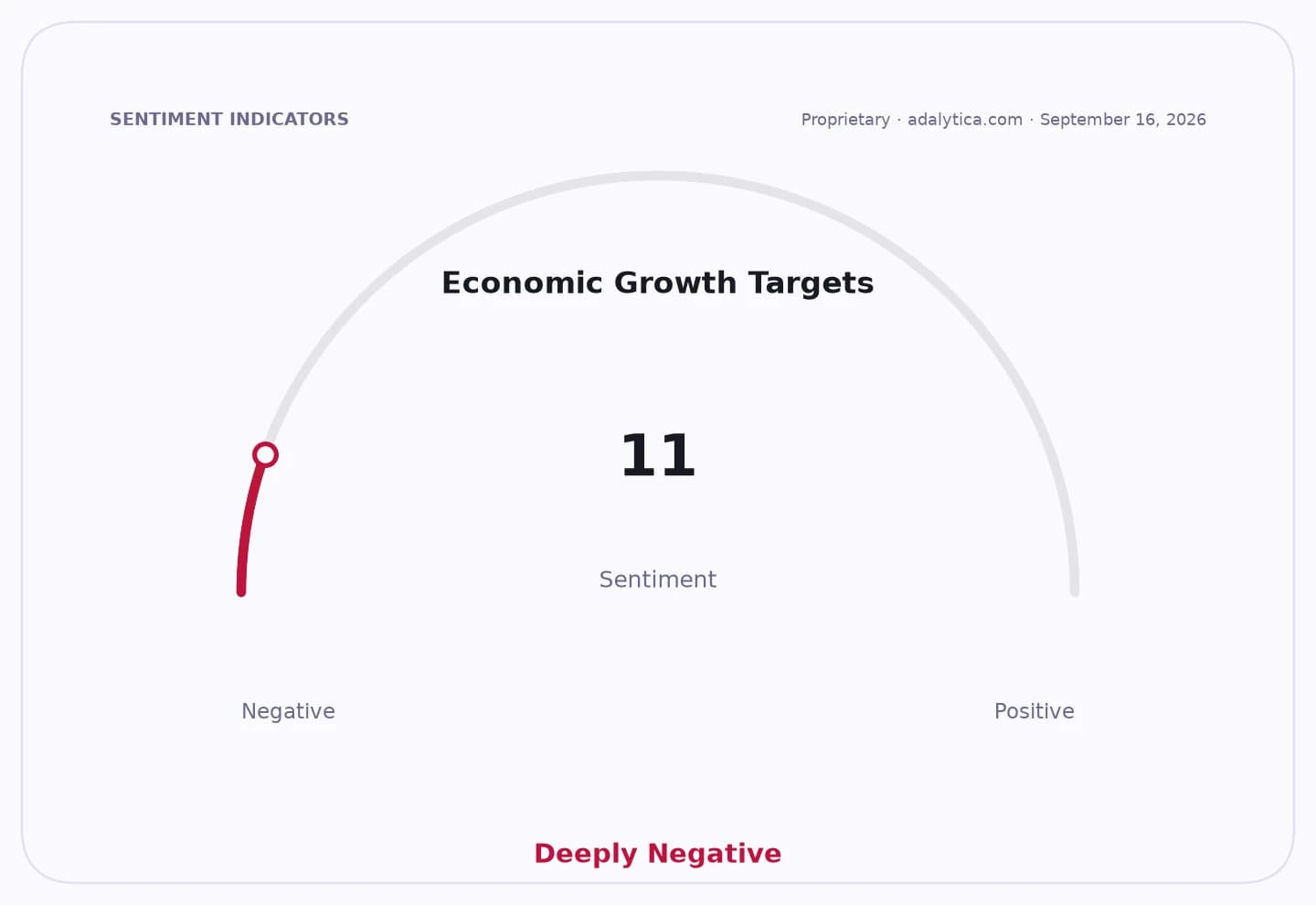
Sentiment IndicatorsⓘProprietary · adalytica.com · September 19, 2026
This is a snapshot — live sentiment, awareness and momentum for 130+ markets update continuously in the dashboard.Open AlphaPulse
The immediate dispute centers on decree 693-24, signed by President Luis Abinader in December 2024, which imposed a 20% ad valorem tariff on certain rice lines within the country’s WTO quota and a 99% tariff outside it. The decree also created a preferential quota of 23,300 metric tons of U.S. rice at zero duty, a formula designed to protect domestic production while preserving some access for American exporters.
But Dominican producers say the dispute has been distorted by import patterns over 2024 and 2025. Marco Rodríguez, head of the National Federation of Rice Producers, said about 220,000 metric tons entered the local market last year, blaming poor import management. He said the country bought no rice from Uruguay between 2016 and 2023, yet imports from that market alone reached about $16.4 million in 2024 and 2025. U.S. rice imports over the same period were larger, at roughly $60.7 million, but farmers argue the key issue is that supply was spread across multiple origins instead of being channeled through the U.S. quota the decree was meant to protect.
The U.S. Trade Representative has pushed for a review of the measure as part of talks over Dominican access for American rice under DR-Cafta. The two governments began tariff discussions this month, with the Dominican foreign ministry saying it wants a reciprocal arrangement that improves U.S. market access without stripping protection from local producers.
For investors and traders, the issue is less about a single decree than about policy risk in a staple-food market. A rollback of tariffs would likely favor importers and foreign suppliers, but it would squeeze local millers and producers already sitting on elevated inventories. It would also deepen uncertainty around procurement flows in a market where policy, rather than pure price, often determines who captures demand.
The upside case for liberalization is lower consumer prices and easier supply management in a country that has periodically relied on imports to cover shortfalls. The downside is concentrated political and economic pain in rural provinces, where officials and producer groups warn that more than 33,000 growers could be exposed if protection is dismantled too quickly. Union leaders say a sharp opening would reverberate through production zones and undermine investment in the next planting cycle.
The stakes extend beyond agriculture. The dispute is now part of a broader bilateral trade negotiation, and the government is trying to preserve goodwill with Washington while defending domestic producers. If Santo Domingo holds the tariff line, U.S. exporters may have to settle for the quota-based access written into the decree. If it yields, the Dominican rice market could become more competitive — but at the cost of pressure on farmers, millers and the political coalition that depends on them.
| Entity | Gains | Losses |
|---|---|---|
| U.S. rice exporters | ▲Better quota access | ▼Tariff protection barriers |
| Dominican rice producers | ▲Existing safeguards | ▼Import competition |
| Dominican consumers | ▲Potentially lower prices | ▼Less stable local supply if policy shifts |
| Importers from Uruguay/Brazil/Guyana | ▲Larger market share | ▼Restricted access if decree stays intact |