Egypt is opening applications for 25,000 new homes under its rent and rent-to-own schemes, a move that underscores how housing affordability has become a bigger economic and social pressure point for the country.
Egypt opens 25,000 homes under rent-to-own schemes
The new offering matters because it targets low- and middle-income households at a time when demand for cheaper housing remains structurally strong and conventional ownership is out of reach for many buyers. The scheme also gives the state a way to channel demand into newly built cities and provincial markets, supporting the broader urban development agenda while easing pressure on the rental market.
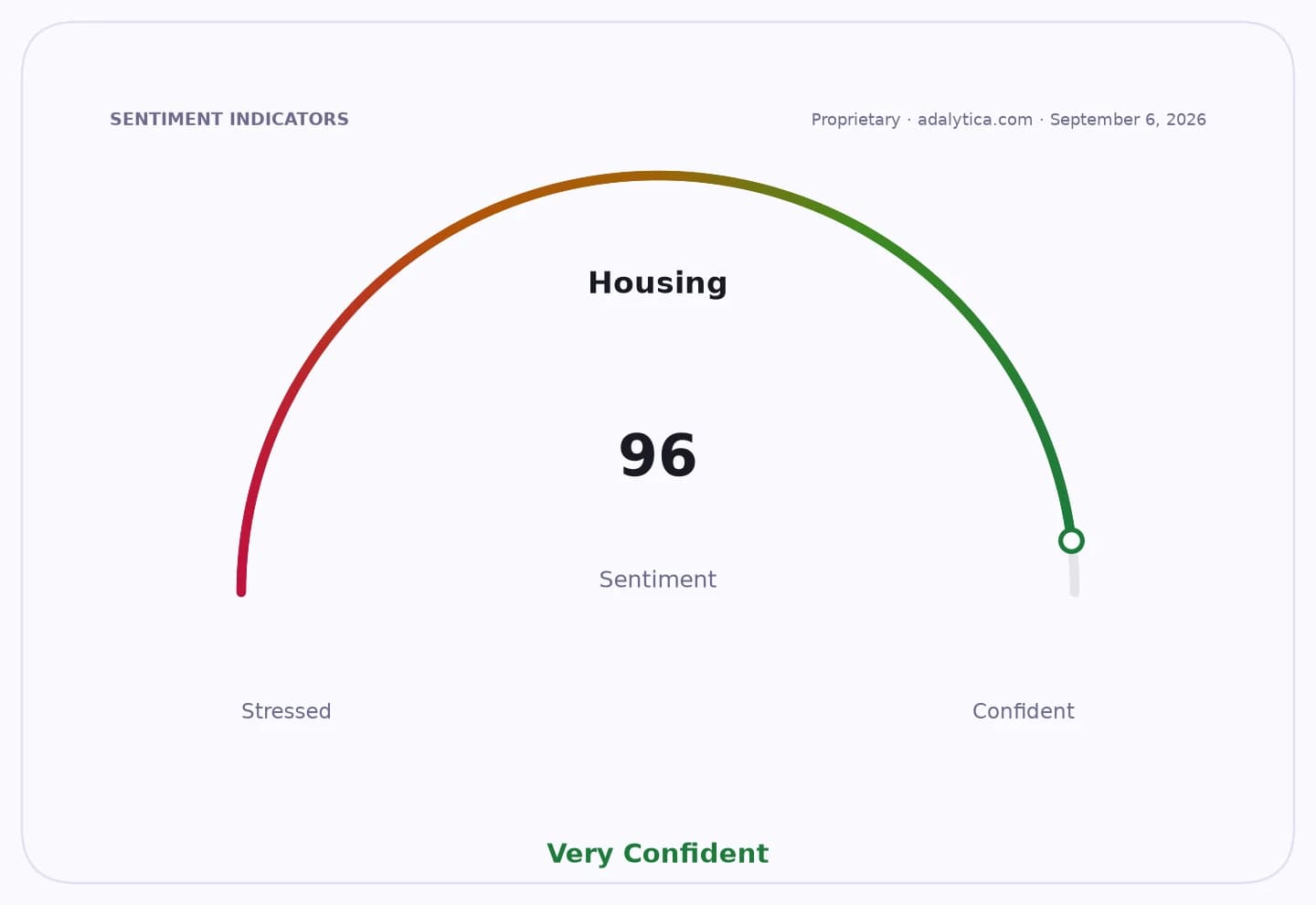
Sentiment IndicatorsⓘProprietary · adalytica.com · September 6, 2026
This is a snapshot — live sentiment, awareness and momentum for 130+ markets update continuously in the dashboard.Open AlphaPulse
The package is split between 15,000 units offered through the Social Housing and Mortgage Finance Support Fund under the “Housing for All Egyptians 9” initiative and 10,000 units from the New Urban Communities Authority under rent-to-own arrangements. Applications open Sept. 20 and run until late October, with 26 new cities included in the rent-to-own tranche and units spread across governorates, new towns and “Haya Karima” villages.
The government is also trying to make the offer more accessible on paper. The social housing component includes units sized mostly at 90 square meters, with a smaller number at 75 square meters, while the rent-to-own units range from 57 to 161 square meters. Officials said 5% of the total allocation is reserved for people with disabilities, and the selection process will be through a public lottery, a nod to transparency in a market where distribution has often been politically sensitive.
Economically, the plan is a demand-management tool as much as a housing program. By subsidizing rent rather than only pushing ownership, the state is acknowledging that many households cannot meet down-payment thresholds or qualify for traditional mortgages. The fund said it can provide rent support of up to 100,000 pounds over the lease period, while applicants must still pay a 365-pound registration fee and a 10,000-pound security deposit. Those figures indicate the state is trying to keep the scheme affordable while preserving some discipline in allocation.
The timing also fits a wider housing cycle in which supply additions are being used to shape prices and social stability. Fresh units in new cities may ease pressure at the margin, but the scale is still modest relative to Egypt’s population and the depth of unmet demand. That means the policy is likely to help the most eligible applicants directly, while having only a limited effect on broader market rents unless more tranches follow.
For investors, the story is less about a one-off social program than about the state’s continued role as the main allocator in Egypt’s housing market. Developers and contractors tied to public housing pipelines could benefit from a steadier flow of projects, while private landlords face a policy environment that favors subsidized alternatives for lower-income tenants. At the same time, the move highlights how sensitive housing affordability has become in an economy already under pressure from inflation and constrained household incomes.
The near-term watchpoint is execution: how quickly applications are processed, how many units are ultimately delivered, and whether the rent-to-own model can scale without stretching the budget. If the program works, it could become a template for more flexible housing provision. If it does not, it will reinforce the view that Egypt’s housing shortage can be eased only gradually, one controlled allocation at a time.
| Entity | Gains | Losses |
|---|---|---|
| Low-income households | ▲Subsidized housing access | ▼High private-market rents |
| Egyptian state | ▲Social relief and housing control | ▼Budget flexibility |
| Public housing developers | ▲Steadier project pipeline | ▼Pure market landlords |
| Private landlords | ▲— | ▼More competition from subsidized units |