Egypt’s central bank is widely expected to keep borrowing costs unchanged today, a decision that would reinforce a delicate balance between cooling inflation and defending the pound as global interest rates stay elevated.
Egypt Central Bank Expected to Hold Rates

A fifth straight hold would signal that policymakers still see little room to ease further after cutting rates by 8.25 percentage points since April 2025. With deposit rates at 19% and lending at 20%, the central bank has already done much of the heavy lifting. Now the issue is whether disinflation can continue without reigniting pressure on capital flows, the exchange rate and imported prices.
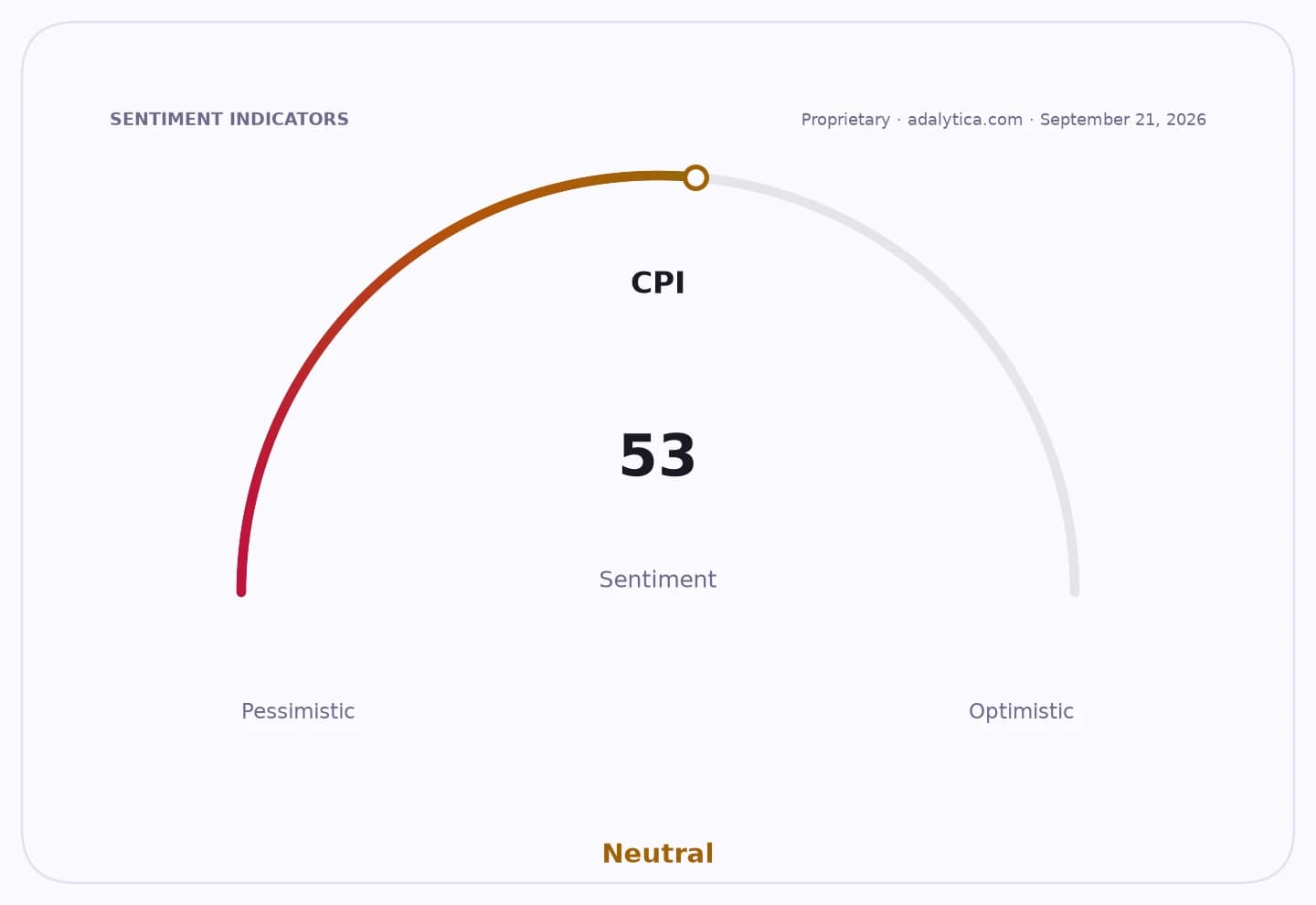
Sentiment IndicatorsⓘProprietary · adalytica.com · September 29, 2026
This is a snapshot — live sentiment, awareness and momentum for 130+ markets update continuously in the dashboard.Open AlphaPulse
That matters because Egypt is still operating in a world of expensive money. U.S. Treasury yields have climbed again, the Federal Reserve has tightened further, and oil prices remain a fresh external risk. For emerging markets, that combination tends to narrow the room for policy flexibility. Egypt, with inflation still running in the mid-teens, cannot afford to cut simply to follow the domestic slowdown if doing so risks unsettling foreign investors or weakening currency stability.
The case for holding is strengthened by the fact that real rates remain deeply positive, giving the central bank room to wait. Inflation eased to 14.5% in August and is expected to drift toward 13% in September before ending the year around 14% to 15%, according to EFG Hermes. That gives policymakers cover to stand pat while they assess October fuel-price risks and the pass-through from regional tensions and higher global funding costs.
For investors, the implications are straightforward. A stable policy rate should be supportive for local-currency debt carry, bank deposit products and any asset classes that benefit from a high real-yield environment. At the same time, it argues against chasing an aggressive near-term rally in Egyptian duration until the next clean disinflation print and clearer signs that external pressures are fading.
The market’s bigger read-through is that Egypt is trying to preserve credibility rather than chase growth too early. That is usually the right move when inflation is still elevated, the Fed is not easing, and capital is still selective. If the central bank holds today, the next trade is not about a new easing cycle — it is about how long Egypt can keep real rates high enough to anchor the pound while inflation keeps receding.
| Entity | Gains | Losses |
|---|---|---|
| Egypt central bank | ▲Policy credibility | ▼Near-term growth stimulus |
| Egyptian pound | ▲Rate support | ▼Easier-money hopes |
| Local bondholders | ▲High real yield | ▼Faster cuts |
| Borrowers | ▲Stability from no surprise | ▼Cheaper credit later |