A sharp drop in the minimum score for entry to engineering faculties is emerging as a labor-market risk in Egypt, with the Engineers Syndicate warning that a 67% admission threshold will dilute training standards, worsen graduate unemployment and keep downward pressure on engineers’ pay.
Egypt engineering admissions threshold cut to 67%
The syndicate said the cutoff is too low for a profession that designs and oversees infrastructure, housing, factories and other public works, arguing that admission rules should reflect the responsibility carried by engineers after graduation. Its demand is not simply about gatekeeping: it is about whether the education system is producing enough qualified workers for a market already struggling to absorb them.
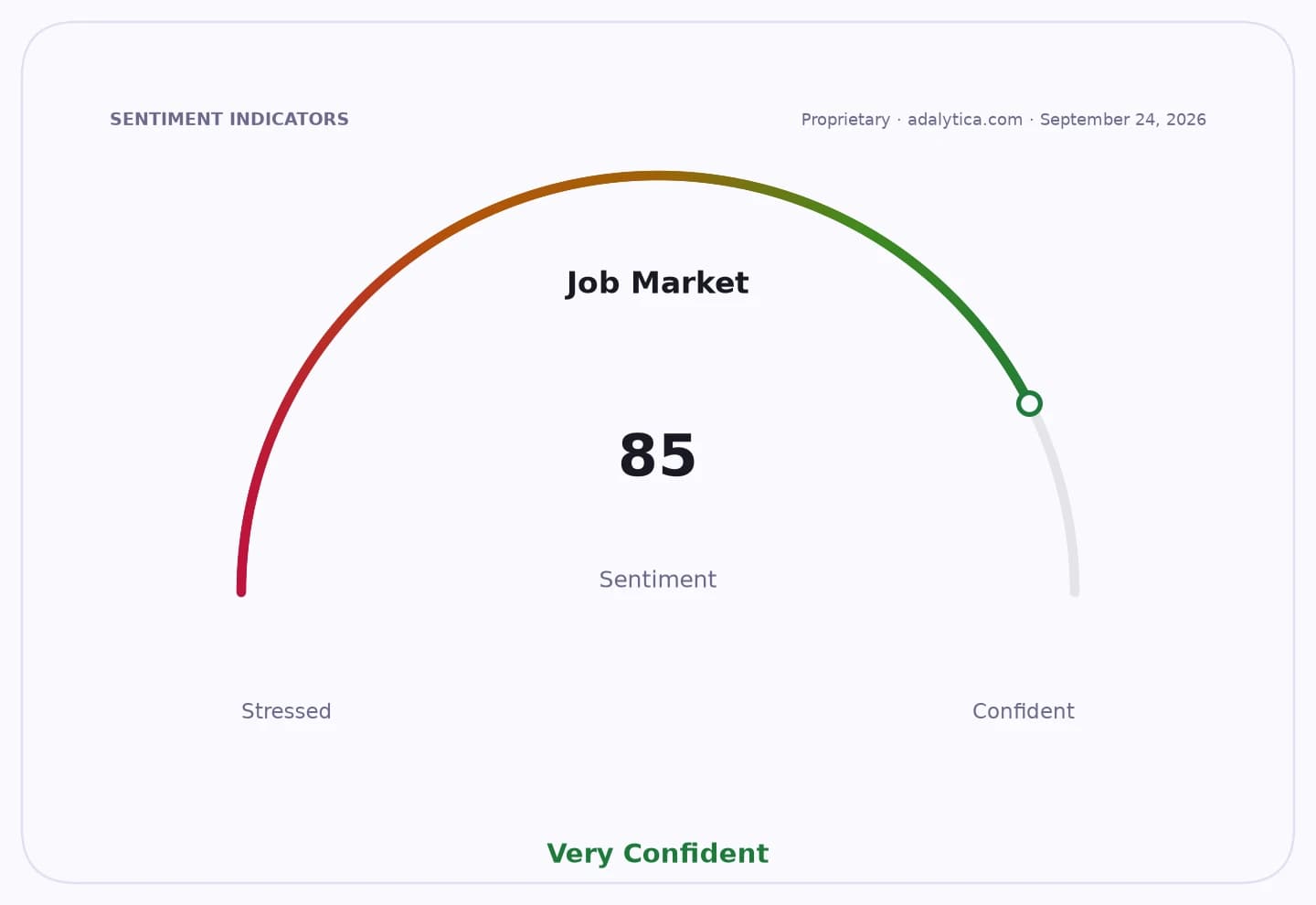
Sentiment IndicatorsⓘProprietary · adalytica.com · September 19, 2026
This is a snapshot — live sentiment, awareness and momentum for 130+ markets update continuously in the dashboard.Open AlphaPulse
That matters economically because engineering is central to construction, infrastructure investment and industrial expansion, sectors that depend on credible technical competence to protect capital spending and project quality. If universities admit too many students with weaker preparation, the likely result is a larger pool of graduates chasing too few jobs, a more intense wage squeeze and lower productivity across project delivery. In a country where labor shortages coexist with job losses in parts of the economy, the issue is not just the number of seats in engineering schools but whether the supply of skills matches the structure of demand.
The syndicate said it has already raised the issue with the higher education minister and welcomed efforts to reduce the number of accepted students, but rejected a 67% floor and called for tighter controls starting next year. It wants the gap between public and private university admission thresholds narrowed to no more than 5%, a move it says would better align output with labor-market needs. The group also argued that the problem is not only the quality of entrants but the scale of output: too many graduates, it said, will intensify competition, weaken wages and undermine the profession itself.
For investors and employers, the warning cuts both ways. On one hand, tighter admissions and stronger screening could support longer-term quality in engineering services, improve project execution and protect returns on infrastructure and industrial spending. On the other, a continued oversupply of graduates would favor employers in the short term by holding down labor costs, while raising the risk of poor work quality, rework and reputational damage on complex projects. In sectors such as construction, utilities, manufacturing and consulting, the real economic question is whether Egypt is building a workforce fit for capital formation or merely producing credentials faster than the market can absorb them.
The broader policy backdrop suggests that workforce allocation is becoming a more explicit part of Egypt’s economic debate. As authorities seek to balance labor supply and demand, the engineering dispute highlights a familiar trade-off in emerging markets: expanding access to higher education can support inclusion, but without labor-market coordination it can also create underemployment, wage compression and a mismatch between degrees and productive capacity. The next test is whether education authorities respond with stricter intake rules, better training standards and more direct links between graduation output and demand in the construction and infrastructure economy.
| Entity | Gains | Losses |
|---|---|---|
| Employers in construction and consulting | ▲Lower hiring costs | ▼Higher training burden |
| Engineering students admitted at 67% | ▲Easier access | ▼Weaker labor prospects |
| Engineers Syndicate | ▲Stronger quality controls | ▼Less influence if unchanged |
| Public infrastructure projects | ▲More scrutiny on standards | ▼Risk from skill dilution |