Employers are looking hardest for managers, strategy consultants, builders and skilled trades workers, a sign that labor demand is still broadening across both white-collar and blue-collar parts of the economy.
Russia Jobs Data Shows Demand for Trades and Managers
The biggest takeaway for investors is that this is not just a hiring story — it is a signal about where the real economy is spending money. When companies expand demand for strategy managers and consultants at the same time they are hunting for painters, plasterers, electricians and machinists, it suggests activity is spreading beyond a narrow set of sectors and into the kinds of jobs tied to construction, infrastructure, industrial work and business planning.
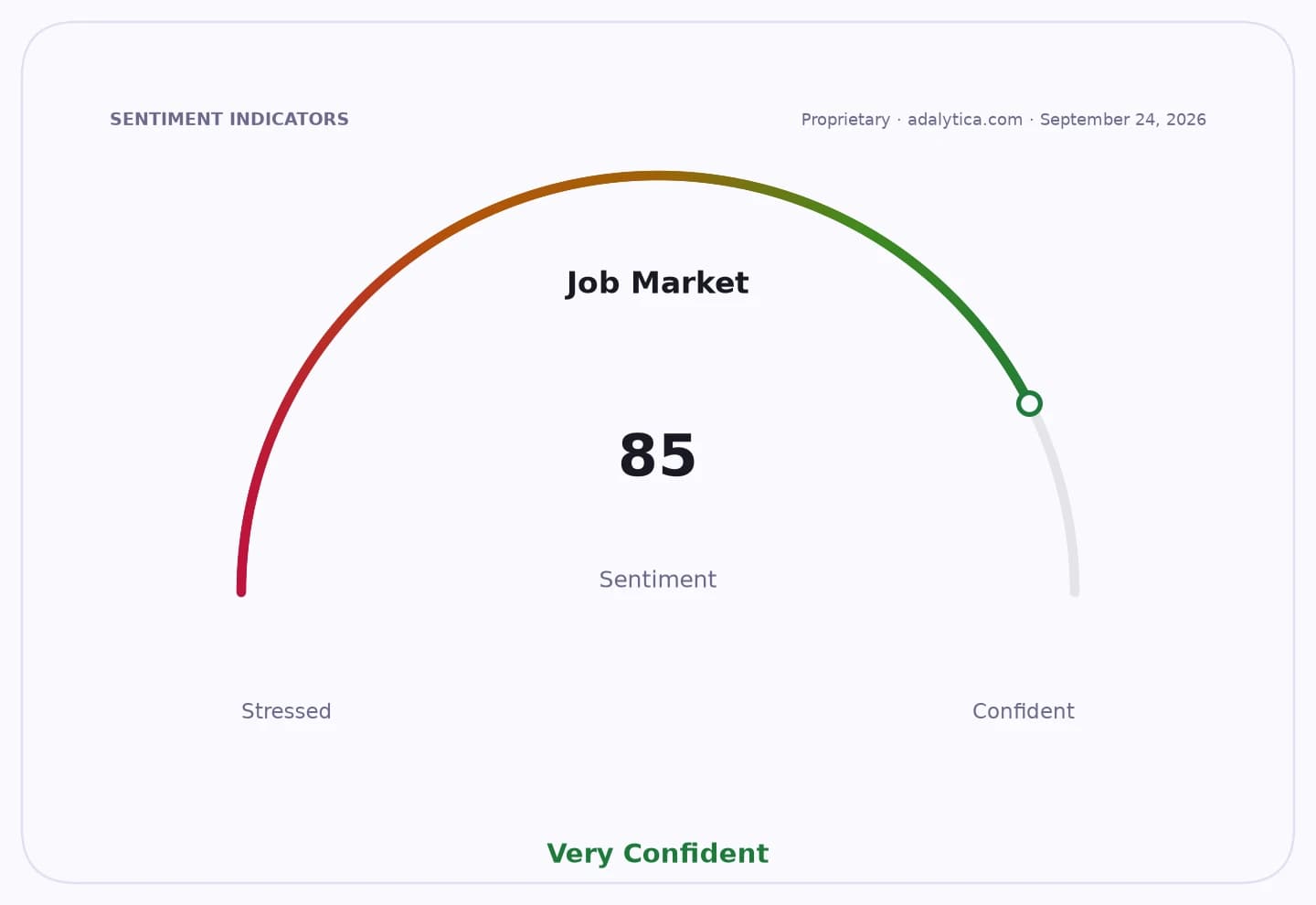
Sentiment IndicatorsⓘProprietary · adalytica.com · September 24, 2026
This is a snapshot — live sentiment, awareness and momentum for 130+ markets update continuously in the dashboard.Open AlphaPulse
That matters because labor shortages in trades can keep wage pressure sticky even when headline unemployment looks steady. In the latest labor-market data, U.S. nonfarm payrolls are still near 159.1 million, while the unemployment rate is around 4.1%, a level that normally points to a still-resilient job market rather than one in clear recession. Job openings have also held above 7.4 million in the latest reading, leaving employers competing for workers in a market that remains tighter than it was before the pandemic.
The Russian jobs data from hh.ru points to the same broad pattern: demand for managers and strategy consultants jumped 175% year over year, while openings for painters, plasterers and finishers rose 118% to 6,600. Vacancies for electricians and electrical technicians increased 57% to 18,700, and openings for machine operators rose 56% to 20,500. In the top 10 were auto mechanics, drivers, installers, branch managers and retail sales staff — a cross-section that says more about the state of the economy than any single headline number.
For investors, the mix is important because it favors companies tied to industrial activity, construction, transportation and staffing, while also underscoring the resilience of businesses that can pass through higher labor costs. It also helps explain why services inflation can stay stubborn: if employers are still chasing skilled workers, wages in those categories tend to stay firm.
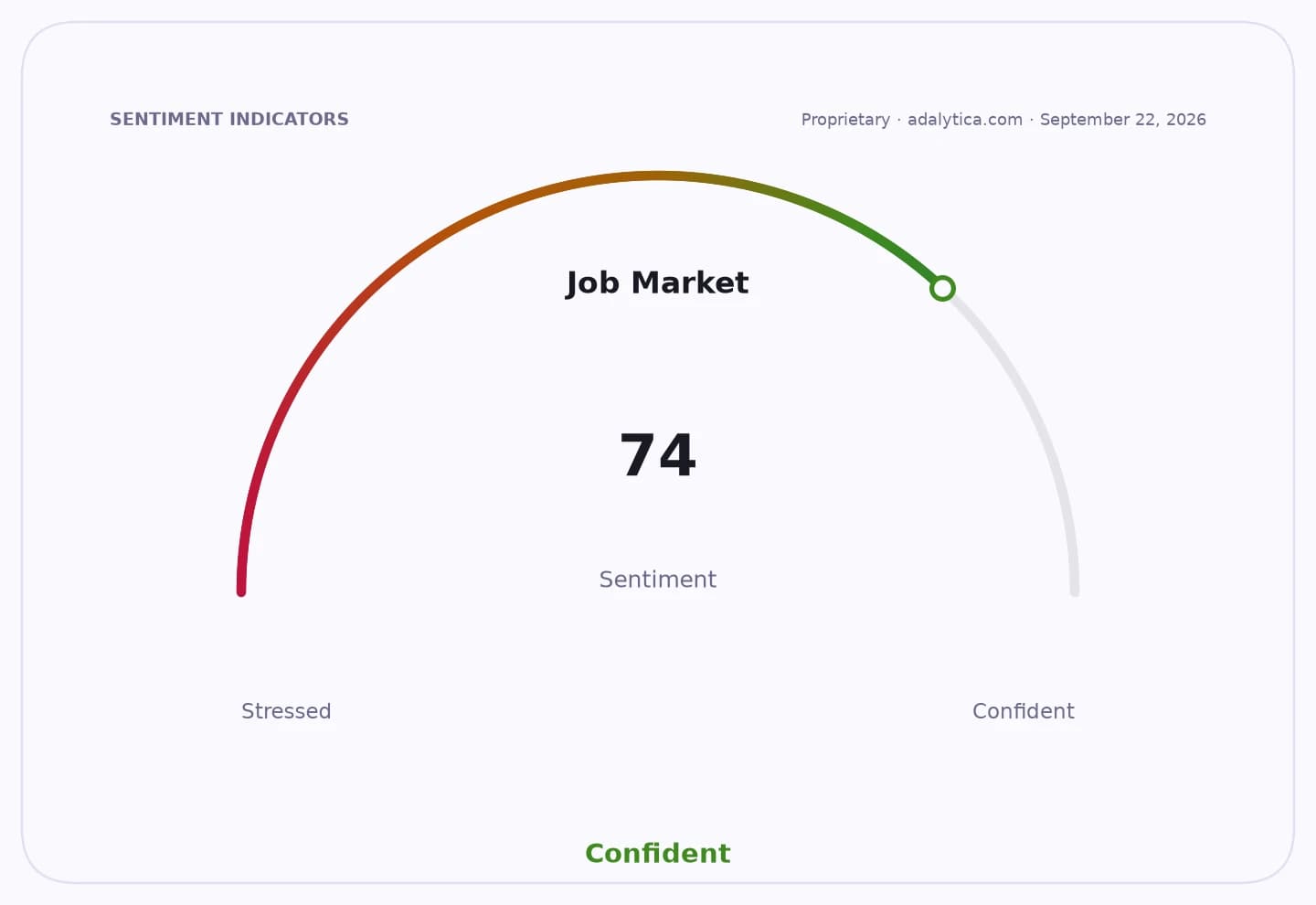
Adalytica’s Job Market Sentiment gauge currently shows optimism, with sentiment in “Greed” territory, even as awareness remains extremely low. That kind of split often appears when labor demand is firm but public attention is still focused on broader economic worries. In plain English: the job market can look better inside the data than it feels in the headlines.
The long-term lesson for investors is to watch where hiring is concentrated, not just whether total payrolls are growing. Broadening demand across managers, technicians and trades usually means business investment is still alive, even if the pace is uneven. For patient investors, that is a constructive backdrop for diversified portfolios and for companies exposed to construction, industrial services, logistics and workforce solutions. It is worth watching, because labor demand like this tends to support the economy longer than most people expect.
| Entity | Gains | Losses |
|---|---|---|
| Skilled trades workers | ▲Higher demand, stronger wages | ▼Less bargaining slack |
| Employers | ▲More productive hiring options | ▼Higher labor costs |
| Construction and industrial firms | ▲Easier project staffing | ▼Margin pressure from wages |
| Workers in lagging sectors | ▲Potential spillover hiring | ▼Competition from fast-growing roles |