Gold prices in Egypt were unchanged on Saturday after a steep slide the previous day, but the bigger story is that bullion is still absorbing a sharp global selloff that has pushed international prices down to about $3,539 an ounce and forced local buyers to wait for the next move.
Egypt gold prices flat after sharp selloff
That matters because gold is not just a jewelry input in Egypt; it is a barometer for savings demand, import costs and household purchasing power in an economy where the metal often serves as a store of value. When the price stabilizes after a drop of at least 185 pounds per gram yesterday, it tells you the market is digesting a repricing rather than launching a fresh rally. For investors, that usually means the easy trade has already been made and attention now shifts to whether this is a short-term pause or the start of a deeper correction.
Sentiment Indicators
In local trading, 21-karat gold — the most widely followed benchmark in Egypt — held at 5,525 pounds a gram, with 24-karat gold at 6,314 pounds for buying and 6,257 pounds for selling. The gold pound was quoted at about 44,200 pounds to buy and 43,800 pounds to sell. The lack of movement came after a week of heavy pressure in the broader gold market, where the metal has fallen to a 14-month low as selling persisted across international trading.
The backdrop is more important than the day’s flat reading. U.S. benchmark 10-year Treasury yields have eased only slightly from about 5.10% to 5.04%, keeping the opportunity cost of holding non-yielding bullion elevated. That is a headwind for gold even as investors continue to seek protection from volatility. In the ETF market, GLD — the largest gold-backed fund — remains under clear technical strain, closing at 322.87 on Friday after falling below its 50-day and 200-day moving averages, while its RSI reading of 27.6 points to a deeply oversold but still fragile setup. BAR shows a similar pattern, with prices sliding to 34.67 and the 50-day average still well above the current level.
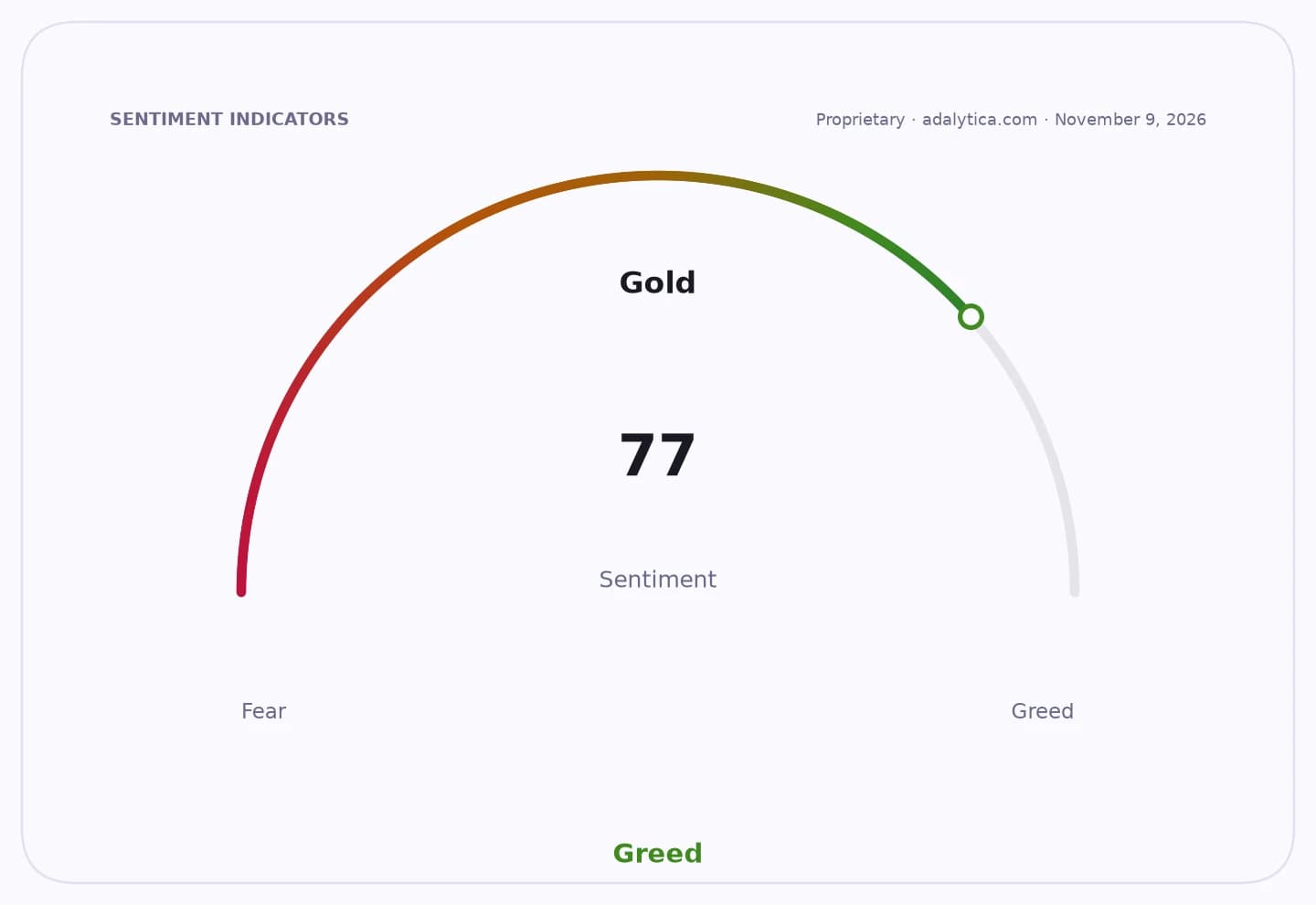
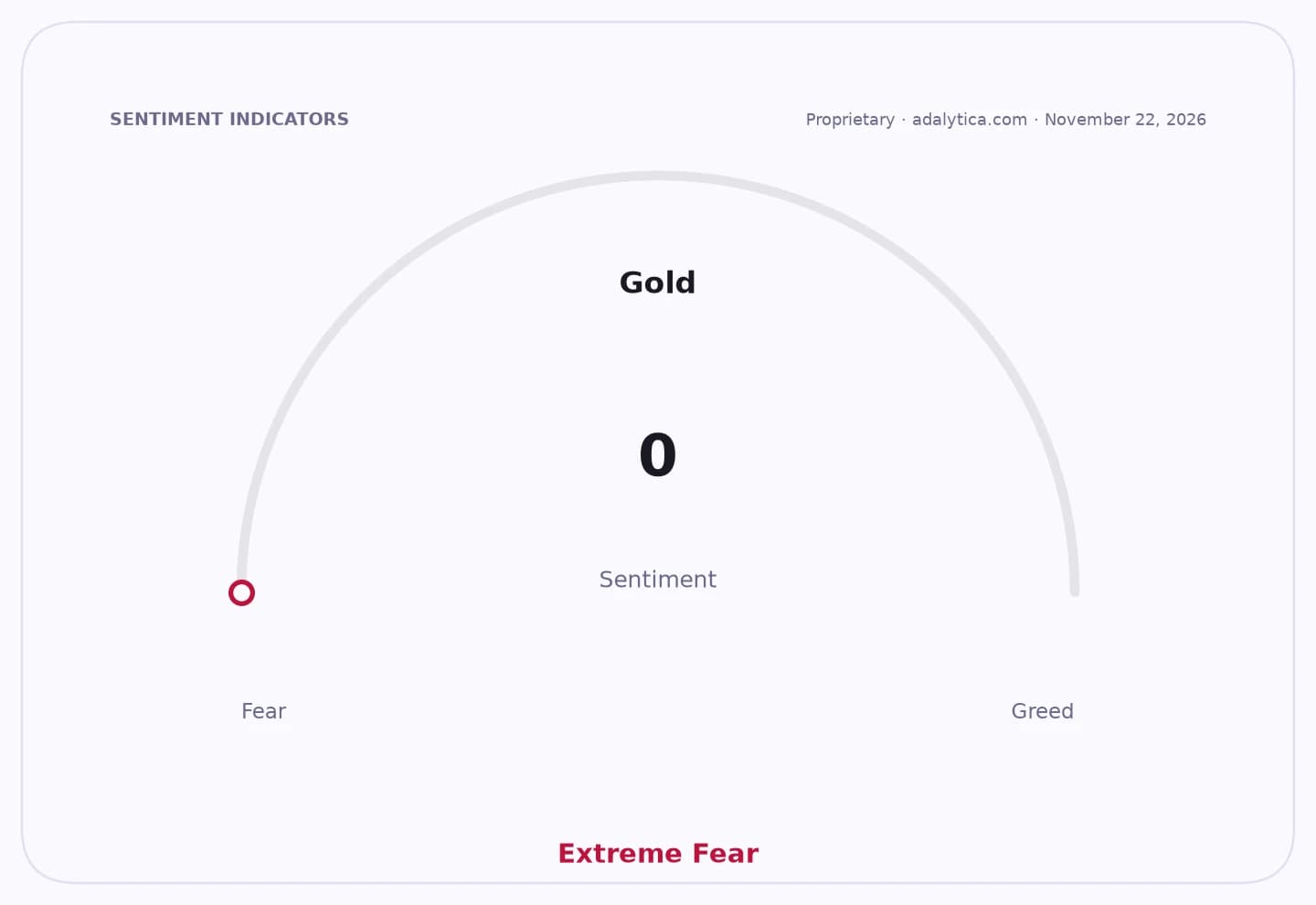
Adalytica.com’s Gold Fear & Greed Index underscores just how washed-out the trade has become, with sentiment at 0.0 — “Extreme Fear” — even as awareness sits at 100.0, a sign that everyone is watching the move but few are willing to buy aggressively yet. That combination usually marks the late stage of forced selling, but it does not guarantee an immediate rebound.
For investors, the opportunity is not in chasing the recent plunge, but in positioning for the second-order winners if gold volatility stays elevated: producers with low-cost operations, royalty names and diversified miners that can survive lower spot prices while maintaining cash flow. The immediate losers are bullion holders, jewelry retailers working through thin margins and momentum traders who were late to the move.
If gold in Egypt continues to stabilize after this week’s rout, the market may be setting up for a bifurcated trade: weaker near-term bullion prices, but stronger relative performance from miners and related funds once forced liquidation runs its course. Right now, the signal is clear — gold is in a correction, and disciplined investors should be watching for the next asymmetrical entry, not assuming the bottom is already in.
| Entity | Gains | Losses |
|---|---|---|
| Egyptian jewelry buyers | ▲Lower replacement costs | ▼— |
| Gold miners | ▲Potential rebound leverage | ▼Spot-price pressure |
| Bullion holders | ▲— | ▼Mark-to-market losses |
| GLD and BAR traders | ▲Possible oversold bounce | ▼Downtrend risk |