Gold prices are falling sharply, and that matters because the metal’s pullback is easing one of 2026’s most painful cost pressures for jewelers, fabricators and consumers who had been priced out during the rally.
Gold Falls as Jewelry Costs Ease
Spot gold and gold-linked assets have lost momentum after a violent run-up earlier this year. December gold futures closed at $3,954.20 on Nov. 12, while the SPDR Gold Shares ETF slipped to $365.17, well below its 50-day moving average and still under the 200-day average. The move comes after futures briefly traded above $4,100 and GLD pushed near $380, showing just how stretched the market had become before the latest reversal.
Sentiment Indicators
For manufacturers, the decline is more than a chart move. Lower gold costs can restore margins in jewelry, watchmaking and bullion fabrication, especially for 21-karat products that track raw gold more closely than finished retail prices. When metal costs surge too fast, producers often struggle to pass them through immediately, squeezing working capital and inventory values. A cooling price gives those businesses room to replenish stock, manage pricing and potentially revive demand from households that delayed purchases.
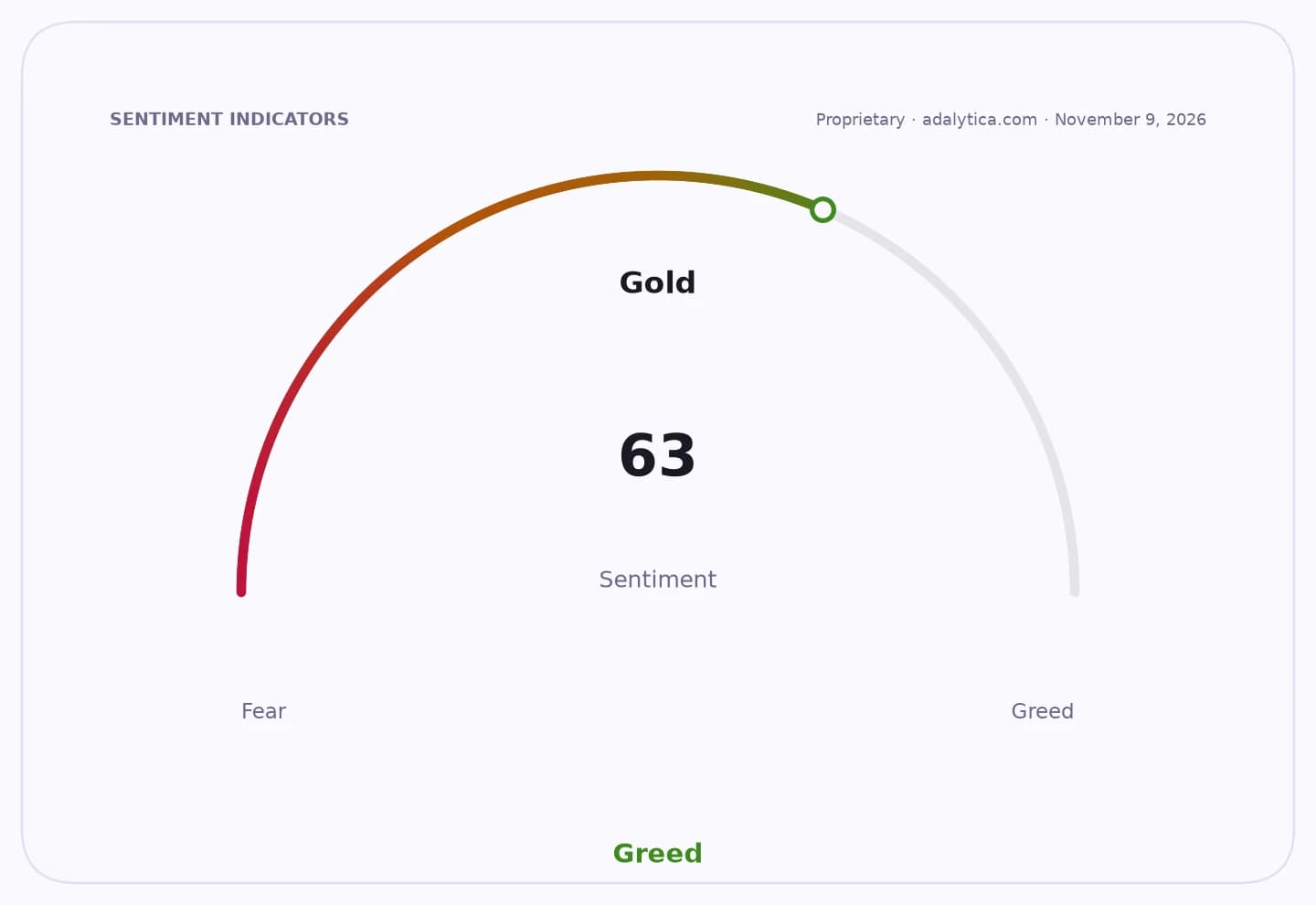
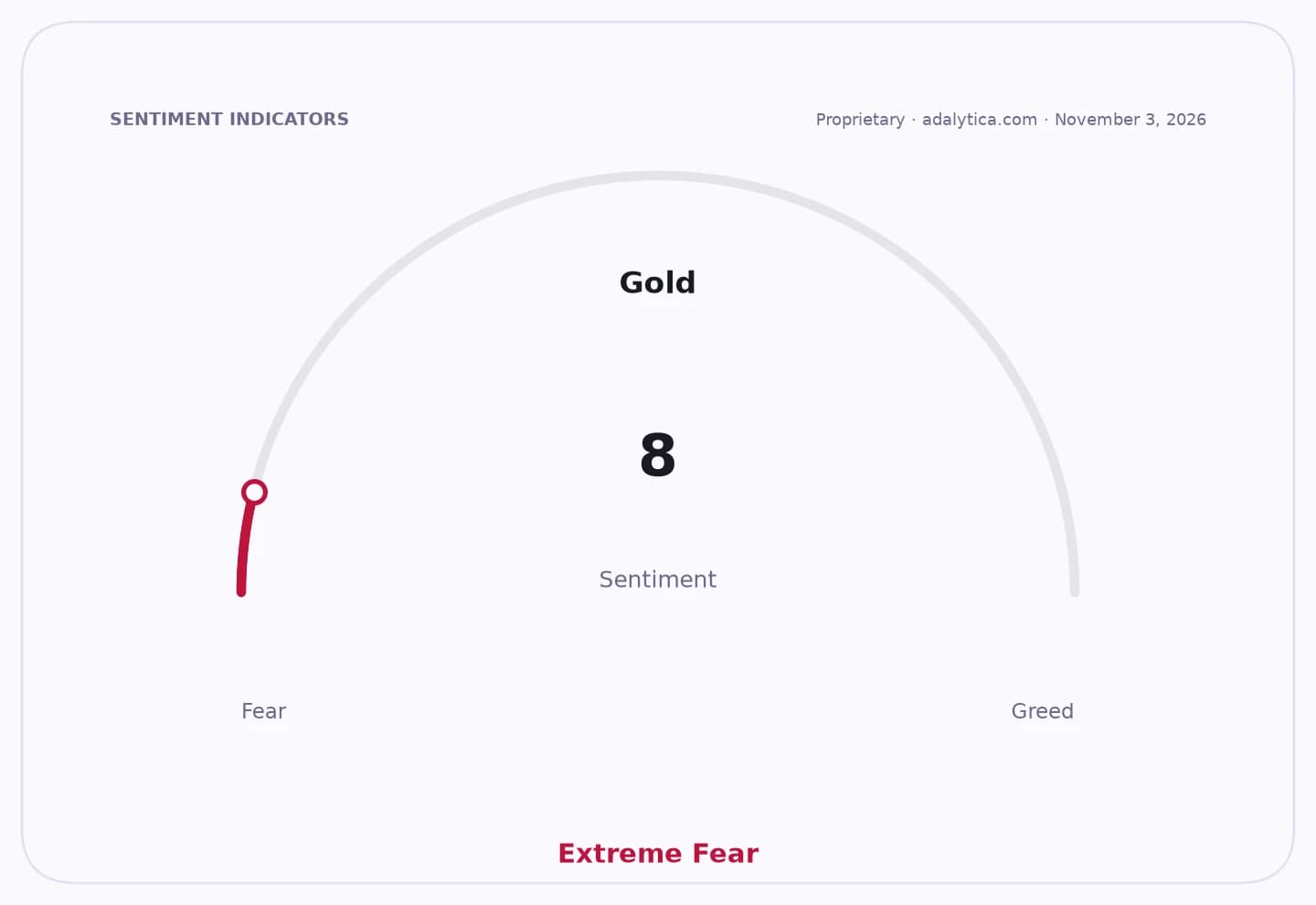
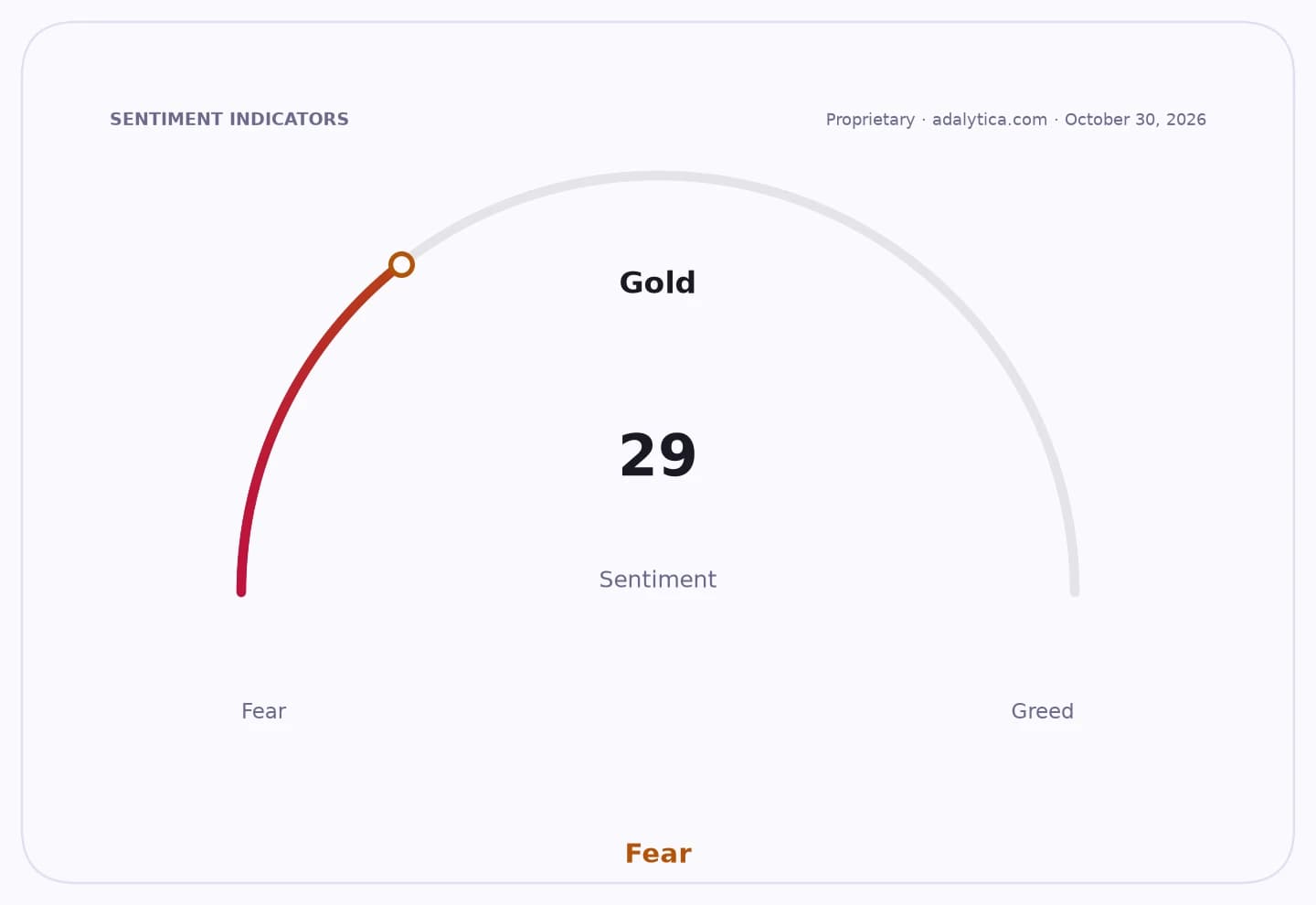
The selloff also reflects a broader shift in the macro backdrop. The 10-year Treasury yield is hovering around 4.86%, while the Fed funds rate is still near 3.89%, meaning investors are no longer getting a free pass to own non-yielding assets. At the same time, the U.S. dollar is flashing extreme greed in Adalytica’s trade signals, a setup that tends to pressure gold because the metal is priced in dollars globally. Gold’s own Adalytica Fear & Greed Index has cooled to 71 from recent peaks, suggesting the market is still bullish but less euphoric.
That matters for investors because gold has become one of the clearest expressions of uncertainty this year. The big winners from the rally were miners and holders of bullion-backed funds; the losers were buyers of physical jewelry, refiners carrying inventory and short-term traders who chased the breakout. With gold now retreating from the $4,000 area, the question is whether this is a healthy reset inside a longer uptrend or the start of a deeper unwind.
The mining complex has already shown how sensitive it is to the metal’s swings. GDX, the VanEck Gold Miners ETF, has cooled to $85.21 after a powerful surge earlier this year. That kind of volatility is a reminder that miners can amplify gold’s upside — and its downside — far more than the metal itself. Long-term investors should view the latest drop less as a reason to flee and more as a reminder that even “safe-haven” assets can get overheated.
For now, the narrative is simple: gold’s retreat is good news for manufacturers and consumers, but it is a warning that the trade has become crowded. If inflation worries, geopolitical tensions or easier monetary policy return, gold can rebound quickly. If the dollar stays strong and yields remain elevated, the metal may keep cooling. Either way, the current decline is worth watching, and for patient investors, it may eventually create a better entry point than the one chased at the peak.
| Entity | Gains | Losses |
|---|---|---|
| Jewelry and 21-karat manufacturers | ▲Lower input costs | ▼Less pricing pressure |
| Consumers | ▲Better affordability | ▼Less urgency to buy |
| Gold miners | ▲Potential long-term buying interest | ▼Near-term margin/price pressure |
| Gold buyers at recent highs | ▲A possible re-entry point | ▼Mark-to-market losses |