Egypt’s new labor rules will force private-sector companies with 10 workers or more to put formal internal regulations in place within 60 days, a move that could reshape compliance costs, workplace discipline and wage-setting practices across a broad swath of the economy.
Egypt labor rules for firms with 10 workers or more

The biggest change is not administrative but structural: firms will no longer be able to operate with loosely defined workplace practices if they fall under the new framework introduced by the labor ministry as part of Law No. 14 of 2025. Instead, they must spell out hours, pay, bonuses, occupational safety and health standards, and minimum-wage compliance in a company-specific code that is reviewed by the local labor directorate before taking effect.
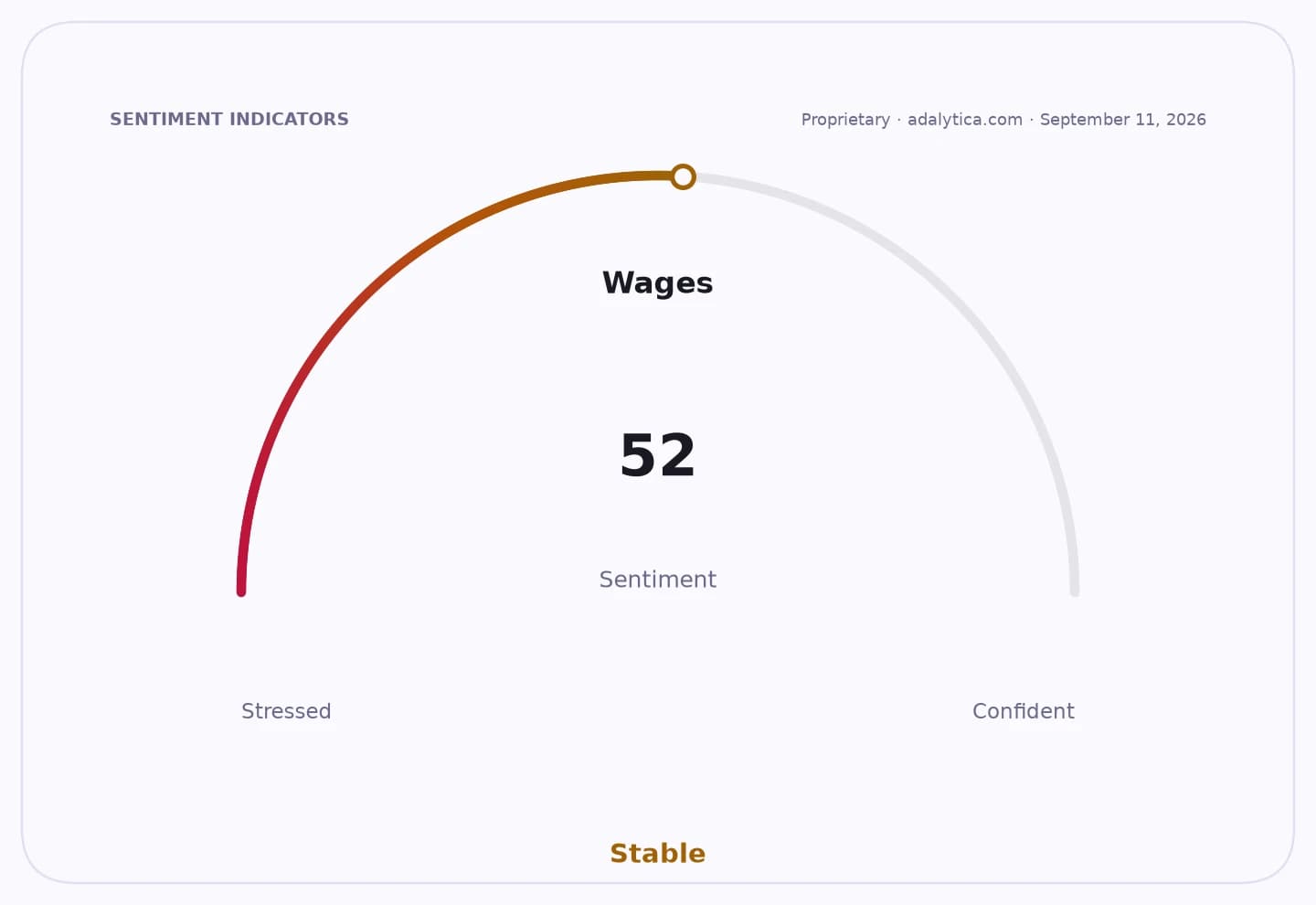
Sentiment IndicatorsⓘProprietary · adalytica.com · September 17, 2026
This is a snapshot — live sentiment, awareness and momentum for 130+ markets update continuously in the dashboard.Open AlphaPulse

For investors and business owners, the measure matters because it raises the legal floor for labor governance at a time when governments across the region are trying to balance worker protections with the need to keep hiring costs predictable. Magdy El-Badawy, vice president of the Egyptian General Federation of Trade Unions, said the aim is to strike that balance between the rights and duties of workers and employers, rather than favor one side.
That framing matters economically. Clearer rules can reduce disputes, improve enforcement and support more stable labor relations, particularly in smaller and mid-sized firms that often lack sophisticated human resources systems. It can also tighten compliance around minimum wages and safety requirements, which may lift operating costs for some employers but could also reduce turnover, accidents and litigation risk over time.

The requirement applies to establishments with 10 workers or more, a threshold that brings in a wide base of private-sector employers. Companies will have 60 days from publication in the official gazette to submit and approve their internal rules, and labor inspectors will be tasked with monitoring compliance. Firms that violate the law face fines, adding a clear enforcement mechanism.
For workers, the policy offers more formalized protections on hours, pay and workplace safety. For employers, it provides a standardized process that may reduce ambiguity, but also limits discretion and may increase administrative burden, especially for businesses that previously relied on informal arrangements.
The broader backdrop is a labor market still defined by fragile confidence. Adalytica’s labor-market sentiment gauge was neutral at 48, while its recession-confidence gauge pointed to fear at 26, suggesting workers and households remain cautious even as payrolls continue to expand. In that environment, governments are likely to favor rules that reduce labor friction and protect incomes, even if businesses worry about added compliance obligations.
Investor implications will vary by sector. Labor-intensive industries such as retail, logistics, food service and manufacturing are most exposed to the new rules because wage, scheduling and safety practices can affect margins directly. Companies with stronger compliance systems may benefit relative to smaller competitors that face higher implementation costs or enforcement risk.
The ministry’s decision also aligns with a wider policy trend of formalizing labor standards while adapting regulation to a changing economy. That includes Egypt’s push to modernize its labor framework and, elsewhere in the region, efforts to tailor rules in special economic zones to attract investment without undermining worker rights. The tension between flexibility and protection is likely to remain a central issue for policymakers and employers alike.
For investors, the key question is whether the new rules become a one-off compliance adjustment or the start of a broader tightening in labor oversight. If enforcement is consistent, the policy could improve workplace discipline and reduce social risk. If implementation is uneven, companies may face uncertainty without gaining the stability the government says it wants to create.
| Entity | Gains | Losses |
|---|---|---|
| Workers | ▲Clearer rights and safety rules | ▼Less informal flexibility |
| Employers with strong compliance | ▲Predictable labor framework | ▼Higher admin burden |
| Small labor-intensive firms | ▲Standardized rules | ▼Higher compliance costs |
| Labor inspectors / state | ▲Stronger enforcement role | ▼Greater monitoring burden |