Russia’s fast-growing self-employed regime is under pressure as authorities and labor groups move to draw a sharper line between flexible gig work and hidden employment, a shift that could reshape tax receipts, labor costs and the way companies staff workforces.
Russia self-employed tax regime under regulatory pressure
The professional income tax regime has pulled millions of Russians out of the shadow economy by letting them legally take side jobs, choose clients and combine multiple forms of work. For the state, that has meant more tax revenue and a larger pool of formally active workers without the rigidities of a standard employment contract.
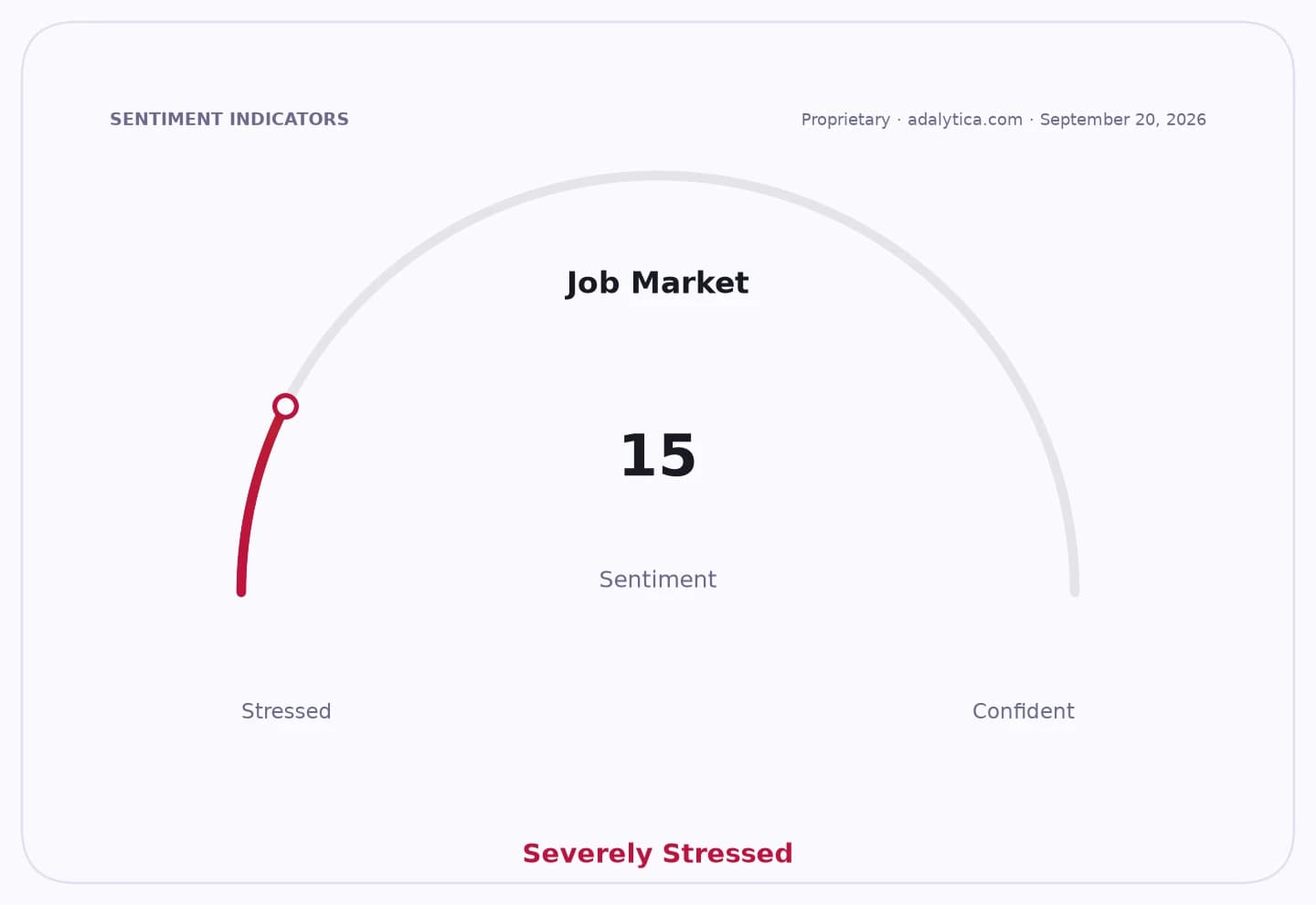
Sentiment IndicatorsⓘProprietary · adalytica.com · September 7, 2026
This is a snapshot — live sentiment, awareness and momentum for 130+ markets update continuously in the dashboard.Open AlphaPulse
But the same model is increasingly being used to reclassify what are effectively staff jobs as contractor arrangements. That leaves workers without the protections of formal employment while giving companies lower payroll costs and greater flexibility, a combination critics say distorts competition and weakens labor standards.
The stakes are not limited to fairness. If regulators tighten rules around misclassification, employers in labor-intensive sectors could face higher wage bills, social contributions and compliance costs. If they do not, more of the labor market risks sliding into a gray zone where productivity gains come at the expense of benefits, legal clarity and long-term worker security.
That tension is especially important in a labor market that remains tight and unevenly balanced. The ability to hire independent workers has helped companies respond quickly to demand, but it has also become a pressure point for unions and policymakers who argue that genuine flexibility should not be used to mask permanent jobs.
For investors, the issue matters most for platforms and consumer-facing businesses that rely heavily on contractors, from ride-hailing and delivery firms to logistics and retail services. Any move toward stricter classification rules would likely favor workers and the budget, while squeezing margins for employers and platforms that have built business models around lighter labor obligations.
The next catalyst is regulatory. Any formal effort to limit contractor abuse, or to clarify when self-employment crosses into employment, would have immediate implications for labor costs, tax compliance and the economics of gig-heavy business models.
| Entity | Gains | Losses |
|---|---|---|
| Self-employed workers | ▲Flexibility, legal status | ▼Job protections |
| State budget | ▲Tax revenue | ▼Gray-market activity |
| Gig platforms and contractors | ▲Lower labor costs | ▼Margin pressure from rules |
| Unions and employees | ▲Stronger labor standards | ▼Fewer contractor loopholes |