President Abdel Fattah el-Sisi said Egypt will form a committee to define objective criteria for selecting future leaders, a move meant to head off speculation over succession and reinforce the case that the state should be staffed through merit rather than patronage.
Egypt Sisi Forming Committee on Future Leaders
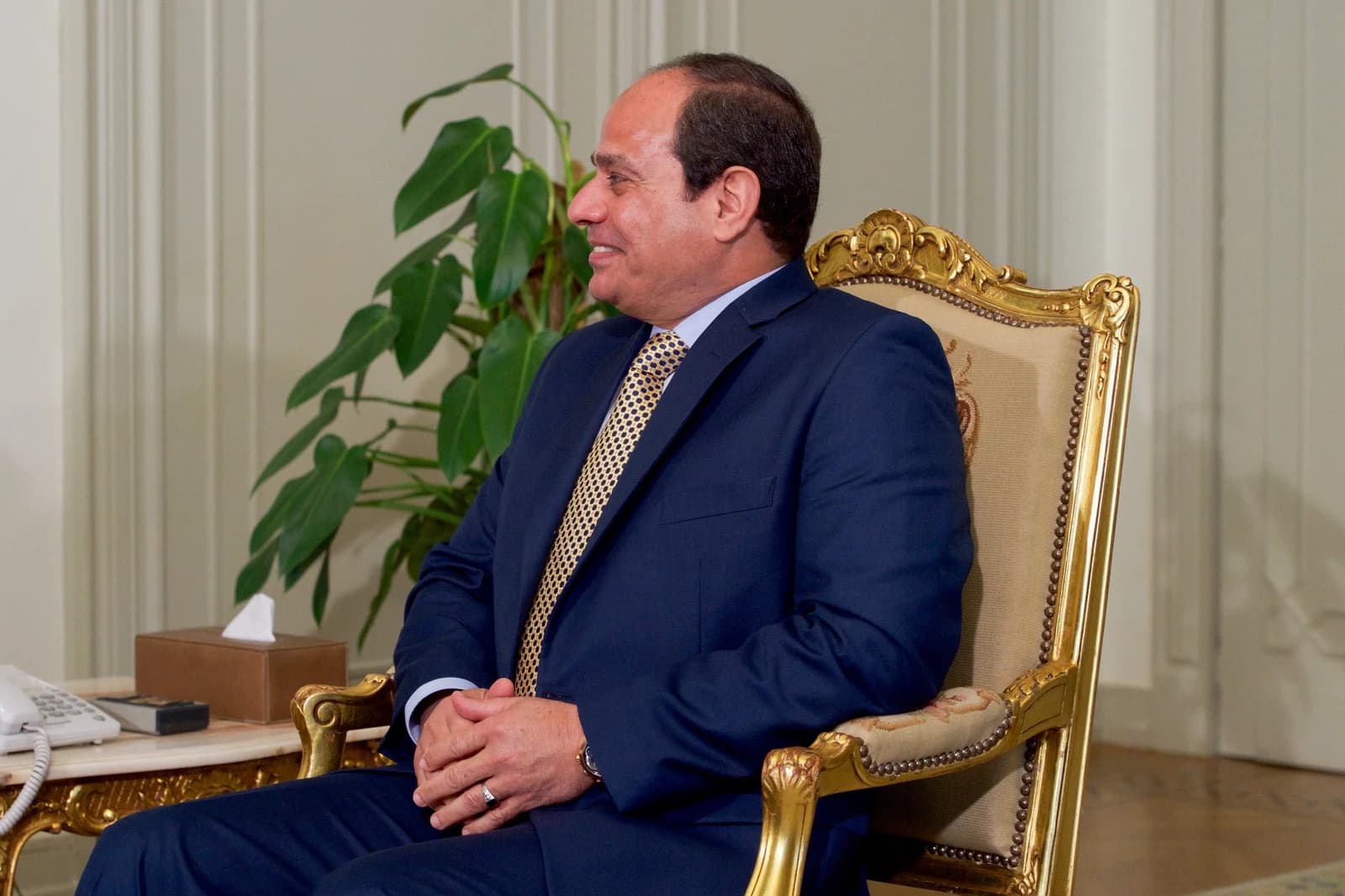
The timing matters because succession questions in large emerging markets can quickly become a source of political uncertainty, even when no formal transition is imminent. By raising the issue more than 40 months before his current term ends, Sisi is trying to shape the narrative early: not around a chosen successor, but around a process that, in his telling, would identify the “most efficient, most worthy and most capable” candidates across state institutions.
For investors, that kind of message is less about the identity of any one figure than about institutional continuity. Egypt has spent years trying to project stability to markets, lenders and foreign partners as it works through a heavy debt burden, currency pressure and the need for sustained investment inflows. A leadership transition that looks orderly, technocratic and managed through state institutions would be more reassuring than one seen as improvised or politicized.
Sisi framed the committee as a way to prevent “favoritism, nepotism or bias toward relatives,” and said the broader aim is not only to prepare a future president but to build cadres capable of taking responsibility across government. That widens the political significance of the announcement: it is an argument for continuity of the state apparatus itself, not just continuity at the top.
He also invoked the wartime-era role of former defense minister Hussein Tantawi as an example of state stewardship in difficult periods, underscoring the military establishment’s self-image as a guarantor of order and fiscal discipline. For markets, that signals the continued centrality of the military and state institutions in managing shocks, even as it reinforces the lack of clarity around how far political succession planning may eventually extend beyond the presidency.
The economic subtext is that Egypt wants succession risk to be treated as manageable at a time when investors are already pricing in macro and policy execution. If the government can demonstrate predictable governance and leadership depth, it could help support confidence in policy continuity, reform implementation and capital allocation. If not, the debate could feed uncertainty over how durable Egypt’s current economic framework will be once the next transition approaches.
For now, the market relevance lies in the message rather than any immediate policy change: Cairo is signaling that succession will be managed as a state process, not a personal one. How credible that looks to Egyptians — and to creditors, investors and regional partners — will depend on whether the committee becomes a real pipeline for talent or remains a political signal.
| Entity | Gains | Losses |
|---|---|---|
| Egyptian state institutions | ▲Claims of orderly succession | ▼Perception of improvised transition |
| Potential technocratic candidates | ▲Clearer selection pathway | ▼Patronage-based contenders |
| Investors and creditors | ▲Greater policy continuity | ▼Political uncertainty premium |
| Political rivals/speculators | ▲None | ▼Narrative of a handpicked successor |