A sharp public call in Egypt to stop treating the state as an “employment office” underscores the government’s growing urgency to rein in a swollen public wage bill and shift more of the economy to private-sector hiring.
Egypt Calls to Cut State Hiring
The comment, made by senior public figure Al-Aradi and echoed in broader official messaging around investment and private-sector-led growth, lands at a time when public payrolls in the region remain one of the biggest drains on budgets. For Egypt, where fiscal consolidation and foreign-currency stability remain central policy goals, trimming the state’s role as an employer is not just a political slogan — it is a direct budget issue, a labor-market issue and an investment story.
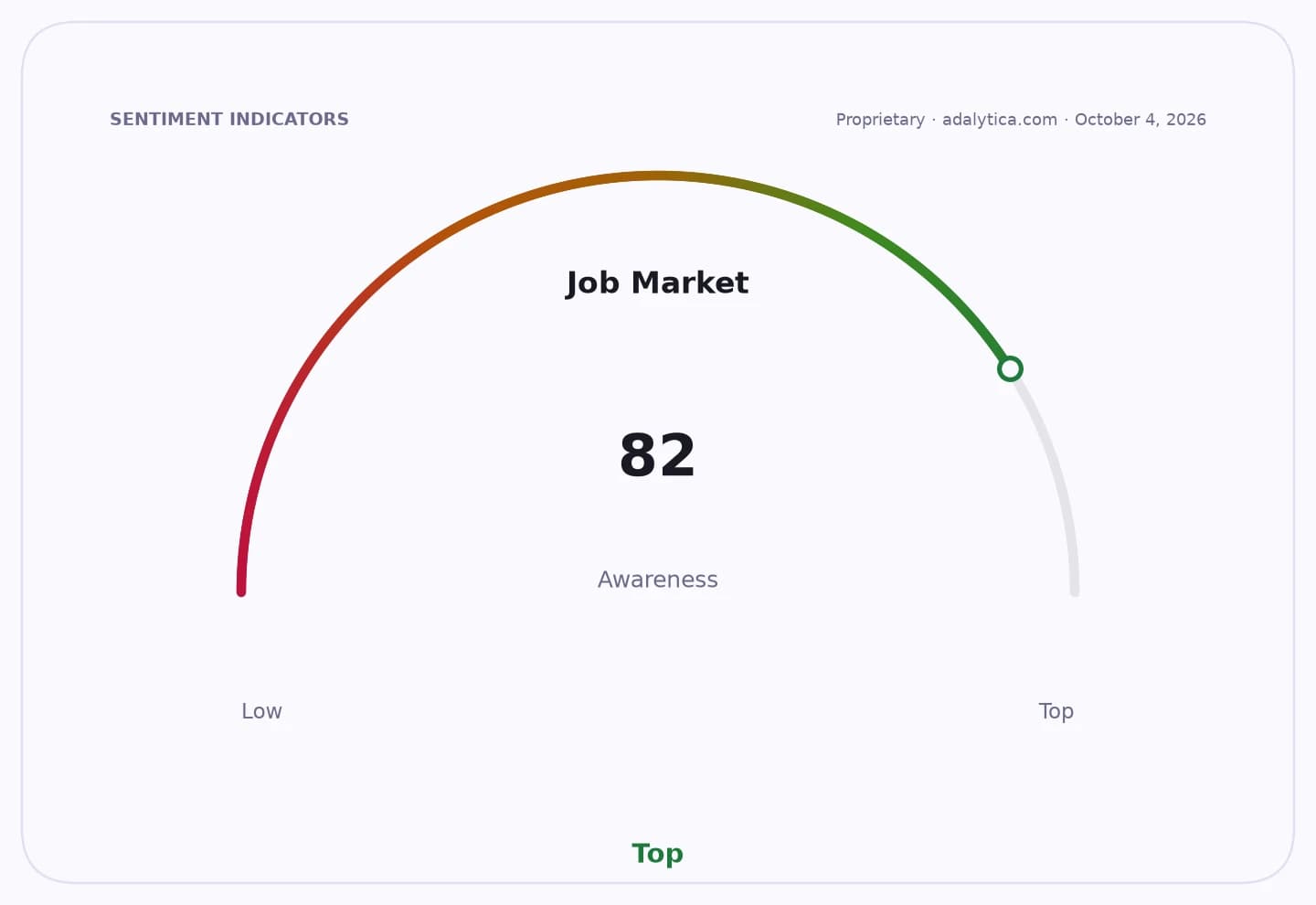
Sentiment IndicatorsⓘProprietary · adalytica.com · October 4, 2026
This is a snapshot — live sentiment, awareness and momentum for 130+ markets update continuously in the dashboard.Open AlphaPulse
The economic logic is straightforward: wage spending crowds out money for infrastructure, services and capital investment. When governments absorb workers who are not needed, they end up financing inactivity rather than productivity, widening deficits and limiting room for growth-enhancing spending. That is why the argument for reducing “the inflated public apparatus” matters to bondholders, rating agencies and domestic investors alike. A leaner state payroll could ease pressure on the budget over time, but only if the private sector is able to create jobs fast enough to absorb displaced workers.
That is the core risk in the reform narrative. Public-sector hiring has long acted as a social stabilizer in Egypt and across North Africa, especially when private demand is weak. Moving away from that model may improve fiscal arithmetic, but it can also raise near-term social and political pressure if job creation does not accelerate. The latest Adalytica Job Market Sentiment reading of 14, in “Extreme Fear,” reflects that fragility, even as broader consumer confidence remains neutral. In other words, the policy direction is clear, but the labor market is not yet showing the resilience needed for a smooth transition.
For investors, the significance is twofold. First, it reinforces the government’s commitment to structural reform and private-sector expansion, which is generally supportive for sovereign-credit credibility and for companies positioned to benefit from outsourcing, privatization and investment-led growth. Second, it highlights the sectors that could see slower wage-driven demand if the state pares back hiring or subsidies too quickly. Financials, infrastructure, industrials and private education or healthcare providers could benefit if private activity fills the gap; households dependent on public payroll growth could lose.
The broader narrative is that Egypt is trying to move from a state-led labor model to a rules-based, private-sector-led one. That transition can support long-run productivity and budget sustainability, but it will be judged by execution: whether new investment translates into real hiring, and whether the state can reduce payroll costs without deepening unemployment or social stress.
| Entity | Gains | Losses |
|---|---|---|
| Egyptian treasury | ▲Lower wage pressure | ▼Short-term political room |
| Private sector employers | ▲Bigger hiring role | ▼Higher expectations to absorb labor |
| Public-sector workers | ▲N/A | ▼Slower hiring, possible restructuring |
| Bondholders/investors | ▲Better fiscal discipline | ▼Near-term labor-market instability |