Egypt’s Labor Ministry is moving to rewire vocational training around actual hiring demand, a shift that could ease a long-running mismatch between the skills young workers have and the jobs employers need to fill.
Egypt Labor Ministry Reworks Vocational Training

That matters because the strategy is designed to turn training into a labor-market pipeline rather than a classroom exercise. By targeting sectors with immediate and future demand — from construction and solar energy to technology, languages and healthcare — the government is betting it can improve employability, reduce wasted training spend and support growth in industries facing persistent skill shortages.
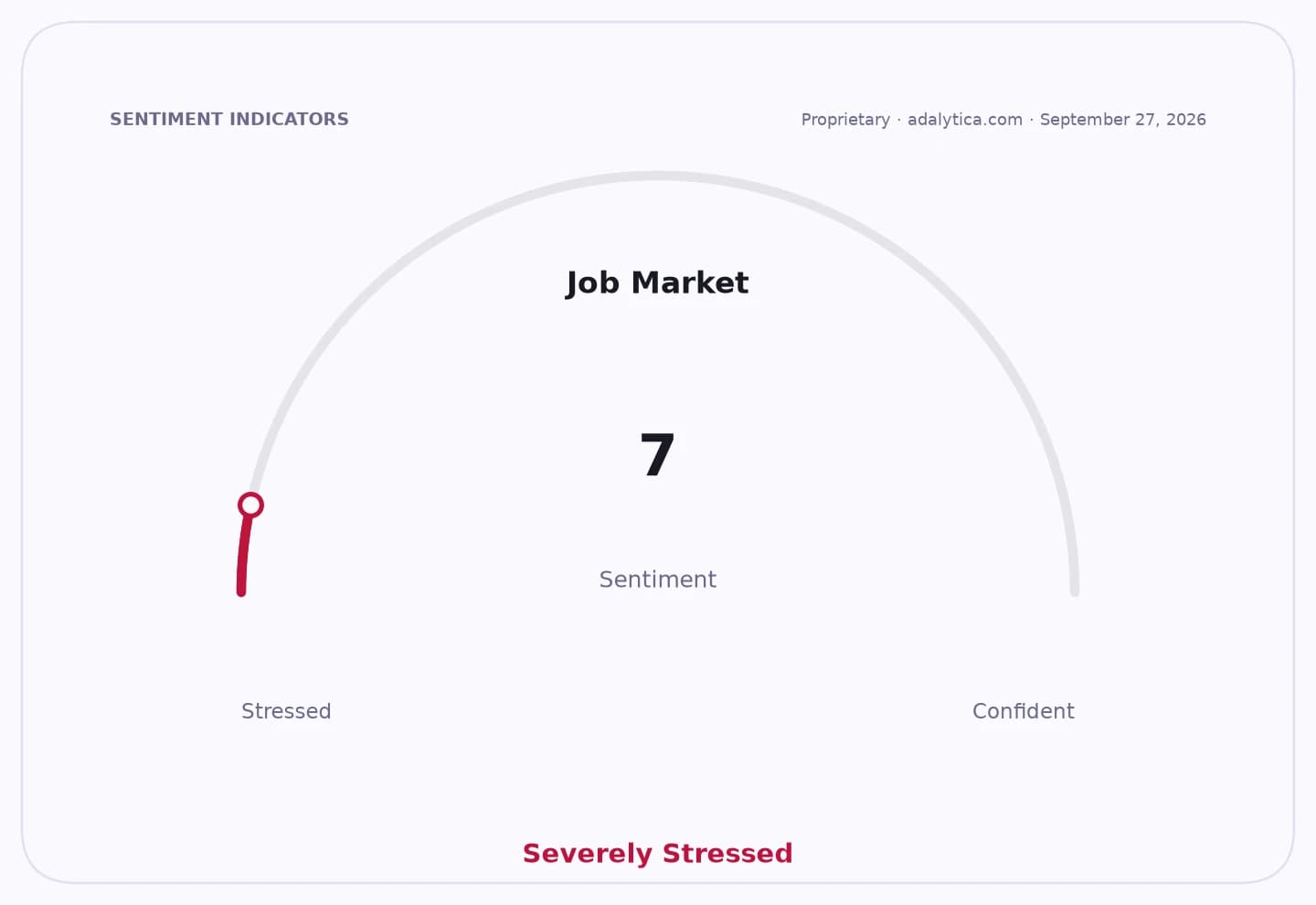
Sentiment IndicatorsⓘProprietary · adalytica.com · October 1, 2026
This is a snapshot — live sentiment, awareness and momentum for 130+ markets update continuously in the dashboard.Open AlphaPulse

The ministry says the new national vocational training strategy will bring together 11 ministries, employers and workers under a single framework, with a steering committee chaired by the labor minister and an executive committee charged with mapping needs, gathering data and tracking implementation. The core idea is a reversal of the old model: not training whoever is available, but training for occupations that can actually be absorbed by the market.
For investors and businesses, that is more than a social policy announcement. A more targeted skills system can lower recruitment bottlenecks, reduce turnover and improve productivity in labor-intensive sectors such as construction and services. It also supports sectors tied to Egypt’s broader development priorities, including solar power and digital work, where access to trained labor can determine how quickly projects scale.

The ministry said it has already graduated about 1,200 young people through free training grants with the Italian Don Bosco Institute in Cairo and Alexandria, with some trainees being matched with employers before graduation. That early placement model is important: it suggests the government is trying to align training supply with hiring timelines, not just produce certificates.
The labor backdrop helps explain the urgency. Official unemployment data in the supplied context point to a job market that has improved from pandemic-era stress, but still faces structural frictions. That makes skills policy economically relevant: even when headline labor indicators stabilize, mismatches between vacancies and worker capabilities can keep businesses short of staff while leaving jobseekers underemployed.
The strategy also appears aimed at external labor demand, not just domestic hiring. By explicitly referencing opportunities inside Egypt and abroad, the ministry is signaling a dual-track approach that could help workers access remittance-generating jobs while giving employers a larger pool of qualified labor.
The bullish case is that a coordinated training system can become a modest but meaningful supply-side reform, especially if it is kept close to employer demand and updated quickly as technology changes. The bearish case is execution: broad interministerial plans often struggle without funding, data quality and private-sector follow-through. For now, the investment takeaway is that Egypt is trying to address one of its most persistent constraints on growth — the gap between education output and employable skills — and the success of that effort will be judged less by announcements than by whether trainees end up on payrolls.
| Entity | Gains | Losses |
|---|---|---|
| Jobseekers and trainees | ▲Better job matching | ▼Generic training paths |
| Employers and investors | ▲Easier hiring, higher productivity | ▼Skills shortages |
| Labor Ministry and state | ▲Stronger labor policy credibility | ▼Policy execution risk |
| Low-skill, oversupplied sectors | ▲Some transition support | ▼Less demand for outdated skills |