Egypt is moving to settle more trade in China’s yuan as Beijing pushes to chip away at dollar dominance, but the U.S. currency still has the stronger hand for now because higher American yields keep supporting it.
Egypt to Settle More Trade in China Yuan

The shift matters because trade invoicing is where currency power turns into economic leverage. If more imports, commodity purchases and bilateral payments move away from the dollar, the greenback’s role in financing trade and recycling reserves weakens at the margin, even if the change is gradual and concentrated in a few emerging markets.
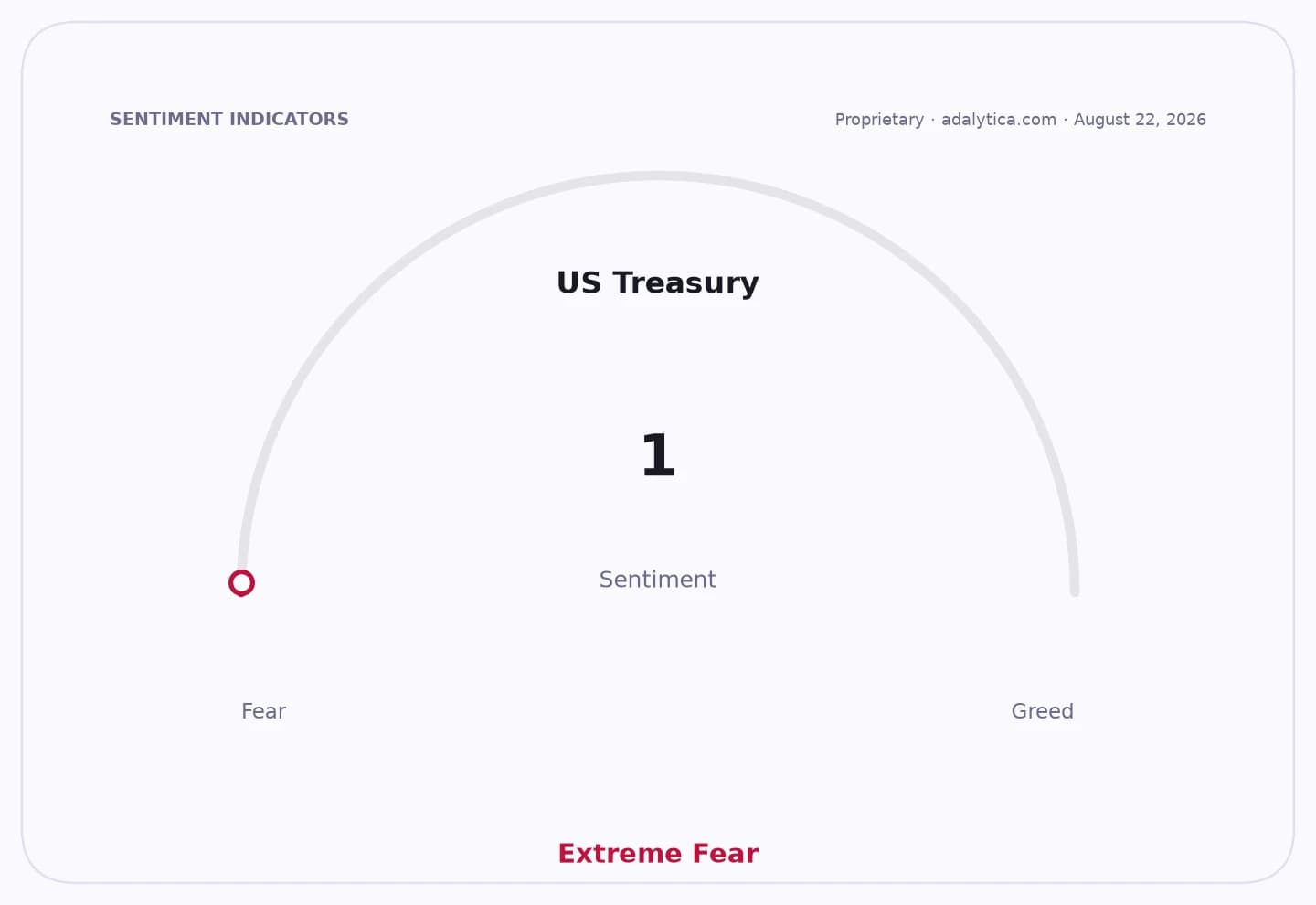
Sentiment IndicatorsⓘProprietary · adalytica.com · September 5, 2026
This is a snapshot — live sentiment, awareness and momentum for 130+ markets update continuously in the dashboard.Open AlphaPulse
For investors, that makes the currency story less about a sudden regime change than about pressure building underneath the dollar. The U.S. 10-year Treasury yield is around 4.8%, keeping the carry on dollar assets attractive, while the dollar ETF UUP has held near 28.08, above its 50-day and 200-day moving averages and close to recent highs. That tells traders the dollar remains bid even as some Asian currencies diversify.
The yuan, meanwhile, has been trying to regain attention. Adalytica’s Chinese yuan trade signals show neutral sentiment at 38 with a 70 awareness reading, after a sharp one-day jump in change and a deeper 30-day decline, suggesting interest in the currency is rising even if conviction is not. The U.S. dollar signals are still firmer, with sentiment at 69 and a 48-point rise over seven days.
Egypt’s move fits a wider geopolitical narrative in which China uses trade links, financing and payment systems to widen yuan usage across the developing world, while Washington’s higher-for-longer rate backdrop keeps the dollar anchored. That tension matters for companies and sovereign borrowers because it can affect invoice currency, funding costs and reserve management.
The near-term test is whether other emerging economies follow Egypt’s lead or whether strong U.S. data and Federal Reserve guidance keep the dollar’s yield advantage intact into the next policy meeting.
| Entity | Gains | Losses |
|---|---|---|
| China / yuan | ▲Wider trade use | ▼Slower dollar challenge |
| Egypt | ▲More payment flexibility | ▼Less dollar reliance |
| U.S. dollar / UUP | ▲Yield support, reserve role | ▼Marginal de-dollarization |
| Emerging-market importers | ▲Diversification options | ▼FX transition costs |