The market is starting to ask whether Treasury buybacks meant to smooth government financing could end up doing the opposite for the dollar.
Dollar Softens as Treasury Buyback Debate Grows
That is the real issue behind the warning that Treasury Secretary Scott Bessent is “playing with fire”: if debt repurchases are seen as a way to lean on bond prices, manage yields or blur the line between funding policy and monetary support, investors may conclude Washington is quietly encouraging a weaker currency. In a year when the dollar is already under pressure, that matters far beyond the bond market.
Sentiment IndicatorsⓘProprietary · adalytica.com · August 22, 2026
This is a snapshot — live sentiment, awareness and momentum for 130+ markets update continuously in the dashboard.Open AlphaPulse
The dollar has been drifting toward a three-month low as traders reduce expectations for another leg higher in U.S. rates and weigh fresh geopolitical risks in the Middle East. The move comes even with Treasury yields still elevated. The 10-year note was around 4.675% on the latest forecast, while the 2-year sat near 4.198%, levels that usually offer some support to the dollar. Instead, the currency has been softening, with the U.S. dollar ETF UUP slipping to 27.90 on Aug. 21 and its relative strength index hovering around 34.5, a reading that points to waning momentum.
For investors, that is the key takeaway: the dollar is no longer being pulled higher just because rates are high. If buybacks are interpreted as another form of yield management, they could reinforce the idea that the U.S. is comfortable with a gentler dollar, especially if the goal is to reduce financing costs or ease pressure on the Treasury’s balance sheet. That may help some parts of the government’s funding math in the short run. But it also risks lifting import prices, supporting commodities and giving foreign assets an edge over dollar-denominated ones.
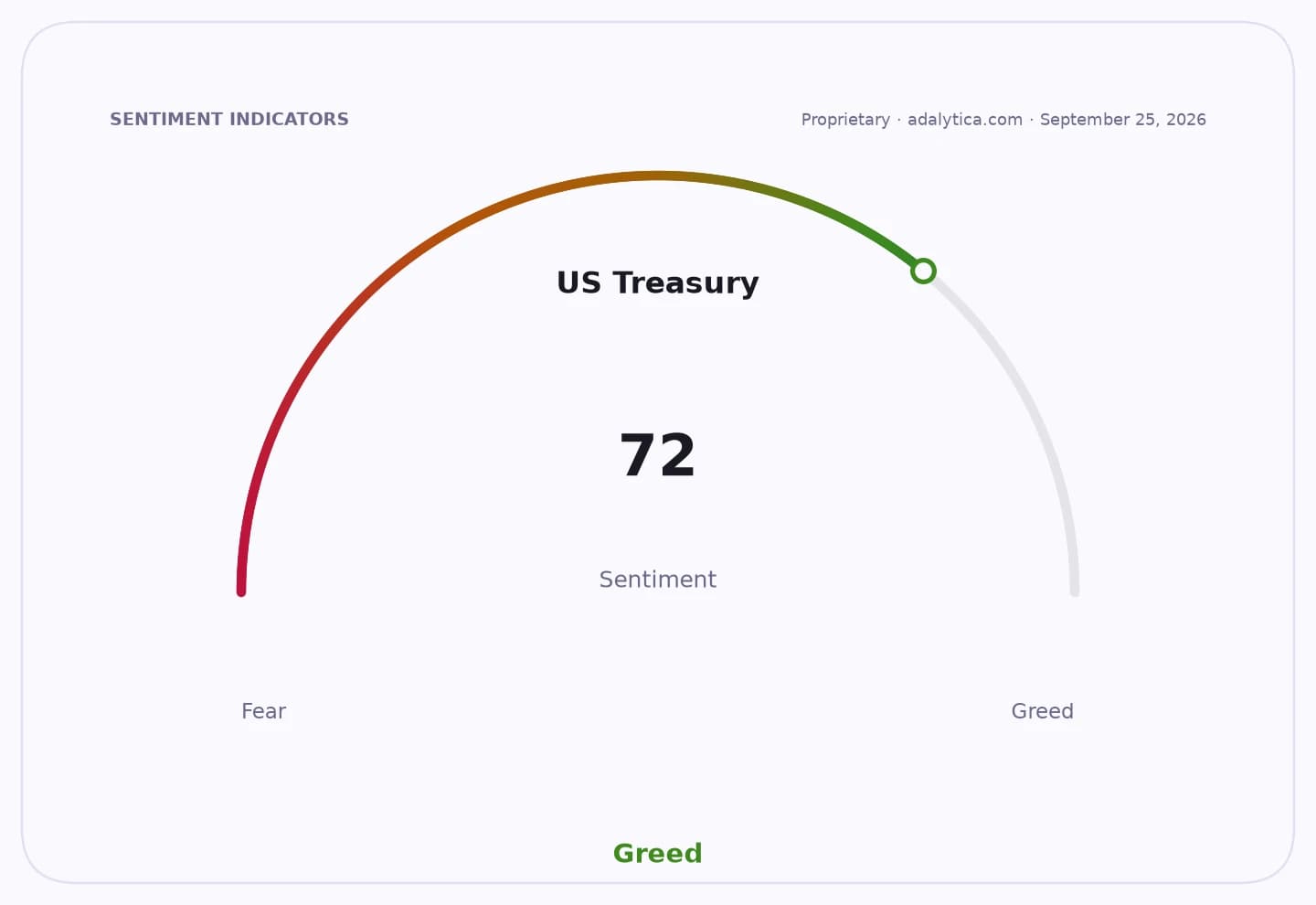
US Treasury — 30-day sentimentadalytica.com
Explore this data interactively — full history, time series and cross-market comparisons.Open AlphaPulse
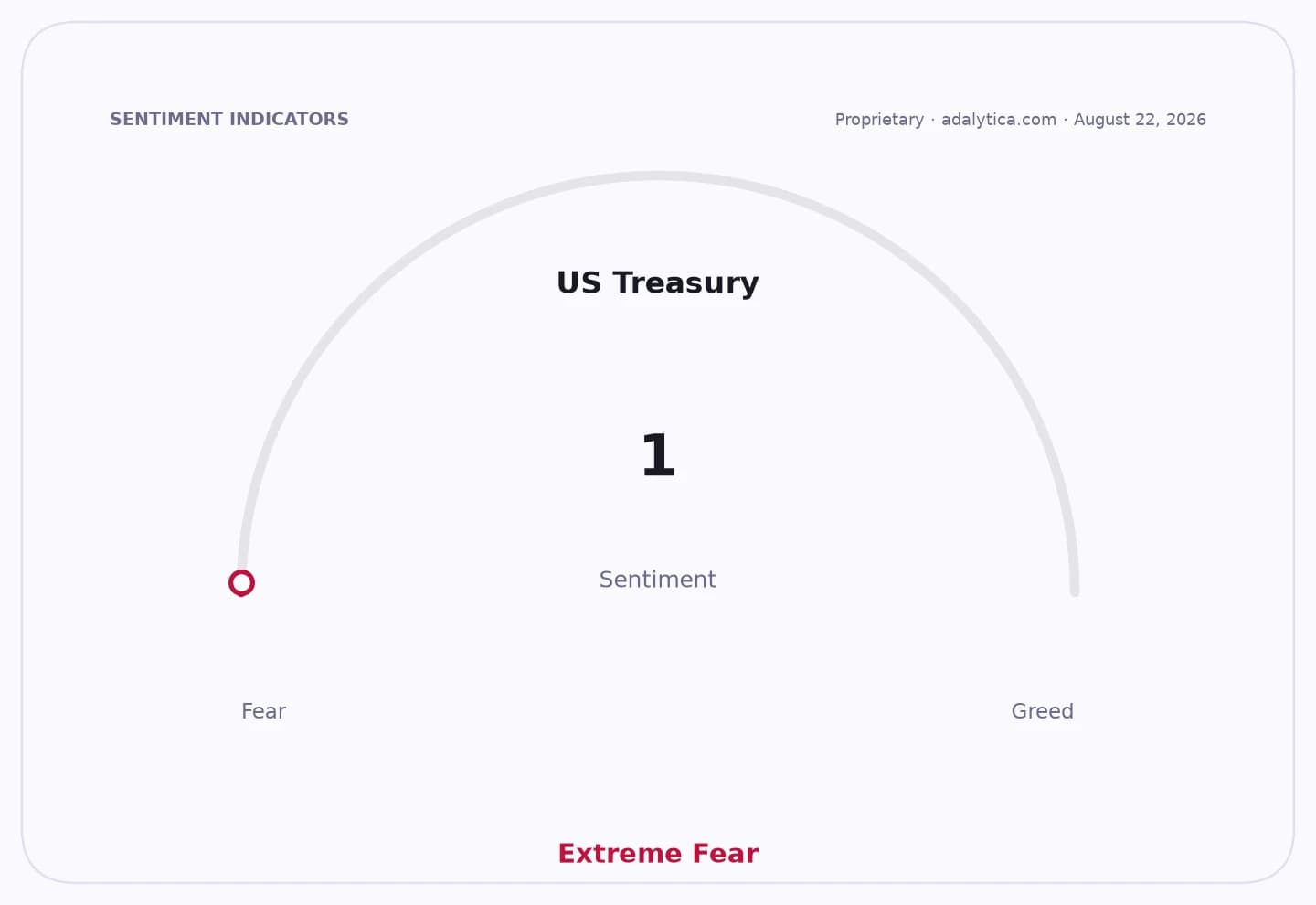
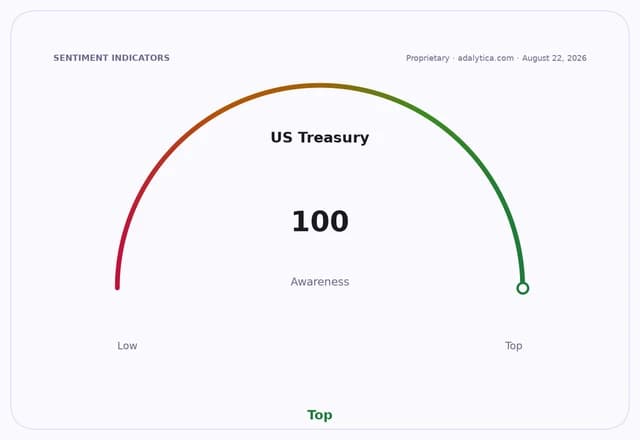
You can already see the market hedging that possibility. Long-duration Treasuries, often a safe haven when growth scares dominate, have lost ground: TLT fell to 82.05 on Aug. 21, below both its 50-day and 200-day moving averages. Adalytica’s U.S. Treasury Bonds Trade Signals snapshot showed “Extreme Fear” in sentiment even as awareness stayed at “Extreme Greed,” a sign that attention on the bond trade is intense but conviction is poor. That is a notable backdrop for a policy debate about how aggressively Treasury should intervene in its own market.
The foreign-exchange message is just as clear. The dollar has weakened against havens and alternatives, with the yen and euro drawing demand and risk assets such as Bitcoin benefiting from the softer greenback tone. FXY, the yen ETF, has firmed to 57.70 while still trading below its 200-day average, suggesting investors are watching for a bigger turn rather than declaring one yet. If Treasury actions deepen doubts about U.S. currency policy, those moves could accelerate.
For long-term investors, this is less about one week of trading and more about whether Washington is drifting toward a version of financial repression: keeping borrowing costs contained at the expense of currency credibility. That would matter for multinational earnings, inflation-sensitive sectors, gold, commodities and any portfolio with heavy overseas exposure. It would also matter for foreign buyers of U.S. assets, who care as much about currency stability as they do about yield.
Bessent may still argue that buybacks are a technical tool, not a devaluation strategy. But markets rarely separate technique from intent for long. If the policy mix looks designed to support government financing while tolerating a weaker dollar, investors will react accordingly. For now, that makes the dollar, Treasuries and export-sensitive assets worth watching closely.
| Entity | Gains | Losses |
|---|---|---|
| U.S. Treasury | ▲Smoother funding costs | ▼Currency credibility |
| Dollar bears | ▲Weaker-greenback trade | ▼Dollar bulls |
| Importers | ▲Little | ▼Higher input costs |
| Multinationals | ▲Translation boost | ▼Domestic consumers |