The Japanese yen is weakening again against the dollar, with USD/JPY holding above 157, as the Federal Reserve’s hawkish stance keeps U.S. yields elevated and Tokyo’s threat of intervention fails to arrest the move.
USD/JPY Holds Above 157 as Intervention Risk Grows

That combination matters because it puts Japan back at the center of the global carry trade: a strong dollar, a still-wide U.S.-Japan rate gap and the growing risk of official action are all feeding volatility across currencies, bonds and equities. For investors, this is not just a forex story. It is a signal that dollar strength can keep pressuring imported inflation, complicating the Bank of Japan’s policy path and forcing traders to price a higher probability of abrupt, government-led reversals in the yen.
The dollar’s support is hard to ignore. The U.S. 10-year Treasury yield has risen to about 5.11%, while the fed funds rate is projected around 3.63%, underscoring how much tighter U.S. financial conditions remain than Japan’s. Even after the Bank of Japan’s recent rate hike, the yen has not sustained any real rebound. Instead, the market keeps testing whether Japanese officials will defend the currency or tolerate further weakness.
That is why intervention chatter is becoming more than background noise. A Friday rate survey revived speculation that Japanese authorities may step in if the yen continues to slide, especially with USD/JPY trading near levels that have historically triggered concern. The warning sign for investors is asymmetry: the downside in the yen can be gradual, but any intervention could be sudden and violent, creating sharp reversals in currency, equity and Treasury positioning.
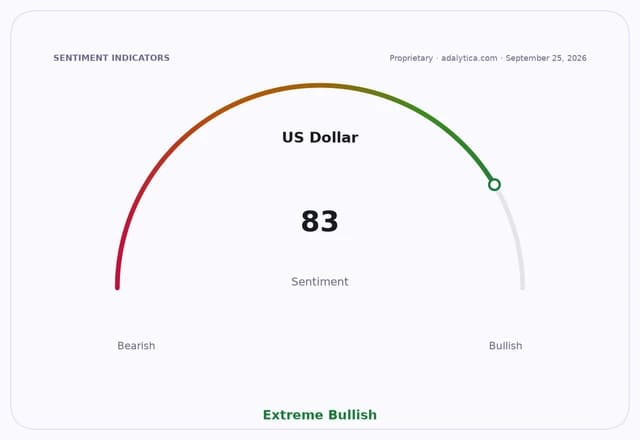
The move is already reflected in market behavior. The dollar index has climbed to 101.29, while the yen proxy FXY has retreated to 57.68, still below its 200-day moving average and only now pressing back toward its 50-day line. By contrast, the U.S. dollar ETF UUP has pushed to 28.69, above both its 50-day and 200-day moving averages, with RSI readings showing strong momentum. The market is clearly voting that the dollar remains the cleaner trade for now.
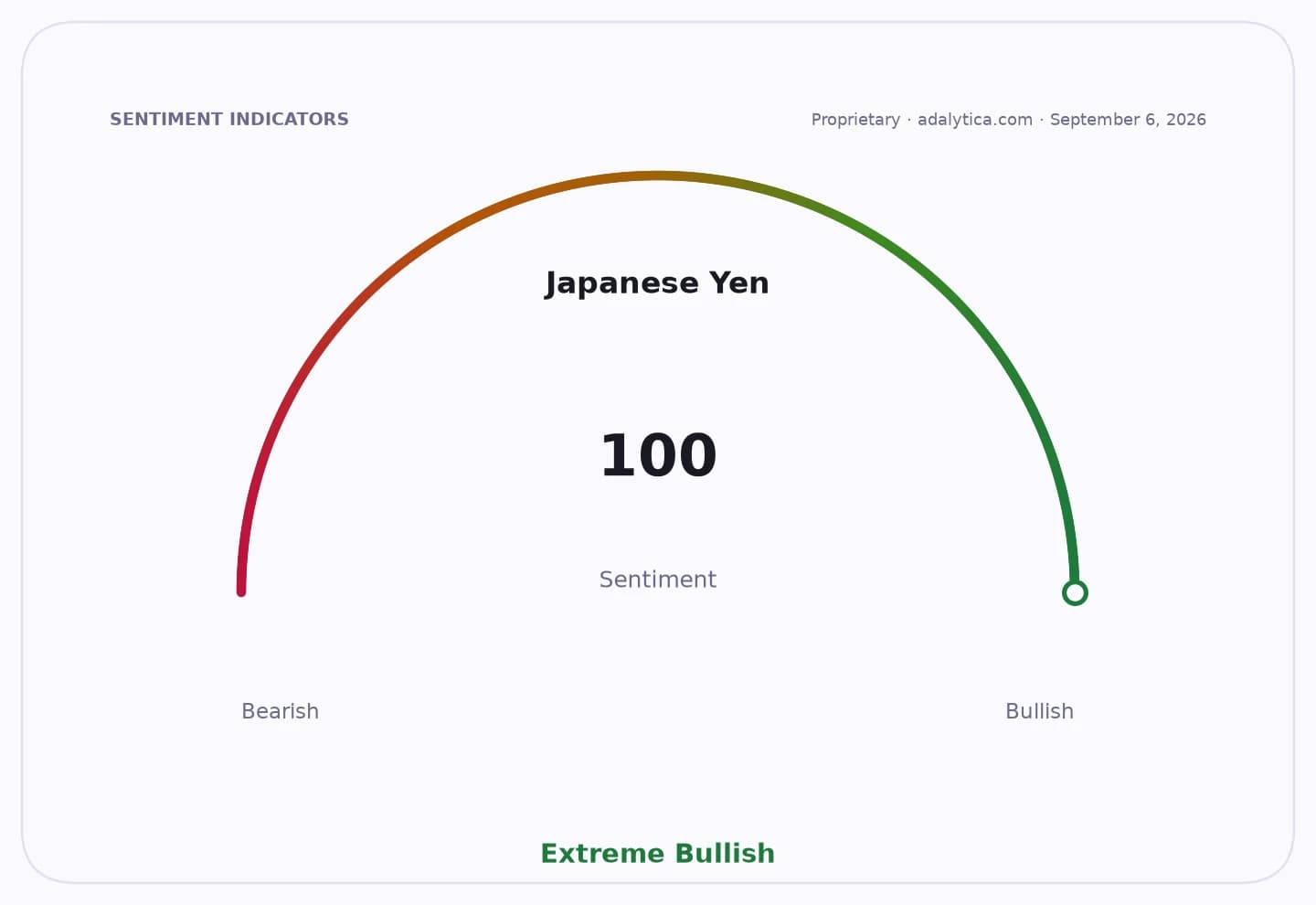
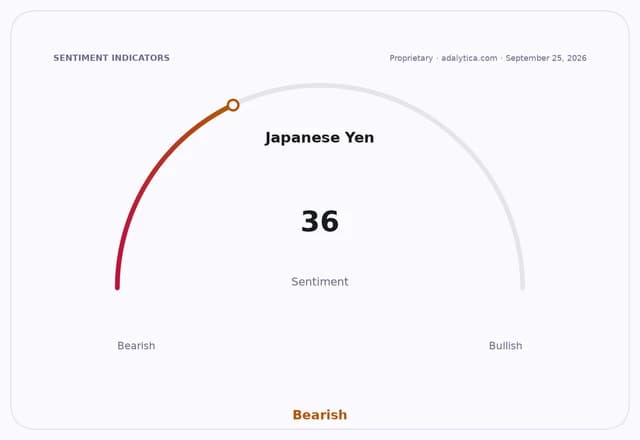
Adalytica’s trade signals also point to the same imbalance. The U.S. dollar shows a greed reading of 83, while the yen sits at a neutral 36, with extreme fear on awareness. In plain terms, the market is paying up for dollar strength and discounting the yen’s ability to stabilize without policy action.
For investors, the real opportunity is not to fight the trend blindly, but to position around the second-order effects. A weaker yen can support Japanese exporters, while also increasing the odds that Tokyo eventually acts. That means currency-sensitive portfolios should stay nimble, and hedges around dollar strength, Japan exposure and global risk assets matter more now than they did a month ago.
The next catalyst is straightforward: more hawkish Fed messaging, any fresh move higher in U.S. yields, or a Japanese holiday-thinned market that leaves the yen vulnerable to a sharper break. If policymakers step in, the move could reverse fast. If they do not, the market may continue pushing toward the 160 area that traders increasingly view as the next psychological battleground. For now, the asymmetric trade still favors the dollar, but the intervention risk makes this one of the market’s most dangerous crowded positions.
| Entity | Gains | Losses |
|---|---|---|
| U.S. dollar | ▲Yield support, stronger momentum | ▼Risk of yen intervention volatility |
| Japanese exporters | ▲Translation gains, weaker currency tailwind | ▼Higher hedging costs if yen snaps back |
| Japanese authorities | ▲Opportunity to jawbone market | ▼Credibility if yen keeps sliding |
| U.S. importers | ▲Cheaper imports from stronger dollar | ▼None from this move directly |