The yen surged more than 3 yen in two days to briefly trade around 156 per dollar and then strengthen through the closely watched 155 level, as investors increased bets that the Bank of Japan will move faster on interest-rate hikes while U.S. payroll data kept the Federal Reserve in play.
Yen rises above 155 on BOJ hike bets
The move matters because the yen’s sudden rebound is not just a spot-market swing. It reflects a repricing of the gap between Japanese and U.S. policy rates, which has been the main engine behind yen weakness for much of the past two years. If the BOJ signals a quicker tightening path, the yield differential that has encouraged investors to borrow yen and buy higher-yielding dollars and other assets could narrow, potentially forcing some carry trades to unwind.
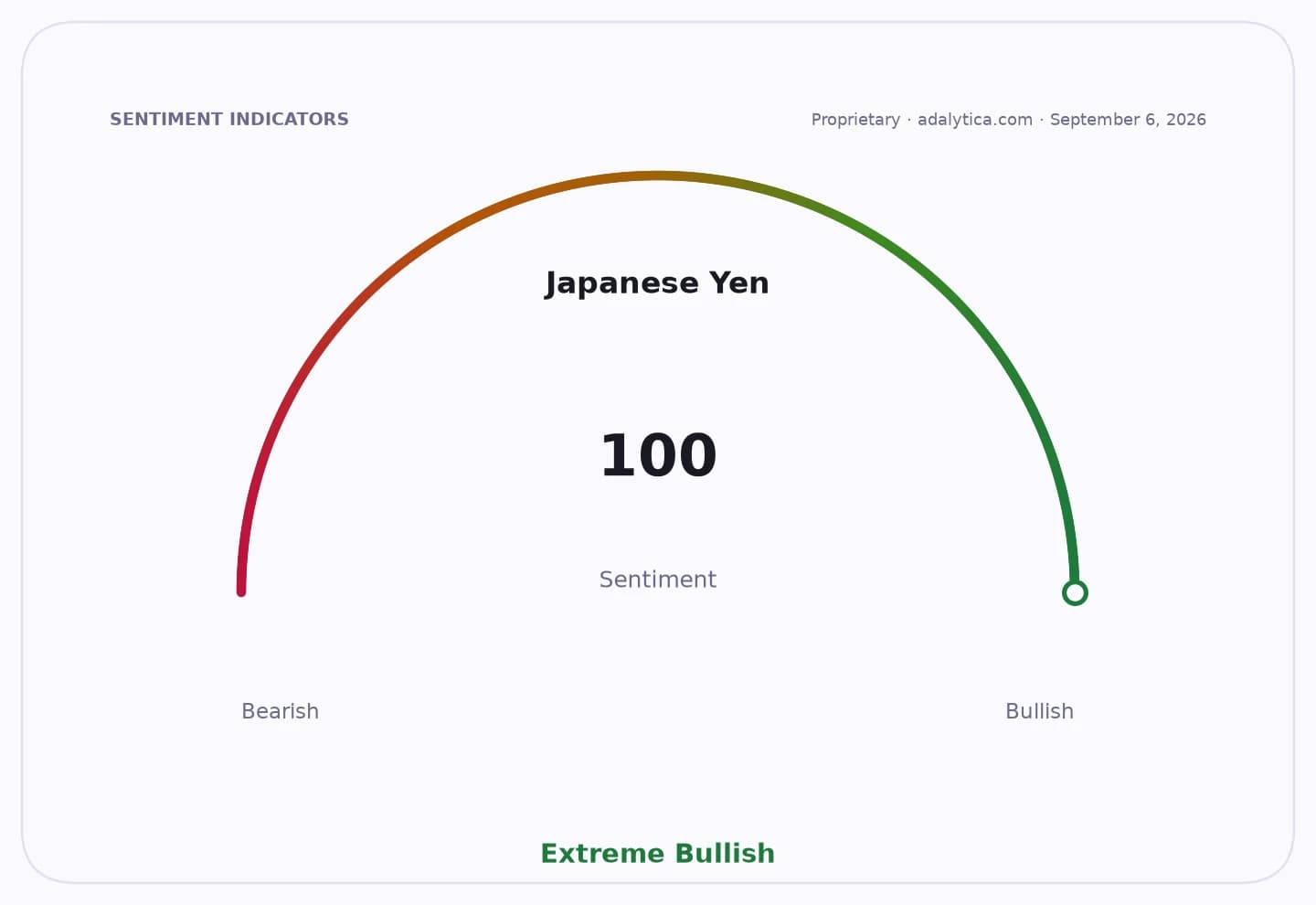
Sentiment IndicatorsⓘProprietary · adalytica.com · September 6, 2026
This is a snapshot — live sentiment, awareness and momentum for 130+ markets update continuously in the dashboard.Open AlphaPulse

That would have immediate implications for currency markets and for Japanese equities, where exporters have benefited from a softer yen. A stronger currency typically lowers the overseas earnings translated back into yen for automakers, electronics makers and machinery groups, while improving import costs for energy and materials. For investors, the 155 area has become a psychological marker: a sustained break lower in USD/JPY could accelerate momentum buying of the yen and pressure positions built around continued depreciation.
The rally has come without signs of direct intervention, suggesting this is still a market-led move rather than a policy shock. That makes it more durable if traders conclude the BOJ is less tolerant of a weak currency and more willing to normalize rates. Recent comments from BOJ officials have reinforced that view, even as U.S. employment figures revived expectations that American rates may stay elevated for longer.
Japan’s finance ministry has said it stands ready to respond to market developments, a reminder that authorities remain uneasy about rapid currency moves. But for now, the dominant force is the changing policy narrative: a BOJ that may tighten sooner, a Fed that is not yet ready to ease, and a market trying to price where the yen’s long slide finally meets resistance.
For investors, the key test is whether the yen can hold above 155 and whether the BOJ follows through with clearer guidance on rate hikes. If it does, the next phase may be less about intervention risk and more about a broader repricing of Japan’s ultra-loose monetary era.
| Entity | Gains | Losses |
|---|---|---|
| Japanese yen | ▲Stronger valuation | ▼Export competitiveness |
| BOJ hawks | ▲More policy credibility | ▼Pressure to act sooner |
| Japanese exporters | ▲Lower import costs | ▼Softer overseas earnings translation |
| Carry-trade shorts | ▲Potential unwind profits | ▼Rising funding costs |