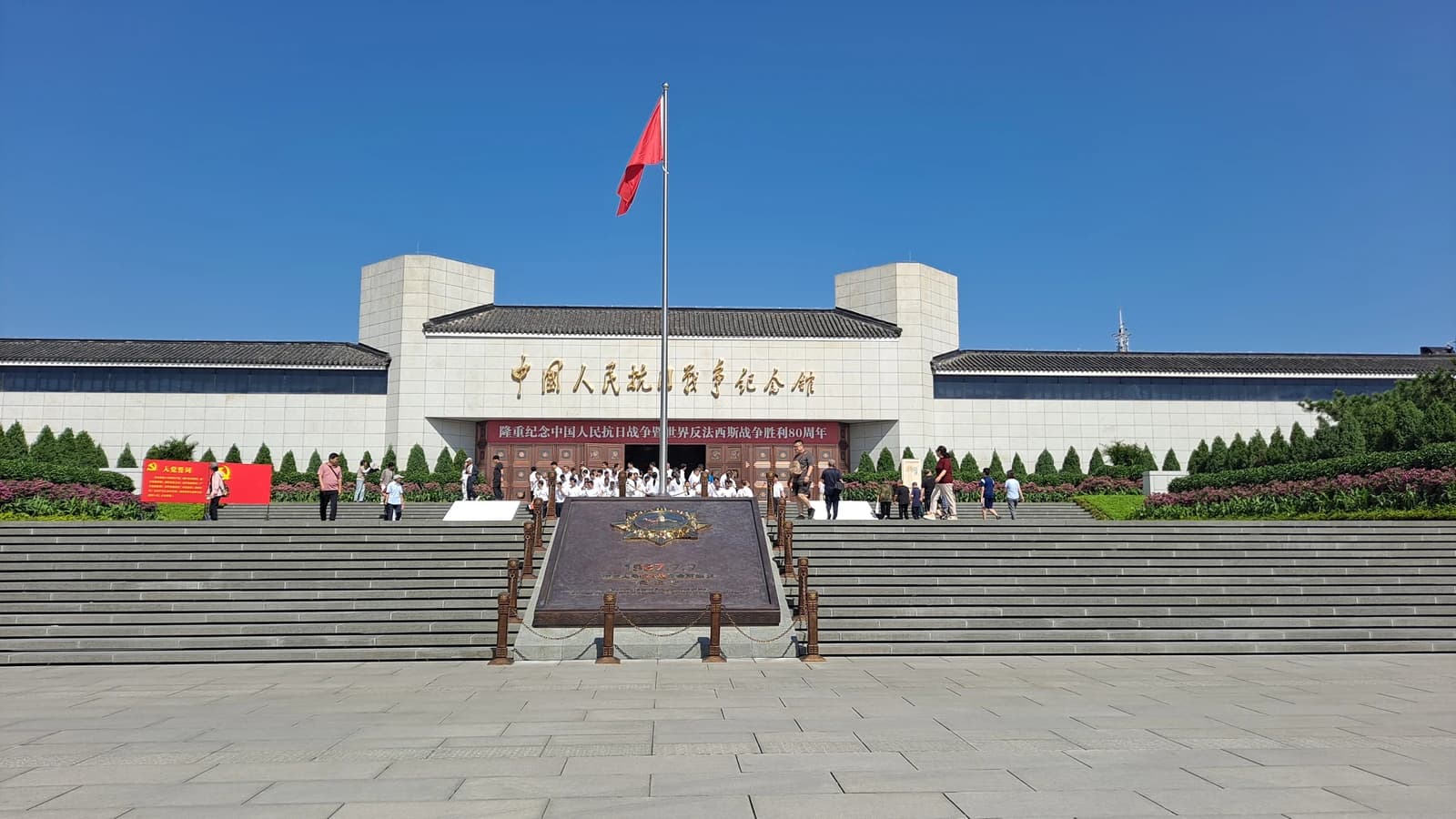
Japan’s wartime legacy in China remains an economic and market risk because every flare-up in historical memory can still spill into trade, diplomacy and capital flows between Asia’s two largest economies.
Japan-China tensions and ETF divergence
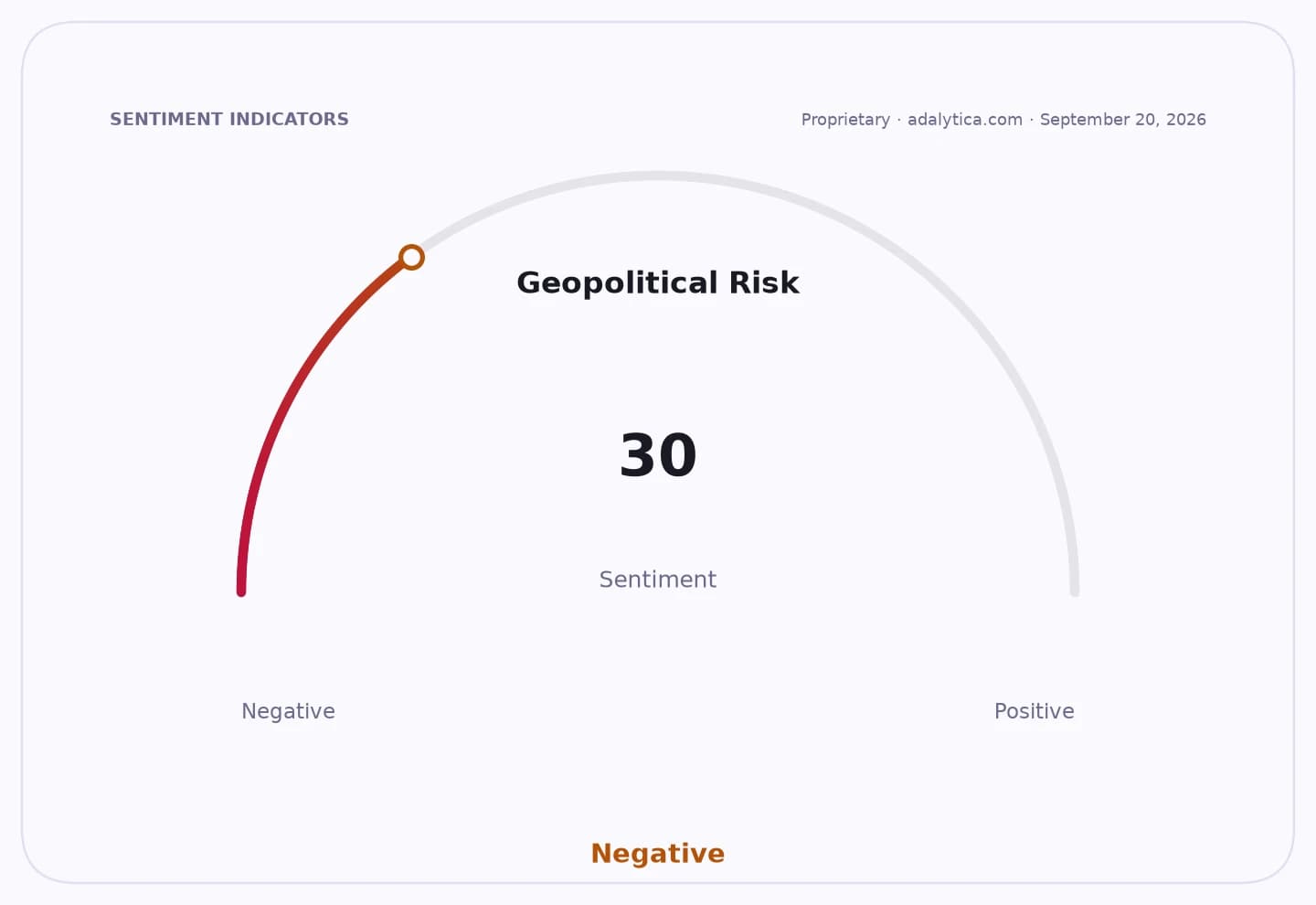
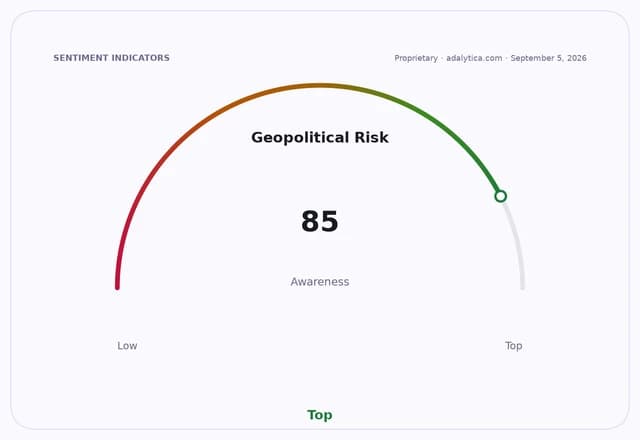
That matters now because the region is already carrying a heavier geopolitical risk premium. Adalytica’s Global Stability Sentiment gauge has fallen to 44, neutral, from 85 a week ago, showing how quickly confidence can deteriorate when old grievances are revived. The market is not pricing a one-off history lesson; it is pricing the possibility that political friction hardens into economic friction, just as both countries remain deeply tied through supply chains, tourism and regional investment.
Sentiment IndicatorsⓘProprietary · adalytica.com · September 5, 2026
This is a snapshot — live sentiment, awareness and momentum for 130+ markets update continuously in the dashboard.Open AlphaPulse

For investors, the key takeaway is that China and Japan exposure cannot be treated as purely cyclical. Japan’s exporters, Chinese consumer names and broader Asia ETFs can all move on shifts in bilateral sentiment, even when the immediate catalyst is diplomatic rather than economic. That is why the recent outperformance in Japan-linked assets and the relative stability in China funds should be watched together: investors are still willing to pay for perceived policy resilience in Tokyo, while FXI remains far more vulnerable to any renewed escalation in nationalist rhetoric or trade pressure.
The price action underlines that split. Japan’s EWJ has climbed to 98.28 from 76.21 in late November and is now trading well above both its 50-day and 200-day moving averages, a sign that capital has been leaning into Japanese equities despite lingering geopolitical noise. By contrast, China’s FXI is at 35.88, still below its 200-day moving average of 36.47, with the fund recovering only modestly from a July selloff. DXJ, which strips out currency moves, has also held near 180, reflecting continued investor appetite for Japanese corporate earnings even as regional tensions remain a headline risk.
Geopolitical Risk vs FXIadalytica.com
Explore this data interactively — full history, time series and cross-market comparisons.Open AlphaPulse
That divergence is the real story. The market is saying Japan still benefits from a stronger governance and capital-return narrative, while China remains the more discounted exposure whenever Asia’s political temperature rises. Yet the deeper implication is not simply about valuation — it is about the fragility of cross-border confidence. A dispute rooted in wartime memory can affect export sentiment, corporate planning and portfolio positioning long after the history itself has passed.
The opportunity, in my view, is to own the beneficiaries of regional uncertainty rather than the most exposed links in the chain. Japanese exporters with global revenue, defense-related names, and infrastructure and automation stocks that can ride domestic capex deserve a premium when geopolitical risk rises. The losers are the companies and funds that depend on uninterrupted China-Japan normalization. If tensions intensify again, the next move is likely to reward quality Japan exposure and punish the most sentiment-sensitive China plays.
| Entity | Gains | Losses |
|---|---|---|
| EWJ holders | ▲Japan equity inflows | ▼China-sensitive sentiment |
| DXJ investors | ▲Export earnings strength | ▼Yen-driven volatility |
| FXI holders | ▲Short-term rebounds | ▼Geopolitical risk premium |
| China-Japan trade | ▲None | ▼Supply-chain confidence |