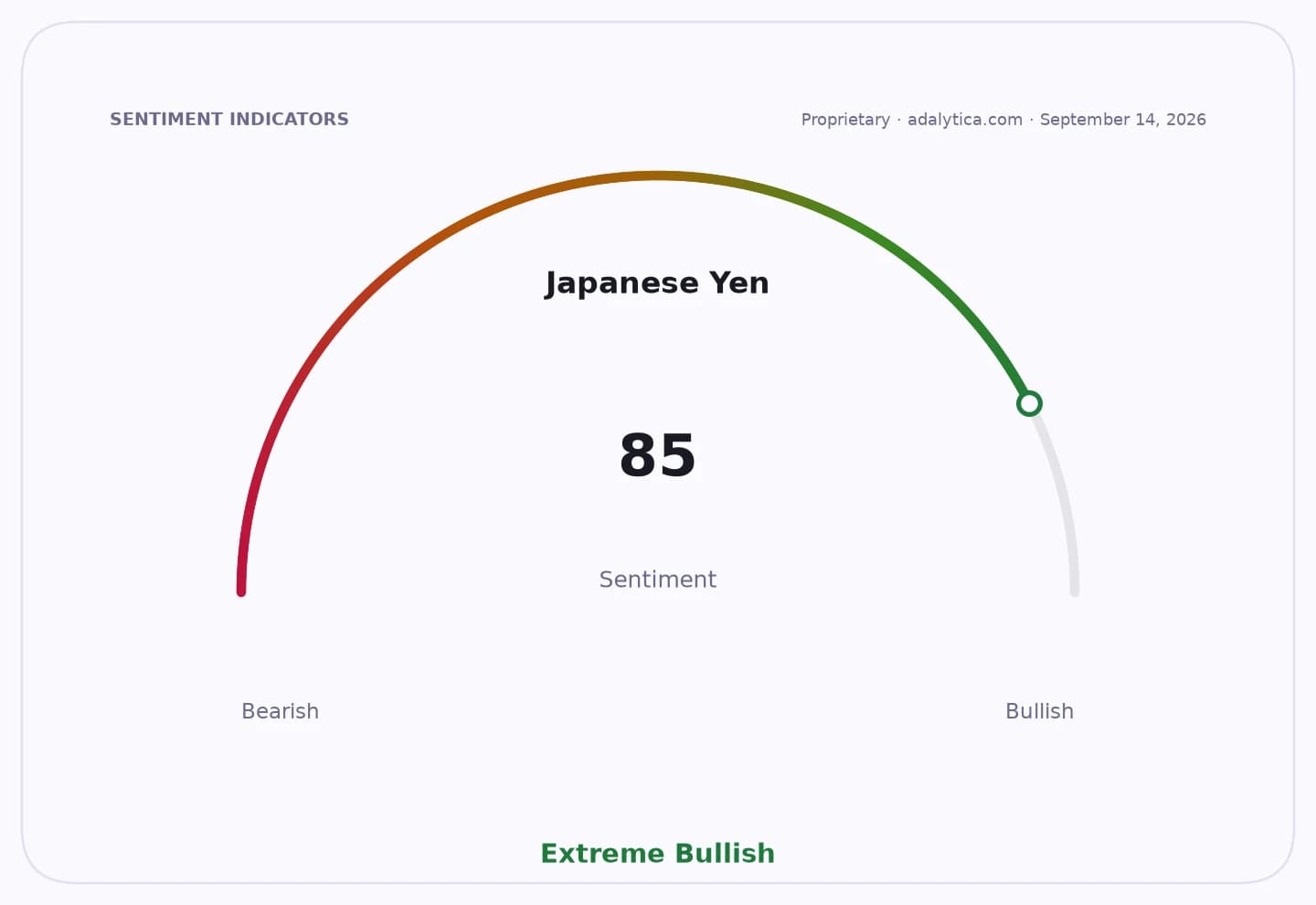
The yen is vulnerable to another sharp leg lower this week after the Bank of Japan failed to deliver the stronger rate-hike guidance traders wanted, leaving a three-day Japan holiday to amplify moves in a market already leaning bearish on the currency.
Yen Falls After BOJ Policy Guidance Disappoints

The yen was little changed around 156.86 per dollar Monday after tumbling as much as 1.3% on Friday, when two BOJ board members dissented from keeping policy unchanged. It dropped more than 2% last week, its biggest weekly decline in almost a year, as investors judged the central bank was not signaling a faster tightening cycle.
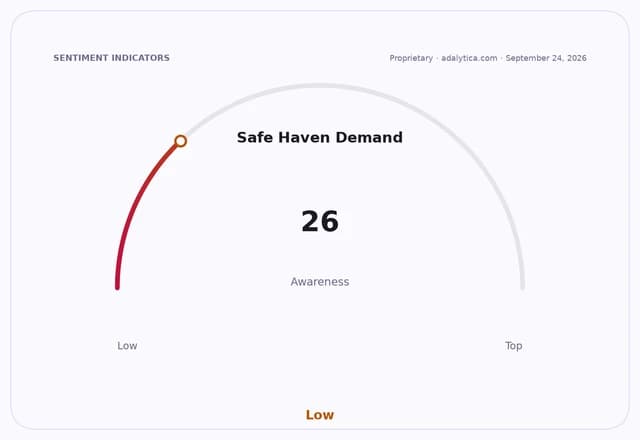
Sentiment IndicatorsⓘProprietary · adalytica.com · September 24, 2026
This is a snapshot — live sentiment, awareness and momentum for 130+ markets update continuously in the dashboard.Open AlphaPulse

That matters because the yen is once again trading as a policy story as much as a macro one. Without clearer guidance on the pace of future rate hikes, the BOJ has given the market little reason to unwind carry trades or bid up the currency, while U.S. interest rates remain much higher and continue to favor the dollar.
Thin liquidity is likely to make the next few sessions more dangerous. A three-day market closure in Japan through Wednesday reduces the pool of local participants that often cushion moves in the yen, raising the risk of outsized swings if global funds push the currency through key levels.
Japanese Yen — 30-day sentimentadalytica.com
Explore this data interactively — full history, time series and cross-market comparisons.Open AlphaPulse
The move also fits a broader pattern: the BOJ has repeatedly disappointed yen bulls when expectations built around policy normalization. “Like most other times the yen has gone into a BOJ meeting on the front foot lately, the BOJ has stopped it dead in its tracks,” James Reilly, senior markets economist at Capital Economics, wrote in a note.
For investors, that keeps Japanese exporters, FX hedgers and global carry-trade players in focus. A weaker yen typically supports overseas earnings for exporters, but it also raises the cost of imports and can fuel volatility in Japanese rates and equities if the currency slide accelerates enough to revive talk of intervention.
Market pricing suggests the dollar still has the upper hand unless the U.S. side turns less supportive. Reilly said a “material upturn” in the yen’s fortunes versus the dollar will likely depend on developments in the United States, underscoring how the next yen rebound may require softer U.S. yields rather than just BOJ action.
With Japan out on holiday, traders will watch for any fresh rate-check signals from authorities and whether the yen can hold near the 157 area. Any renewed drop in liquidity could quickly turn a policy disappointment into another test of official tolerance for weakness.
| Entity | Gains | Losses |
|---|---|---|
| U.S. dollar | ▲Yield advantage, safe-haven bid | ▼— |
| Japanese exporters | ▲Repatriation value, overseas earnings | ▼Import costs, hedging drag |
| Yen bears / carry trades | ▲Momentum, rate differential | ▼Intervention risk, volatility |
| Japanese importers / consumers | ▲— | ▼Higher import bills, price pressure |